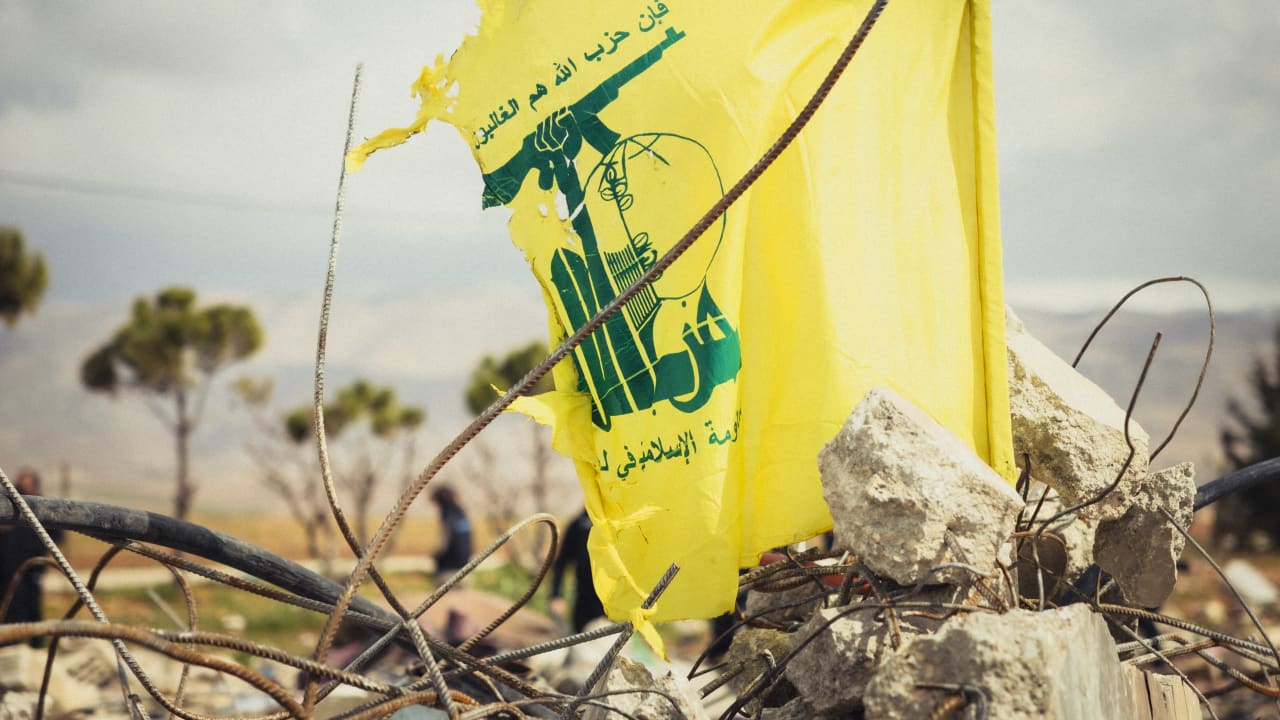
The Lebanese understand the necessity of land operations to rid the country of Hezbollah, but are fearful Israel will withdraw before freeing them of the Iranian proxy, two exiled descendants of Southern Lebanon Army members told The Jerusalem Post.
Maryam Younnes was only five years old when she fled her home in Dibil in southern Lebanon, leaving behind her grandmother and cousins, unable to legally see or speak to them again.
Maryam’s father, Elias, was a commander in the South Lebanon Army (SLA). He defended the country’s sovereignty against the Palestinian Liberation Organization, which used the territory to launch attacks against Israel and brutalize local populations.
“We were in no man’s land. No one helped us. No one looked after us, just like what’s going on right now. There was no army. The PLO were brutal with us as well, fighting with Israel against our will; they were slaughtering us,” she recalled. “They were kidnapping people from the south. They were trying to take over land.”
Elias was among those who called on Israel to help fight against the PLO terrorists and who took up arms alongside Israel. He fought for his country’s stability until 2000, when Israel withdrew, and Hezbollah labeled him a “traitor,” Maryam said. When then-Hezbollah leader Hassan Nasrallah went on national television and promised to slaughter anyone who worked alongside Israel, the family packed up and fled.

'We were forced to leave our country'
Despite being so young then, Maryam remembers details of her village, including studying in French and the close relationships she had with her grandmother, uncles, aunts, and cousins.
“We were forced to leave our country. We fought for 20 years for our country, and then in one night we were supposed to just leave everything and run away,” she said.
“And it left an impact, and something inside of every one of us.... We are a strong community. Mentally, we are very flexible. But still, not being able to talk to our family back in Lebanon – like me, growing up, remembering my grandma and how beautiful a connection we had, but never able to talk to her again or see her – it’s very hard.”
Maryam thought she would be gone for only two weeks. Twenty-six years later, she is a member of Israel’s Lebanese Maronite community. Around 7,000 SLA members escaped to Israel and built lives there, unable to return to their homeland. As an Israeli citizen, Maryam completed her National Service and is now starting a business that helps Arab brands enter the Israeli market.
Elias was among the last members of Israel’s Lebanese community permitted to be buried in his home village. While this means his daughters have not been able to visit his grave, Maryam said she knows there was nowhere else he would have wanted to be laid to rest.
The reach of Hezbollah’s violence
Dibil, like many Christian and Druze villages in southern Lebanon, has not been spared Hezbollah’s violence. The Iran-backed group circulated rumors last month that IDF soldiers were hiding in the local church, which led to the building being attacked with shelling and rocket fire.
The rumor, Maryam said, was part of a broader campaign to target communities outside Hezbollah’s Shia base. Hezbollah rockets have fallen short of their intended targets in Israel, landing instead on Lebanese villages, and Hezbollah fighters have also been known to position themselves near these areas in the hope that Israel will strike them, allowing the group to benefit from civilian casualties, she said.
“They’re using a very dirty game, and we are very worried. From what I’ve heard, Israel can clear the area around the Christians, so it’s less problematic than it was before, but we are still afraid of them coming back, or trying to do something even bigger, especially in Beirut,” Maryam said.
While many Lebanese “understand the reason for the war because it’s very obvious and it’s very clear,” Maryam said, Israel’s withdrawals in 2000 and 2006 have left people unwilling to trust that the Jewish state will follow through. As a result, many are hesitant to risk supporting efforts to rid Lebanon of the Iranian proxy.
“The Lebanese people are terrified that this might happen again, and that an agreement with Iran might affect the situation in Lebanon, which will affect the Lebanese people themselves, because Hezbollah will turn its weapons on them,” she explained. “It’s not for the love of Israel, but the majority agree on the necessity of eliminating Hezbollah in order to have a prosperous Lebanon, a peaceful Lebanon.
“Hezbollah is the cancer of the country, and I think right now, the majority of the Lebanese people are really hoping that Israel will finish the job,” she said, adding that the US’s and Israel’s inability to fully conclude wars on other fronts has not gone unnoticed.
Asked how she felt, watching Israel launch yet another land operation into Lebanon, Maryam said it “hurt” her to see land being taken, but “Israel is doing the job that the Lebanese people were supposed to do, and I know that this is the only way we can actually eliminate Hezbollah and hopefully create a clean Lebanon, where people actually can have the ability to dream finally and to build a proper future.
“As hard as it is, I am very hopeful that this operation will end up with, again, a peace agreement, and we will see solutions. And I hope that we will be part of this agreement or solution, because we are the first ones who fought against Hezbollah, and we were the ones who were kicked out of their land because of Israel’s wrong decisions,” she said.
The Lebanese have paid a high price for Hezbollah’s decision to drag the country into another round of conflict, and it is widely understood that these battles are not being fought for the benefit of the people, she said. Despite the toll, many Lebanese understand why Israel is fighting and support efforts to rid the country of the group.
The UN Human Rights Office estimated that as much as one-fifth of the population of Lebanon has been displaced, and thousands of civilian casualties have been reported since October 8, 2023.
“I don’t see how a person can treat cancer without hurting the whole body,” Maryam said, addressing the tragedy of civilian casualties alongside what she sees as the necessity of the action. “If we had another way to do it, I would be the first one to advocate for it, but we don’t. It’s a terrorist organization that understands only power, so you need to crush it to the ground and take its weapons.”
Maryam said she is deeply aware of and sympathetic to those who have been displaced or are mourning, describing herself as an example of “collateral damage.” The only thing that could justify such suffering, she said, is the assurance that this will be the last war Lebanon fights, and that the international community will ensure Hezbollah is finally gone.
Memories of Lebanon’s deadly 15-year civil war, which ended only in 1990, are still in living memory, and the trauma is still informing decisions now. Estimates suggest 150,000 were killed, tens of thousands wounded, and hundreds of thousands displaced. The government, she said, is trying to “work smartly” to weed out Hezbollah’s infiltration without risking the group turning its weapons on the people, igniting a similar battle.
“Iran can tell Hezbollah, ‘Okay, turn your weapon on the Lebanese people. This is your last breath; do whatever it takes to stay alive and to keep your weapon. Fight the Lebanese people,” she theorized, noting only days ago there were reports that Hezbollah was plotting to overthrow the government.
If Israel can successfully cleanse Lebanon of Hezbollah, Maryam said she would look forward to returning to her village and hopes there can be an agreement that would allow her to split her time between her two homes.
Collateral damage’
Children of South Lebanon Army members recount how Hezbollah forced them to flee their homeland
Lebaese analyst Jonathan Elkhoury spoke to the Post from Ramat Gan, though, like Maryam, he was born in southern Lebanon and was forced by Hezbollah to flee as a child. The first violence he remembers, though, is PLO terrorists stealing the family’s car, storming into homes and executing his neighbors.
“One of the first things that my mom said, speaking with her friend on the phone after October 7, was that the same thing that happened to the communities in southern Israel was what happened to us in Lebanon back in the ’70s, when the Palestinian terrorists came into the village and just shot kids and women and elderly,” he shared.
Jonathan’s father spent 18 years in the SLA, achieving the rank of officer, fighting against the foreign forces brutalizing Lebanon. Despite fighting under the Lebanese flag, he was painted as a traitor by an armed group that swore their allegiance would be to a foreign power, the ayatollah of Iran.
As a member of a minority in the Middle East, half Catholic and half Greek Orthodox, Jonathan said that Israel was the only country willing to fight alongside his father and defend him.
In May 2000, after Israel’s withdrawal, Jonathan’s father fled to Israel, and a year later, the rest of the family joined him when Hezbollah began occupying their villages.
“Hezbollah occupied our territory. They started entering homes and behaving as if they were the new sheriff in town; this is basically what they said. They stole a couple of our cars. They would go into homes and beat women and children of South Lebanon Army soldiers,” Jonathan recalled. “Some of [the SLA soldiers] were executed. Some of them sat in prison for a really long time and got tortured for being allied with Israel and wanting to have peace with Israel.”
Seeing the state of Hezbollah’s control over Lebanon 25 years after he fled, Jonathan said it was “devastating to see that Lebanese people are continuing to suffer on behalf of a cause that has nothing to do with any Lebanese cause.”
When Hezbollah dragged Lebanon into a war by attacking Israel on October 8, 2023, a day after Hamas’s devastating invasion of southern Israel, many who were silently opposed began to speak out against the terrorist group, he said.
“They were against involving Lebanon in wars that have nothing to do with any Lebanese cause. Israel wasn’t engaging in Lebanon. Israel wasn’t attacking Lebanon. There’s no issues going on, except some points on the border that could be fixed by negotiations. There’s no need to go to war in order to fix these issues, once they sit and talk with Israelis. So a lot of Lebanese started to question, what is Hezbollah’s role in Lebanon?” he noted.
“It didn’t happen in a vacuum; it was boiling among the Lebanese for the last two decades at least, questioning Hezbollah’s role and why are they still holding weapons, why are they still occupying territories and deciding on behalf of the Lebanese government, without asking it whether they should go to war or not.”
Now that Hezbollah has again dragged Lebanon into a war unrelated to its national interests, in what Hezbollah admits is in response to the targeted killing of Ayatollah Ali Khamenei, the situation has reached a boiling point, he claimed.
Hezbollah did not respond to the ceasefire violations it alleged Israel was carrying out, Jonathan said, so claims of protecting Lebanon’s sovereignty are nonsensical.
Referencing a Gallup poll from July last year, Jonathan noted that the overwhelming majority (79%) of Lebanese supported disarming Hezbollah, including more than a quarter of the Shia population, and 86% of the population opposed military conflict with Israel.
Apart from the wars initiated by Hezbollah, Jonathan said, many recall early speeches delivered by Nasrallah insisting that the diverse country become a Shia Islamic extension of Iran. While Nasrallah may have changed his rhetoric, aware that the majority of Lebanese are not Shia and so would reject such plans, Jonathan said the terrorist group has steadily maintained his vision, changing the status of villages from nonreligious or sectarian to Shia.
Part of the reason many villages in southern Lebanon refused to evacuate is the fear that Hezbollah will seize control in their absence, he commented.
“About 100,000 people stayed in their villages in the south of Lebanon, from the Christian villages, from the Druze villages, and also from the Sunni villages, because for decades, they were able to prevent Hezbollah from embedding themselves in these villages and in their communities. They refused to let Hezbollah use them to attack Israel, like we’ve seen in the Shia villages,” he said.
Speaking of a recent announcement by the IDF’s Arabic-language spokesperson, confirming that Hezbollah’s leaders and commanders have left Dahiyeh in Beirut and its territories in southern Lebanon to embed themselves within the cities so far untouched by war, Jonathan repeated Maryam’s accusation that the group was trying to gain support through civilian casualties.
“Hezbollah is trying to use the Christian villages that stayed there to tell the Lebanese public, ‘No, this is Israel hurting everyone, not just us.’ So they’re deliberately going to Christian villages or Sunni villages or Shia villages to try and make Israel respond in these territories, to win in the public opinion or the public eye inside of Lebanon,” he claimed.
Addressing the recent direct talks between Beirut and Jerusalem, the first high-level meeting since 1993, Jonathan said that his two home countries had come close to normalizing relations on multiple occasions. He said Lebanon once again has the historic opportunity it lost with the collapse of the May 17 Agreement of 1983.