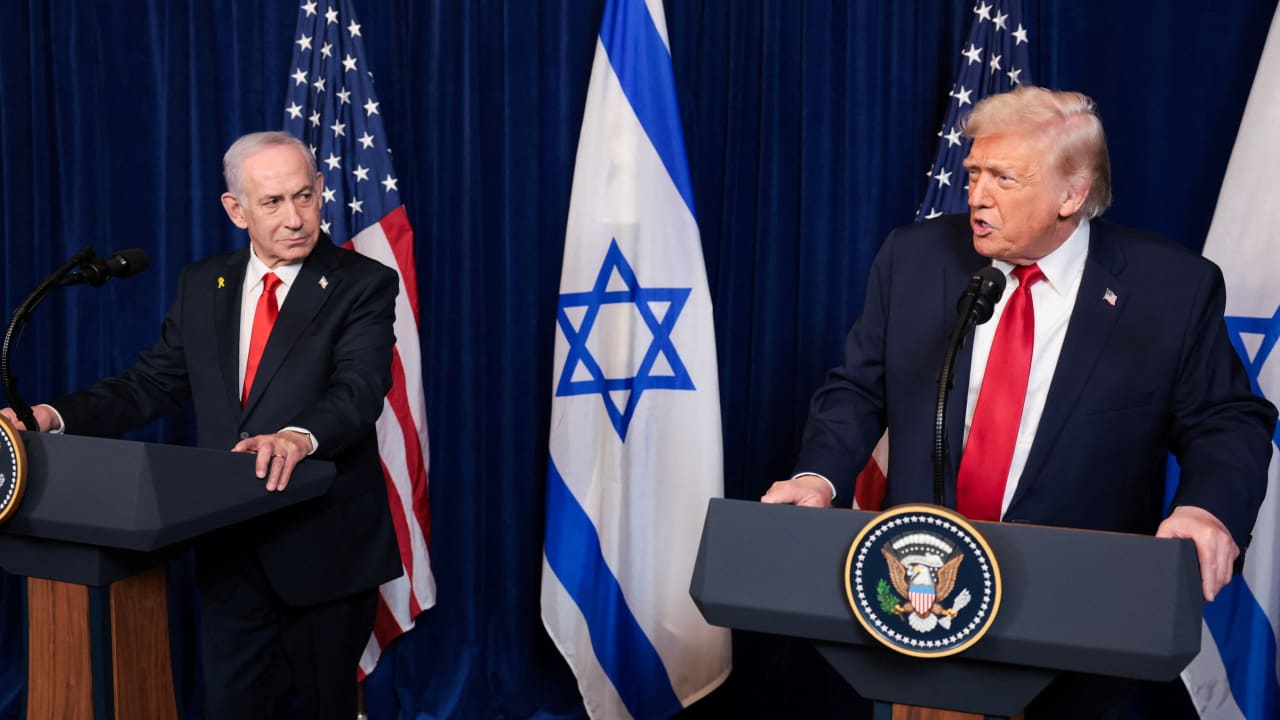
When Prime Minister Benjamin Netanyahu called US President Donald Trump last week, the Iran attack was delayed.
Part of the reason that Netanyahu asked for a delay was that Israel was caught off guard at the speed at which Washington suddenly seemed ready to attack, according to foreign reports.
As of Tuesday, those foreign reports said, there was still significant uncertainty about what Trump would do.
At the time, top Israeli officials understood that the regime had already killed at least between 2,000 and 3,000 of their own people, mostly on Thursday and Friday, January 8-9, a big jump from the death totals until then, which were estimated in the 400-500 range.
They were also aware that around one million protesters had come out during those days, a skyrocketing total compared to earlier protests, with most foreign reports indicating that on most of the other days, the volume had not surpassed 100,000.

There had been an evolution regarding Trump’s public statements about what the American military, cyber, or covert forces could do against the Islamic Republic, and there was also a much-discussed Netanyahu and Trump phone call last week.
But after all of that, Israeli officials had not expected that Trump would thrust forward and attack as early as Wednesday without additional coordination. Meanwhile, the full gamut of American naval and air forces had moved, placed in the region as they were during the prior three rounds of fighting between Israel and Iran between 2024 and 2025.
Taken by surprise that Trump had been aloof at first, seemingly slow-moving and deliberate in his consideration of the issue, then suddenly shifted his position to being attack-ready on Wednesday itself, the prime minister, foreign reports have indicated, felt pressed into the unusual position of needing to ask the US president to hold off.
Israeli, American military preparedness
There were likely various reasons for the pause, including questions about Israeli air defense readiness, American readiness to help defend Israel, whether the US attack being contemplated would have the desired effect of truly bringing about a regime downfall, or a waste of bluster due to lack of planning or improper timing. These reasons were probably why an assortment of Israeli officials did not think the timing was right.
But it is possible that the act of directly asking for a delay in the attack, as opposed to just ongoing consultations and the sharing of strategies and tactics, came about in no small part because, foreign reports have said, Israeli officials were caught flat-footed.
Given that the climax for the protests so far was between January 8 and 9, and neither the US nor Israel acted in anyway on those days to prevent the slaughter of thousands of Iranians, thereby allowing the regime a significant boost in its struggle to retain power, it appears that both Israeli and American officials have generally been behind on keeping up with developing events in the Islamic Republic.
One reason for that could be the sudden jump in the size of the protests, from tens of thousands to one million in a matter of days, after nearly two weeks in which the demonstrations remained relatively small.
But whatever the reasons, foreign reports have indicated that Israeli officials did not anticipate the speed or the extent of some of the ups and downs of the protests to date, despite Israeli officials having extensive information about the economic and water crisis confronting the country for an extended period due to the global nuclear sanctions, which kicked in late in August.