As Sweida’s Druze continue to be ravaged by Islamist extremists under the watch of Syrian President Ahmed al-Sharaa, Dr. Osama Shekh built an entire medical system to treat the ethno-religious community while government-backed hospitals refused them care.
By day, Shekh is an anesthesiologist at the Galilee Medical Center. In his free time, he coordinates smuggling of pharmaceuticals, drug therapies, and medical equipment from Damascus to any of the four hospitals he runs in Sweida from Julis in northern Israel through WhatsApp.
Sweida, in Syria’s south, is approximately 132 km from Julis, where The Jerusalem Post met with Sheikh Mowafak Tarif, the spiritual head of Israel’s Druze community, and other volunteers at the Druze Emergency Operations Room.
On July 13, news of fighting between Syria’s Druze and Sunni Bedouin broke out. The United Nations in late August said that its experts sounded the alarm over what it described as armed attacks on local Druze communities, “with reports of killings, enforced disappearances, abductions, looting, destruction of property, and sexual and gender-based violence against women and girls.
“The scale of violence reported – including massacres, looting of homes, shops and livestock, and use of stolen phones for extortion – points to a targeted campaign against the Druze minority, exacerbated by incitement to hatred on media and social media platforms portraying them as Israeli allies.”

The Israeli Druze leaders the Post met with in Julis described the attacks as a genocide, orchestrated by the Syrian president, whom they referred to as a terrorist in a suit.
The Post also spoke with Israeli Druze Safwan Marich, director of the Security and Emergency Response Division for the International Fellowship of Christians and Jews (IFCJ), and Syrian Druze Rashad Abou Sada, the director of the Al Mishkat Center for Research and Documentation in Sweida.
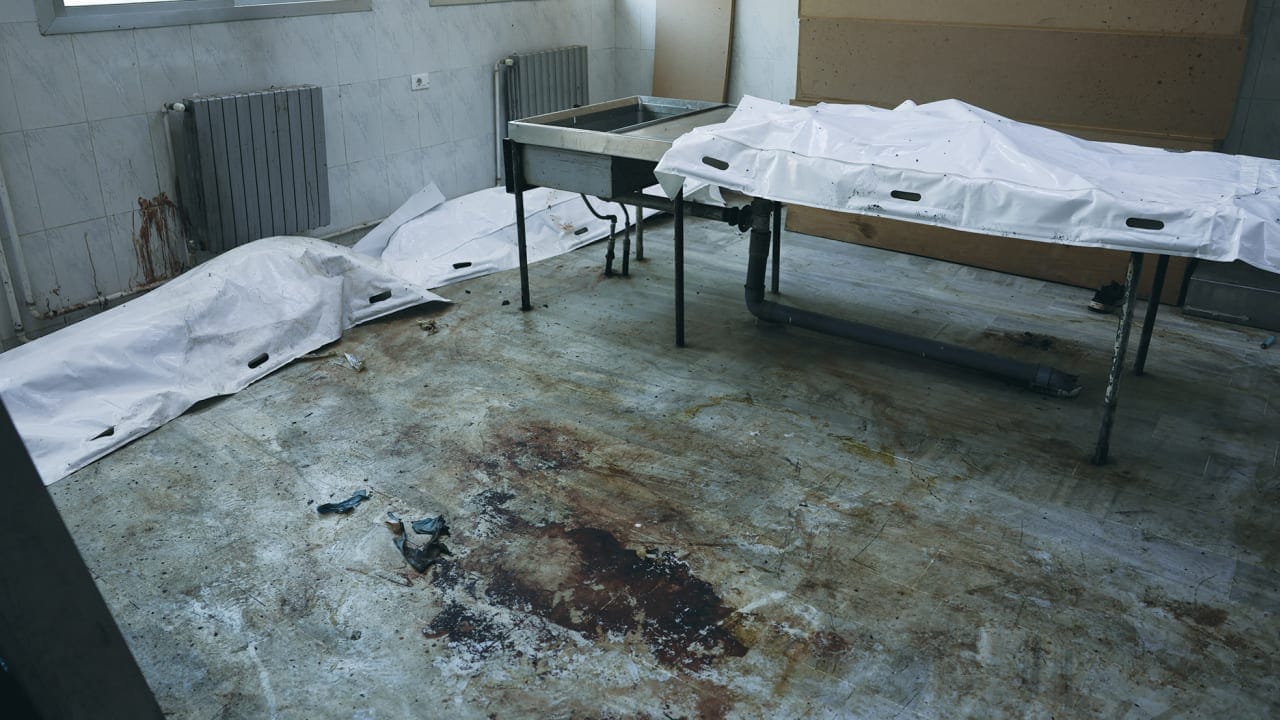
Just over a week after July 13, the Sweida National Hospital was targeted, where staff said that government forces killed patients in their beds. This attack made the hospital nearly inoperable.
In Sweida, “the health system has collapsed,” Sada said. “A large part of the ambulance and emergency response network was destroyed,” he added, referring to the attack on the national hospital. “Hospitals have turned patients away – not due to discrimination, but because they lack electricity, ICU capacity, medicines, and even oxygen.”
A damaged healthcare system
Sweida’s fragile healthcare system survives due to local solidarity, rather than any government support, Sada added. The hospitals operate with severe shortages of almost everything, according to Shekh and Sada.
“Most facilities lack basic diagnostic equipment, functioning ICUs, anesthesia supplies, cardiac and cancer medications, and even oxygen cylinders. The recent destruction of parts of the emergency system further reduced capacity, and many departments now rely on outdated or nonfunctional machines. Essential medicines arrive only in small quantities through community donations or limited humanitarian shipments,” Sada said.
“In practical terms, hospitals can provide only the most basic care, while complex or urgent cases often have no treatment options inside the province,” he explained.
“In most emergencies, people in Sweida are effectively trapped, as travel to other cities is unsafe and often blocked. Ambulances have been stopped or targeted, making medical evacuation extremely risky. Some families attempt to transfer patients in private cars, but many never reach Damascus in time,” he continued. “There have been cases where Damascus hospitals refused to admit a Druze patient from Sweida – initially on sectarian grounds later reframed as ‘technical reasons.’”
Sada said that the refusals have mainly occurred in Damascus and Daraa, in hospitals controlled by Sharaa’s government and operating under his Health Ministry. “The documented case in Damascus – where a Druze patient from Sweida was initially denied admission – happened in a state-run hospital that follows Sharaa’s directives.... Similar obstacles have been reported in other government hospitals under his authority.”

Marich said that Druze are afraid to travel to Damascus, and many students who live in the buffer zone but travel to Damascus for school have stopped attending.
Syrian government forces have been restricting the entry and exit of people and goods by road, according to Shekh, Sada, and Marich. “There is nothing coming in, they do not allow patients to go out. So [diabetics] are dying from high levels of sugar in their blood. It’s very slow, because insulin is not available to [Druze],” Shekh said.
For women experiencing breast cancer symptoms, no mammography services were available to enable early detection, Shekh said. Druze women in Sweida often had to wait until the cancer had metastasized and spread throughout their bodies, by which point two-thirds of those diagnosed at stage four do not survive.
“There are people who died because they could not get their medicine,” Shekh stressed. “The Syrian government made it clear. If you’re Druze, you have no rights. Not for food, not for supplies, not for life.”
Shekh said that this reality exists all over Syria, and even in Lebanon, where the Druze population fears the same fate.
Between Sweida and Israel’s side of the Golan Heights are nearly 20 Sunni Muslim towns and cities, hostile to the Druze and Israel, the representatives from the Druze Emergency Operations Room said. It is impossible to drive between Sweida and the Israeli border without being stopped. The only way to access Sweida from Israel is by air.

Since July, there have been few channels through which Syrian Druze have received healthcare and aid. These include initiatives in Israel led by Shekh and Sheikh Tarif and separate programs that the IFCJ and the IDF have collaborated on both in Sweida and in the IDF-established buffer zone.
According to Sada, The World Food Program has sent flour and occasional food baskets in irregular deliveries; a US-based Druze charity, SAS, has supported some medical and humanitarian needs; and the Syrian Arab Red Crescent has carried out basic emergency relief. A onetime shipment of food baskets in July was also sent by the King Salman Humanitarian Aid and Relief Center in Saudi Arabia.
Sada said that despite these contributions, the most significant and consistent support has come from Sheikh Tarif, the Druze community in Israel, the Israeli government, and the IFCJ. He added that Druze abroad have also contributed significantly, funding medications, ambulance fuel, and clinic operations, aid that often arrives faster and more reliably than institutional aid.
Notably, Doctors Without Borders has not operated in the Sweida province, according to its website, though it operates in 11 other provinces in Syria, out of the 14 total. The other provinces it does not operate in, in addition to Sweida, are Latakia and Quneitra. Located in the Golan Heights, Quneitra includes sections that are part of the buffer zone. Latakia is where Alawites were massacred in March of this year.
DWB did not respond to the Post’s request for comment.
Shekh’s new healthcare system
When the armed attacks began, the Druze community in Julis began discussing how best to aid the Druze in Sweida.
Since there was no way to reach Sweida by land, the community, the Israeli government, and other organizations, including the IFCJ, sent supplies via the Israel Air Force. These efforts were unable to meet the needs of the hundreds of thousands of people in the Sweida province, according to Shekh and Marich. Additionally, the IAF flights to Sweida were dangerous, and there was a limit on the quantity of aid that could be flown in, Marich added.

In some cases, Sweida residents were smuggled into Israel via Hader, located 10 minutes from Israel’s border, where an IDF-run infirmary that works all day is, Marich told the Post. Hader is close to Majdal Shams, a Druze town in the Golan Heights that made headlines in July 2024 after a Hezbollah rocket killed 12 children playing soccer.
“We smuggled patients with screws, the day after surgery, under piles of wheat,” Shekh recalled. However, not everyone who arrives in Hader can enter Israel.
Shekh stressed that the most urgent treatments were unrelated to combat. Shekh explained that the lack of care affects everyone, from the three-year-old child with congestive heart failure (when the heart cannot pump blood effectively) to people with kidney stones and hernias. These are common conditions that, in Western countries and in Israel, require medical management, but people can function in their daily lives.
In Sweida, these conditions debilitate people. Even those who just have a hernia – they cannot work, they cannot fly, they cannot do anything, Shekh said.
In early September, members of the Druze Emergency Operations Room began rethinking its approach, realizing that the tens of thousands of dollars it had collected from Israeli Druze could profoundly affect the health sector.
Shekh suggested that if he could locate a friendly pharmacy, they could buy pharmaceuticals from Damascus and send them to Sweida. The Druze Emergency Operations Room began this new system of sending money to a Syrian to buy medical supplies in Damascus, and then another middleman would smuggle them to Sweida.
In order to better control patient care, Shekh convinced Sweida’s private hospitals to cede control to his operation. He also began paying salaries to the doctors and nurses who worked there, simultaneously helping the devastated local economy by putting money in the pockets of the people who lived there.
“It costs us approximately $150,000 weekly. For two months, we’ve paid $1 million for treatments,” the doctor said.
Shekh pulled out his phone and proudly showed the Post his WhatsApp groups, divided by specialty, which included doctors from Israel, Sweida, and Druze from all over the world. He uses WhatsApp to consult with these doctors on how best to treat each patient at the four hospitals he runs in Sweida. He then shares the cost of the treatment with the Druze Emergency Operations Room, so it can provide the funds for the necessary equipment and medication to be bought in Damascus and smuggled to Sweida.
To date, the organization has arranged and paid for more than 630 major surgeries. For cancer patients, it bought all the medications and drug therapies from Damascus, at a cost of approximately $200,000. In Sweida, 1,524 cancer patients received this treatment over the past couple of months. Shekh knew this number from the top of his head.

If a patient’s condition is too complicated to be treated in Syria, Shekh begins the process of bringing them to Israel to see a specialist. For example, Shekh recalled one child whose hand was fractured in multiple places, requiring a certain surgeon who knew how to operate on the hand with those injuries.
“The Cradle” was another initiative Dr. Shekh started from the Druze Emergency Operations Room, aiming to help Syrian Druze pregnant women. It began after he learned that there were approximately 125,000 evacuated Druze in the city of Sweida who had fled ISIS from surrounding villages in the province. Among them were 56 pregnant women, who “just ran away with their clothes” when ISIS came and were giving birth in public shelters, schools, or fields.
“I went to Sheikh [Tarif] and told him the situation. He declared something very clear: I don’t want any Druze woman to give birth in a shelter. Fix this,” Shekh recalled.
From his WhatsApp, Shekh, smiling, showed the Post several pictures of the 118 babies born in private hospitals in Sweida, swaddled in blankets, hats, lying in cradles, all purchased in Damascus.
“This [whole operation] is the only thing we control. It’s a very important thing,” Shekh said.
Clinics in the buffer zone
Separate from the work organized by the Druze Emergency Operations Room in Sweida, the IDF and IFCJ have also established two clinics in the buffer zone, in addition to the one in Hader. The IFCJ also flew medicine, antibiotics, intensive-care equipment, medic bags, and other medical equipment into Sweida through the IAF. Marich said that they partnered with another organization to fly in 2 tons of baby formula.
The additional clinics in the buffer zone are located in the predominantly Druze villages Rima and Erneh, which also has a significant Christian population. The clinics were set up in existing buildings that IDF teams scouted to service the tens of thousands of residents of these villages and surrounding areas, Marich said.
Each clinic features reception and waiting areas, examination and treatment rooms, an emergency and resuscitation room, a women’s health clinic equipped with a Doppler ultrasound device, a room for minor surgeries, a laboratory for blood tests for glucose, kidney function and electrolytes, a pharmacy, and an X-ray room, according to IFCJ.
The clinics are staffed by local medical teams, including internal medicine physicians, a family doctor, a gynecologist and midwife, an endocrinologist, a general surgeon, a nurse, pharmacists, and emergency personnel with an ambulance.
The staff members operating in these clinics are not paid, Marich noted.
One child with a severe cardiac condition, who could not find medication in the Sweida province, was provided with the needed drug through an IFCJ shipment, according to Sada. He said that insulin supplied by the IFCJ shipments kept dozens of vulnerable patients stable during weeks when pharmacies had completely run out.
The IFCJ is not only servicing Druze; it is also aiding Christians in the area.
“When the brothers of our brothers need help in Syria, we must help when we can,” said IFCJ President Yael Eckstein. “We can’t stop terrorists from targeting and killing people, and we can’t stop the rockets from falling, but what we can do is provide comfort and help for those who need us. We can’t help all the persecuted Christians in the Middle East, but when it’s right on Israel’s Syrian border, we can’t turn our backs on them.
“The global Christian community and our Druze brothers and sisters in Israel have stood side by side with Israel and the Jewish people, particularly since Oct. 7. And now that we can, we will stand with the Christian and Druze communities in Syria as they are being targeted.”
The roots of the conflict
Marich explained that when former Syrian president Bashar Assad, a member of the Alawite minority, was in power, he formed a coalition of minorities, including Alawites, Druze, Kurds, and Christians, against the Sunni majority. Since the Sunnis ousted Assad’s regime, they have been “taking revenge” on all the minorities who were in the coalition with Assad.
“They massacred the Alawites, they massacred the Christians in the coastline area – there was a big Christian community there that was massacred in big quantities – and in July they started to massacre the Druze, too,” Marich said.
Shekh argued that an ideology is behind the attacks. “It’s the same ideology that caused September 11, the same ideology that caused October 7.” He explained that the ideology is not only against Druze, but also against other groups of Muslims. “This ideology makes the other people, the ones that are not alike, they are disbelievers. We Druze, we are disbelievers.
“We don’t even have the privilege of paying taxes to stay alive,” he said, referring to the Jizya tax levied on Jewish and Christian subjects of a state governed by Islamic law. In practice throughout history, this implied a second-class status to non-Muslims. “By this ideology, the only thing they can do is kill us. So what happened here was just a matter of time.
“In this year, the Alawites – they laid down their weapons, and they were massacred. So when they asked the Druze to lay down their weapons – if you don’t learn from the mistakes of others, you’re a fool; this is a phrase we use here.”
“Ahmed Sharaa’s government bears full and direct responsibility for the massacres and the continuing violence in Sweida. Under his authority, security forces and associated militias carried out a coordinated campaign that burned and occupied 33 Druze villages, launched near-daily drone strikes on civilian areas, and left behind mass casualties still being uncovered by the Red Crescent,” Sada said.
“The attacks were not limited to military operations. Multiple Druze religious shrines were burned, sacred books were destroyed, and there were documented cases of rape, executions, and beheadings committed during the assault. Christian communities were also targeted: several churches were burned, and Christian clergy were killed in attacks that appeared intended to terrorize and erase minorities from the region.”
“You can see many people were shot in the streets because they’re Druze. They shaved mustaches and beards – these are pictures that are reminiscent of the Holocaust,” Marich said.
“It’s not that they took people and prosecuted them or executed them because they were armed. They shot anyone they saw in the streets. They shot people in hospitals, they shot medical staff.
“I cannot tell you if the Syrian regime directed these attacks, I don’t know; I don’t know if the Syrian regime tells them to go kill the Druze people. But the bottom line is, the Druze community suffered from a lot of deaths – children, babies, elderly, religious leaders, women; there are hostages now. These are the facts. I’m not interpreting the facts; these are just the facts,” Marich said.
Shekh also highlighted the ineffectiveness of international bodies. In July, the European Union sent €1.6m. – the equivalent of approximately $1.8m. – in aid of Sweida. However, Shekh said it went straight to the government of Sweida, run by Sharaa.
He said international aid organizations like DWB said that in order to help, the area has to be declared a war zone by Sharaa’s government. “It’s ridiculous,” he commented bitterly.
“The Druze community in Sweida feels deep appreciation for the compassion and support shown by the Israeli public. Many families in the province speak openly about this sense of solidarity, especially during moments when they felt abandoned by others,” Sada said.
“What happened in Sweida on July 15 carries a painful resemblance to what Israel experienced on Oct. 7, the same pattern of organized terrorism, targeting civilians, destroying villages, burning homes, and attempting to break a community’s spirit,” he continued. “The similarities are not political; they are human. Innocent people were massacred simply because of who they are.”