

As International Holocaust Remembrance Day approaches, the question of how to preserve the memory of the Holocaust becomes more urgent. The last survivors are aging. Those born in 1939 are now 86, and their fading voices highlight how close we are to an era without living testimony.
Soon, memory will rely not on firsthand accounts but on documentation, interpretation, and increasing technological forms of representation. In a world shaped by rapid advances in artificial intelligence, managing this transition responsibly has never been more important. Studies show that the sense of personal relevance surrounding the Holocaust weakens as we move further away from the first generation of survivors. While the second generation often connects the Holocaust to their own identity through their parents’ stories, many from the third and fourth generations report feeling that the Holocaust is “less connected” to them.
At the same time, contemporary traumatic events such as 9/11, regional wars, and most recently Hamas’s attack on October 7, 2023, take up significant space in public consciousness and push historical events farther into the background.
Long before today’s technological revolution, the Annales School, founded in the late 1920s by Lucien Febvre and Marc Bloch, emphasized that history is not only about events and facts: It is also shaped by social representations, emotions, myths, and collective memory.
Against this backdrop, we must rethink how to ensure that the Holocaust remains a meaningful part of Jewish memory and human memory worldwide. Today, organizations, universities, and research institutes are working together to explore how technology might help safeguard both memory and truth.
‘Tongs approach’
One useful way to think about this challenge is what might be called the “tongs approach.” On one side, we must protect historical truth and the uniqueness of the Holocaust; while on the other side, strengthen its human relevance for people of all ages today.

In simple terms, what happened then – the dilemmas, the moral choices, and the hardships – were extreme versions of situations that exist in everyday life. Every group has leadership struggles, moral decisions, acceptance and exclusion, friendship and betrayal.
Without a solid foundation of facts, documentation, and accurate history, Holocaust memory risks erosion and distortion. The Holocaust was unique: industrialized mass murder, a total racist ideology, and a highly organized system designed for extermination. These elements demand clear and differentiated treatment.
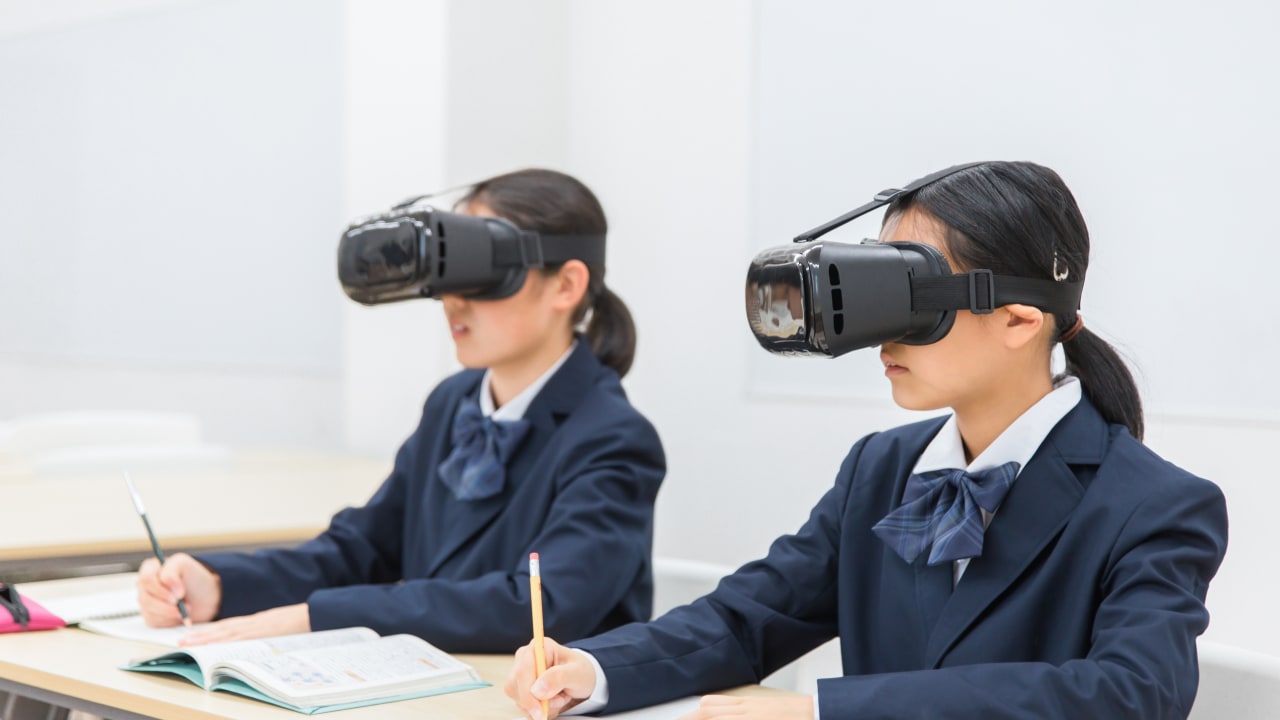
Technology offers significant opportunities, such as digitized archives and open databases, recorded testimonies, AI-based interactive holograms, colorized photos, VR tours of camps, and other augmented-reality educational tools.
While all of these make the memory more accessible in a world without survivors, risks also exist. Digital representations and artistic interpretations may blur the boundaries between fact and fiction.
Since the Holocaust occurred in a pre-Internet era, mixing Instagram-style content with Holocaust imagery can create dangerous confusion. The question is not whether to use technology but how to protect the line between documentation and representation.
Today, tech entrepreneurs are developing AI tools to combat factual distortion online. A single false claim can quickly multiply into thousands of bot-generated posts. Tools are needed to detect and remove manipulative content, along with responsibility from the platforms themselves.
We can think of Holocaust-related technologies as comprising three main categories:
1) Information technology: Search engines, AI tools, and digitized archives that make accurate information widely accessible
2) Experiential technology: Colorized photos, animated materials, 3D tours, VR, and holograms that make learning emotionally engaging and easier to understand
3) Guardrail technology: Tools designed to identify and remove misinformation, hate speech, and manipulative narratives. Examples include: Cyberwall – a live database tracking antisemitic online content; HO:PE (Hate Online: Preparedness and Empowerment) – a browser plugin/app from the World Jewish Congress and the Institute for Technology and Human Rights.
Detecting denial
These are all part of a technological battle, but facts alone are not enough. The struggle is not only about truth but also about relevance. When people feel personally connected to the Holocaust, they are more capable of safeguarding facts and rejecting misinformation.
If the first dimension is about accuracy, the second is about meaning. Many young people around the world don’t feel a direct connection to an event that happened over 80 years ago.

To reach them, we must focus on the human dimension, the emotional and moral questions that resonate across time.
Thinkers like Primo Levi and Saul Friedländer highlighted this point. Levi asked us to see the Holocaust not only as organized evil but also as a place where human nature was exposed in its strongest and weakest forms. Friedländer emphasized that understanding comes not from numbers but from personal stories and voices.
To make the Holocaust relevant, we must show that it is not only a story about “what happened to them” – the actual victims – but also a mirror reflecting “what happens to us”: our relationships, fears, moral struggles, and social dynamics.
Even under impossible conditions, people experienced loyalty, jealousy, love, conflict, friendship, sacrifice, humiliation, and forgiveness. These universal emotions allow young people to connect. They reveal not only horror but humanity within horror. This approach does not diminish the uniqueness or magnitude of the Holocaust but rather keeps it meaningful.
Some also expect Holocaust remembrance to combat antisemitism. However, modern antisemitism draws on political, social, and religious tensions that historical memory alone cannot solve.
Instead, the relevance of the Holocaust can help combat hatred of the “other,” dehumanization, exclusion, and labeling of entire groups: problems that remain painfully current.
The path forward
The future of Holocaust memory depends not only on preservation tools but on how we choose to tell the story. Combining historical truth with personal and contemporary relevance allows it to remain a living, meaningful memory.
The tongs approach is not a slogan, it is a guiding principle: On one hand, strict protection of historical accuracy, supported by advanced technology; on the other hand, nurturing the human relevance of the Holocaust for every generation.
If we maintain this balance, the Holocaust will remain not only a crucial historical event but also a source of learning, reflection, and identity for generations to come.■
Gila Oren, PhD, is a senior lecturer and head of marketing studies at the College of Management in Rishon Lezion, specializing in marketing, heritage, and collective memory. Her work focuses on the intersection of tourism, heritage sites, and Holocaust memory, with an emphasis on visitor experience and the ways technology shapes contemporary remembrance.