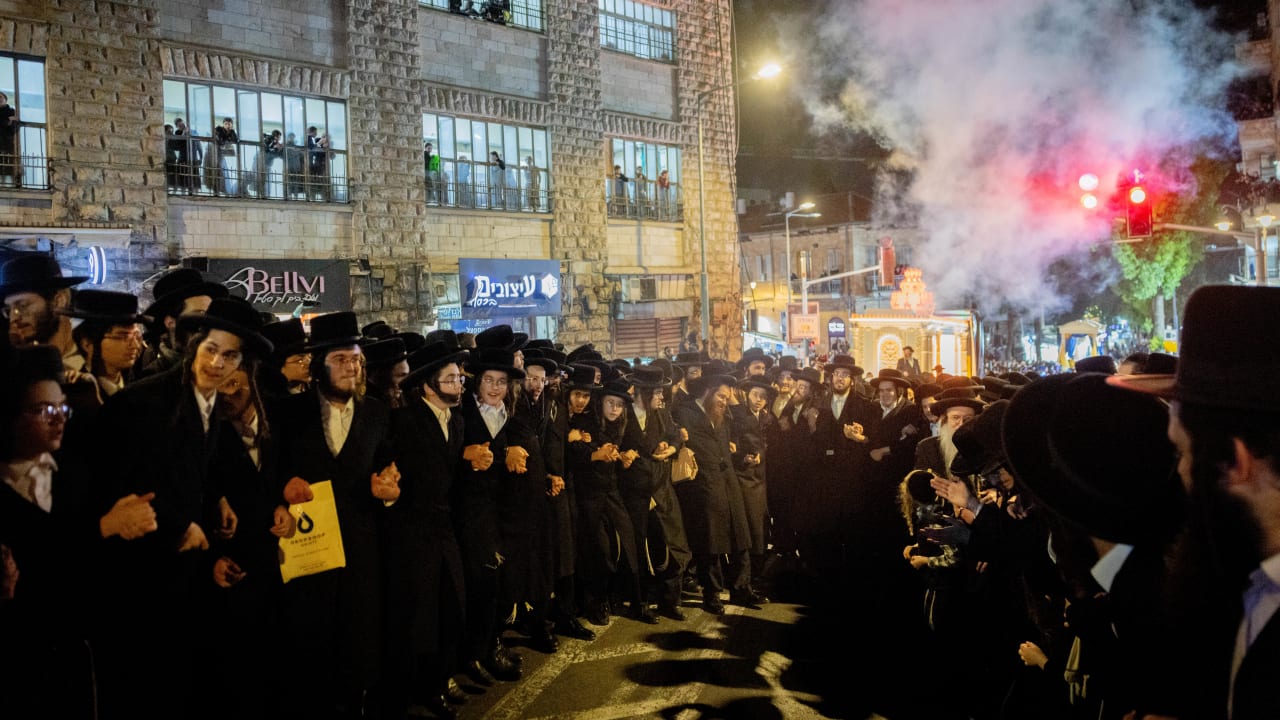
The contents of the draft bill being advanced by the government - one that would exempt most eligible ultra-Orthodox (haredi) men from military service - benefit only the haredim and not Israel’s security needs or the obligation to equalize the burden, Attorney-General Gali Baharav-Miara warned in an advisory opinion issued late Wednesday.
The opinion was submitted to Foreign Affairs and Defense Committee chairman and Likud MK Boaz Bismuth as the coalition races to secure internal support for the bill. Pressure from haredi parties has intensified, with boycotts and legislative stalling used to force its advancement. The push also follows Prime Minister Benjamin Netanyahu’s public endorsement of the proposal earlier this week, calling it “the beginning of a historic process.”
In the opinion authored by Deputy Attorneys-General Dr. Gil Limon and Avital Sompolinsky, the legal advisory sharply criticized the bill, writing that it discourages actual drafting, widens long-term inequality, and must be fundamentally amended to meet Israel’s legal standards. Their language signals that the proposal, if passed, is unlikely to withstand scrutiny by the High Court of Justice.
The deputies stressed the broader context: Israel is fighting a multi-front war and faces a massive manpower shortfall. The security establishment has said the IDF needs around 12,000 additional soldiers, more than half for combat roles, and that the army is fully prepared to absorb them. As of press time, the number of IDF fallen stood at 923, including soldiers killed in battle, hostages, and victims of October 7.
Front-line positions have been filled - but largely by reservists, many of them parents, serving round after round. This burden must be eased, the opinion states, especially when it is “incompatible with the law.” Only last week, the government approved 280,000 reserve call-ups for the next two months.
At the same time, the legal status of haredi draft dodgers has been in limbo since the previous draft law expired in June 2023. Army needs have soared, but haredi enlistment has not - and only a negligible number of draft evaders have been arrested.

“The starting point has to be that of an equal draft that applies to all.”
Last month, the High Court of Justice ruled that the government cannot continue subsidizing yeshiva study for eligible draft dodgers and must produce an effective, comprehensive conscription plan. The verdict, authored by Deputy Supreme Court President Noam Sohlberg, rested on four premises: that the duty of military service applies equally to all; that inequality in haredi conscription has become especially severe since October 7; that recruiting haredim is an urgent security need; and that ensuring equal service is a national mission requiring coordinated action by all relevant authorities. The court also found that the state’s near-total abandonment of criminal enforcement constitutes selective enforcement that empties the draft obligation of substance.
According to the AG’s office, Bismuth’s bill answers none of these requirements. On the contrary, it “discourages military drafting” and “entrenches, in the long-term, this grave inequality.”
“It appears that the proposal tends firstly to the needs of the yeshivot - by ensuring direct and indirect flows of money based on technical definitions of ‘study,’ by canceling draft orders and the few effective sanctions previously applied to draft dodgers, and by chaining haredi men to yeshivot until age 26 so they can avoid the draft. All this, notwithstanding the proposal’s complete lack of response to the security question,” the opinion reads.
The advisory concluded that the proposal must be reconstructed from its foundation, not merely adjusted in its margins: “The starting point has to be that of an equal draft that applies to all.”
Bismuth’s draft bill proposes a new framework for haredi conscription by recognizing civilian-security service as equivalent to military service, introducing gradual multi-year enlistment targets, and shifting enforcement away from personal criminal liability and toward institutional financial penalties on yeshivot. The legislation allows broad deferments enabling haredi men to postpone service until age 26, after which they may enter shortened civilian-service tracks or, in practice, avoid service altogether. It removes combat-service requirements, expands alternative service tracks in police and internal-security agencies, and defines “haredi” eligibility based on one’s high-school educational framework.
Bismuth was appointed to the committee only in July, after former chairman Yuli Edelstein was removed from the post for refusing to advance an earlier version of the law. His ouster enabled the coalition to install a loyalist widely viewed as more willing to push through a proposal acceptable to the ultra-Orthodox parties. In return, the coalition secured a fragile, temporary assurance that its haredi partners would not bring down the government.
Keshet Neev contributed to this report.