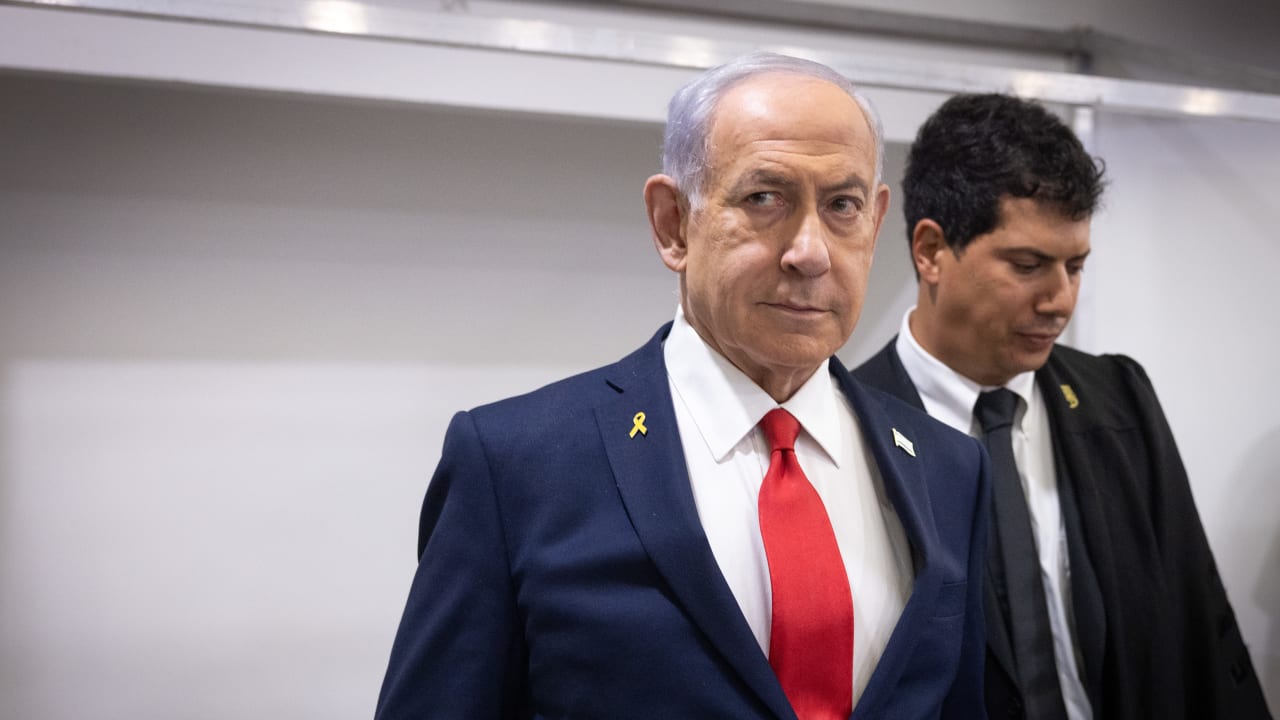
The criminal trial of Prime Minister Benjamin Netanyahu resumed on Tuesday in the Tel Aviv District Court after Monday’s hearing was canceled due to scheduling changes ahead of the prime minister’s planned trip to the United States.
The session also came a week after Netanyahu submitted a formal pardon request to President Isaac Herzog, an unusual backdrop to ongoing testimony and cross-examination in the most significant of his cases, Case 4000.
Prosecutor Yehudit Tirosh continued her methodical questioning of the prime minister, this time focusing on how Netanyahu viewed the owners of Israel’s major media outlets and the extent of their influence over editorial content.
That line of inquiry centered on Shaul Elovitch, the former owner of Bezeq and the Walla news site, who is a key figure in Case 4000. Tirosh pressed Netanyahu on whether he understood who controlled these news outlets, how he perceived their authority, and how he expected his staff to communicate with them.
Netanyahu repeatedly downplayed any granular knowledge of media ownership structures. What mattered, he said, was simply knowing “who to turn to.” Switching briefly to English, he added: “The top guy is the top guy.”
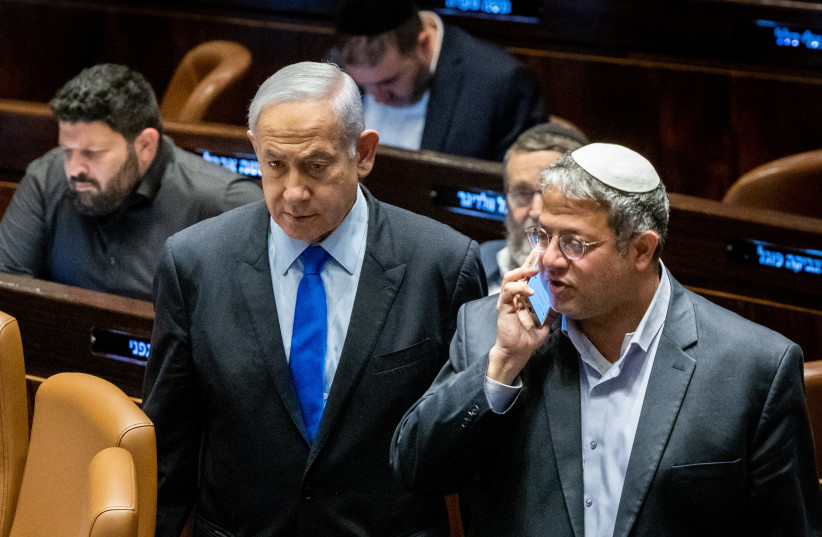
Netanyahu's charges
The prime minister, indicted in 2020 on charges of bribery, fraud, and breach of trust across Cases 1000, 2000, and 4000, maintained that he did not involve himself in the internal mechanics of newsrooms, nor did he engage in exchanges of regulatory benefit for press coverage.
According to the indictment, Netanyahu advanced regulatory decisions that directly benefited Bezeq – decisions allegedly tied to a quid pro quo understanding with Elovitch in exchange for favorable coverage in Walla. Tirosh pressed him on this point, referencing testimony by former senior aide Boaz Stembler, who was responsible for contacting media outlets on Netanyahu’s behalf.
The prosecution returned again and again to Stembler’s actions – and his omissions. Stembler had testified that he never instructed Walla to publish favorable content nor pressured its editors. Tirosh used this to question whether Stembler’s limited involvement aligned with Netanyahu’s version of events or suggested efforts underway elsewhere, outside official channels.
At one point, Tirosh asked why, if Netanyahu believed Elovitch was “the only sane voice” at Walla – someone who, Netanyahu admitted in earlier testimony, supported his diplomatic worldview – he never instructed Stembler to speak directly with Elovitch. Netanyahu responded that he did not manage editorial content and did not direct Elovitch to intervene.
Throughout the hearing, the prime minister repeated that even powerful media owners feared retaliation from reporters. Netanyahu claimed that influential figures in the media landscape were at times afraid to express dissenting views lest journalists “punish” them publicly.
He further insisted he never received “outstanding favorable attention” from Walla – a central pillar of his defense. Instead, he said, the coverage was often harsh, repeating his long-standing claim that he was subjected to disproportionate or obsessive negative scrutiny. Walla’s editorial line, he maintained, remained critical even during the period in which the prosecution argued that favorable coverage was being provided in exchange for regulatory benefits.
The tension between the prosecution’s narrative and the defense’s portrayal of Walla’s actual coverage was again at the center of Tuesday’s exchanges. Tirosh sought to show that Netanyahu was acutely aware of who controlled the levers within key media outlets and that his office maintained a coordinated strategy to influence press coverage. Netanyahu, meanwhile, continued to frame his interactions with media owners as routine political communications, and nothing more.