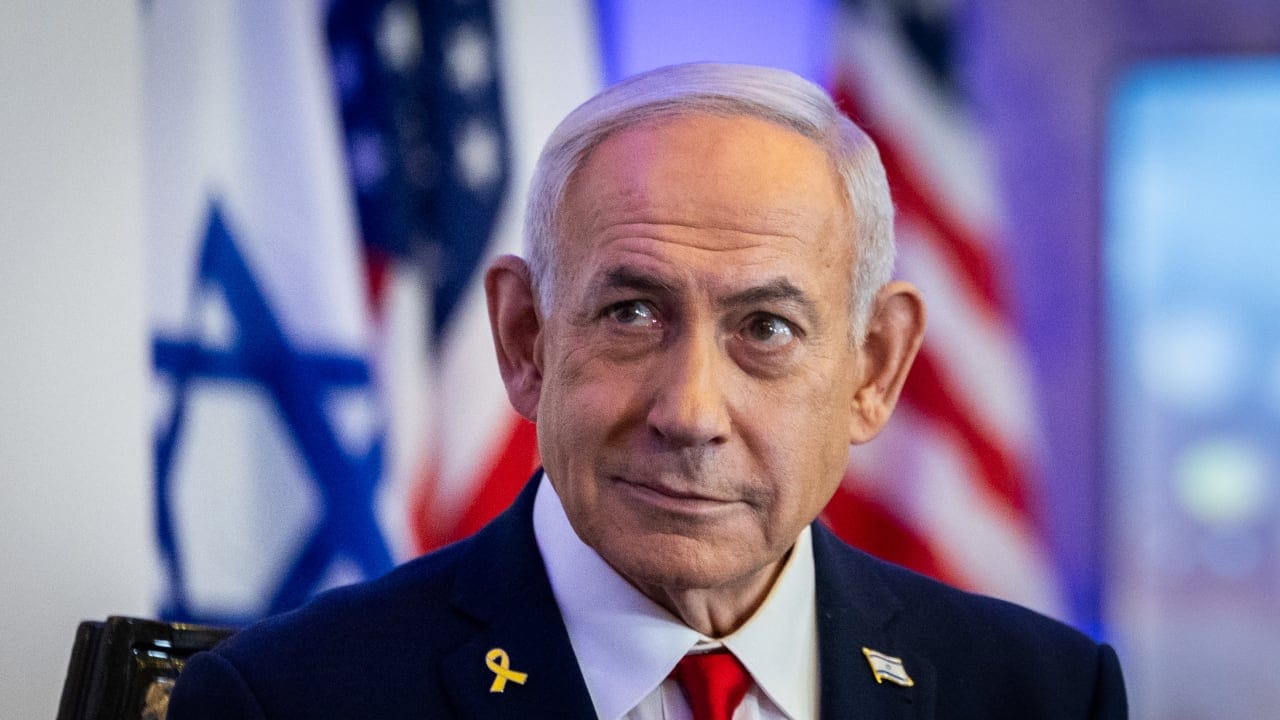
One day after the pardon request was publicized, President Isaac Herzog said on Monday that he would “consider solely the best interests of the State of Israel and Israeli society” when deciding whether to grant a key lifeline for the criminal trial of Prime Minister Benjamin Netanyahu.
“The issue of… [the] request for a pardon is clearly provoking debate and is deeply unsettling for many people in the country, across different communities,” Herzog said, adding, “I have already clarified that it will be handled in the most correct and precise manner. I will consider solely the best interests of the State of Israel and Israeli society.”
His comments followed the political and societal storm caused by the pardon request, five years after the indictment was filed, and came on a day that Netanyahu himself appeared in court.
The prime minister was indicted in 2020 on charges of bribery, fraud, and breach of trust across Cases 1000, 2000, and 4000. Cross-examination began in June, with the prosecution focusing on Case 1000 until about two weeks ago. Monday’s testimony returned to Case 4000, in which Netanyahu is accused of advancing regulatory benefits worth hundreds of millions of shekels to Shaul Elovitch in exchange for favorable coverage on the Walla news site, which he owned.
The hearing opened with a defense request to cancel Tuesday’s session because of “security-related” scheduling conflicts, details of which they provided to the judges in a sealed envelope. The prosecution did not object but asked to add an extra hour of testimony to Wednesday’s hearing instead. Judges Rivka Friedman-Feldman, Moshe Bar-Am, and Oded Shaham agreed, canceling Tuesday’s hearing and extending Wednesday’s.

She challenged the prime minister on his claim
Prosecutor Yehudit Tirosh concentrated on Monday on discrepancies between Netanyahu’s portrayal of Walla during the 2013-2015 period covered by the indictment and the way he presented it earlier this year during direct examination.
She challenged the prime minister on his claim that he granted the outlet only one interview, showing instead that he gave at least three, including two at times when the law did not restrict online interviews before an election. Tirosh referenced testimony by former aide Nir Hefetz, who said he repeatedly urged Netanyahu to take those interviews.
She then confronted the prime minister with a 2016 article published by Walla regarding a meeting in which Netanyahu reviewed recordings with journalist Tal Shalev, something he had written about on Facebook, though he told the court he did not recall it. The defense described such examples as isolated and insignificant, insisting that Walla was never central to Netanyahu’s media strategy.
The prosecution also pressed him on meetings with Elovitch in 2013 and late 2014, including one that occurred shortly after Netanyahu reassumed the communications minister role. Those meetings, Tirosh argued, lined up closely with regulatory decisions that benefited Elovitch’s businesses. The prime minister dismissed any connection and described the 2013 meeting with Elovitch as “without purpose,” adding that he did not even remember signing a key 2010 transfer-of-control document for Elovitch at all.
As the tension rose, Netanyahu grew visibly irritated, accusing the prosecution of wasting the court’s time over “lies and trivialities.” He rejected the core allegations outright, saying he never made any deal with Elovitch, never ordered favorable coverage of himself or his wife, and never tied regulatory decisions to media considerations. When the prosecution presented what it described as further evidence of contradictions, including the 2016 Walla clip Netanyahu himself had once posted online, defense attorney Amit Hadad accused the prosecution of “shameful tactics.”
The session ended with the judges urging the prime minister to answer more directly, noting that even if the prosecution’s examples amounted only to “crumbs,” they might still carry evidentiary weight.
All of this unfolded as the court and public continue to digest the implications of Netanyahu’s pardon request. His legal team argued that the court schedule – three sessions a week, though most weeks do not include three full days due to schedule clashes – impairs his ability to govern, and that clemency could therefore serve the public interest. Herzog’s statement, however, underscored the gravity of the moment and made clear he will evaluate the request with the broadest national considerations in mind.