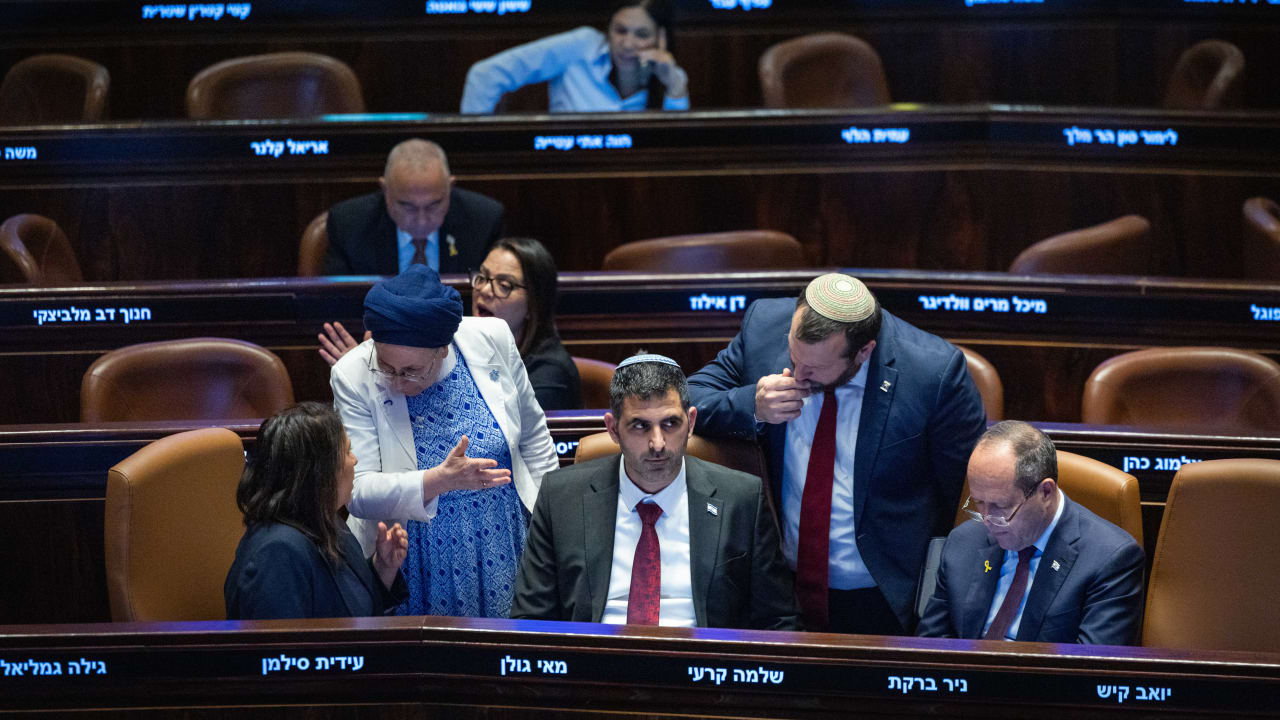
Communications Minister Shlomo Karhi (Likud) announced the second stage of his controversial communications reform bill on Tuesday, presenting a separate bill that includes a model for commercial radio broadcasting.
This additional bill comes after the Knesset plenum passed, for its first reading earlier this month, Karhi’s highly controversial communications bill that proposes sweeping reforms to the country’s broadcasting sector, potentially reshaping the media landscape.
The new “stage two” proposal focuses on the Israeli radio market and the areas where stations can broadcast.
Currently, some radio stations broadcast nationwide, whereas others do not. Israel is divided into 13 license regions.
The channels that do broadcast on a national level are Army Radio and KAN – the Israeli Public Broadcasting Corporation.

According to Karhi’s proposal, the purpose of the bill is to allow FM radio broadcasting without geographic restrictions by offering tenders to bidders.
An existing license holder would be able to participate in a tender before their license expires. If they win, they could broadcast under the new model to achieve broad, nationwide coverage.
The tender would be based on price, with each entity allowed to hold a maximum of three frequency channels, the proposal states.
Based on the proposal, many of its components are identical to those in Karhi’s overall communications reform bill and can be merged with it.
A-G disapproves of Karhi's bill
Attorney-General Gali Baharav-Miara disapproved of advancing the broader communications reform bill before it reached the plenum for a first reading.
She said in September that the bill poses a concrete threat to the free press in Israel and its ability to fulfill its duties in a democratic society, adding that the proposal itself lacks fundamental qualities.
The Union of Journalists in Israel (UJI), a key watchdog in the industry, petitioned the High Court of Justice against advancing the communications reform bill.
According to the petition, the bill’s reform violates administrative law, ignores legal advice, and threatens the independence of the free press.
Critics and politicians, along with a significant portion of the public, have slammed the government for the attempts at sweeping reforms to Israel’s broadcasting networks, along with the recent shutdown of Army Radio after 75 years of broadcasting.
Defense Minister Israel Katz announced his decision to shut it down last week.
In a lobby at the Knesset on Monday against the shutdown of Army Radio, UJI’s Haim Har-Zahav said that the attempt to close the station “is part of a broader development” related to the “growing ties between wealth and political power.”
Dr. Tehilla Shwartz Altshuler from the Israel Democracy Institute said at the lobby that shutting down Army Radio is an attack on freedom of expression, “when the intention is to eliminate half of the public radio sector.”
Sarah Ben-Nun contributed to this report.