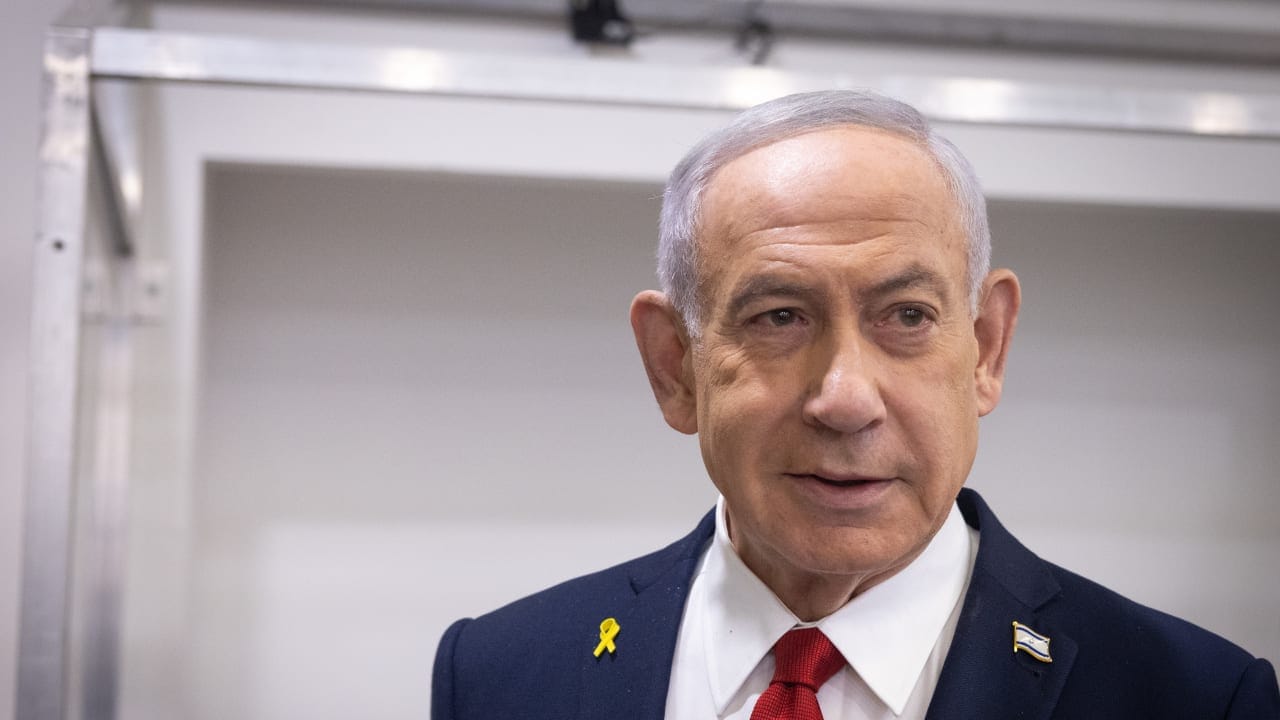
Benjamin Netanyahu’s trial opened on Wednesday with a discussion over the decision of the presiding judges to expand the number of testimonies by the prime minister per week to three from two.
Netanyahu’s defense attorney Amit Hadad said he “sadly” wouldn’t be able to represent the prime minister, while Netanyahu said he is “going above and beyond to make it to these testimonies.”
This follows the court’s decision in September to expand the days of testimony starting in November, citing an urgency to move the case along. This is due to both its complicated and nuanced nature, the fact that it has dragged on for about five years now, and also taking into account the looming retirement of some on the bench.
Netanyahu said his schedule had been chock-full on Tuesday, culminating with a “secret conversation” that was quite significant.
“I went to sleep at around 4 a.m., and woke up two hours later,” he said, underscoring how difficult it is to keep to the court’s schedule and also serve as prime minister – the main issue in this case. The judges were expected to soon issue a final decision on the schedule changes.

Journalists denied opportunity for questions
Separately, in an escalation of matters, the judges decided that Netanyahu would enter the courtroom at the same time as them. This effectively blocks both photographers from capturing him in court, as no photographs or videos can be taken while judges are present in a courtroom, as well as questions by journalists, as, once judges are in the courtroom, no one from the audience is permitted to speak.
The questions can be a mix of provocative and relevant ones, but this is the only forum in which journalists can ask the prime minister questions without the process being controlled by him or his office.
The Administration of the Courts later released a decision by the bench by the panel confirming this order of operations – that Netanyahu would enter at the same time as the judges.
In Case 1000, Netanyahu is on trial for a conflict of interest relating to Arnon Milchan, who was his close friend and confidant while he served as communications minister from 2013 to 2015.
Allegedly, the prime minister received thousands of dollars worth of Champagne and cigars from Milchan and from Australian billionaire James Packer, who was a friend to both. Per the indictment, Netanyahu pushed for legislative and regulatory changes that would have been beneficial to Milchan during that time. The prime minister was charged with fraud and breach of trust.
The testimony on Tuesday included a closed-door session on Netanyahu’s relationship specifically with Packer.
On Wednesday, prosecution attorney Yonatan Tadmor presented Netanyahu with testimony from Hadas Klein, who was both Milchan and Packer’s personal assistant, and had become a state’s attorney. What Tadmor presented theoretically shows preferential treatment that Netanyahu gave Packer.
Netanyahu said he did not remember the meetings that Tadmor referenced.