
The head of the Efrat Council, Dovi Shefler, announced on Sunday that he would not be waiting for Israel’s declarations on the status of the West Bank, and that construction work was already underway to expand Efrat to push for sovereignty in the area.
“We are creating sovereignty on the ground. This is how we actually settle Judea and Samaria and create a reality of de facto sovereignty,” Shefler said.
His comments came in response to US President Donald Trump’s statements to reporters that he would not allow Israel to annex the West Bank. They also arrived amid tensions regarding calls for the official application of Israeli sovereignty in the area.
Shefler landed in the US as part of the Yesha Council delegation, an umbrella organization representing the municipal councils of Jewish settlements in the West Bank.
The heads of the Yesha Council traveled to the US for what they described as an “emergency delegation” on the sovereignty issue, aiming to influence policy before Prime Minister Benjamin Netanyahu’s scheduled meeting with Trump at the White House on Monday.
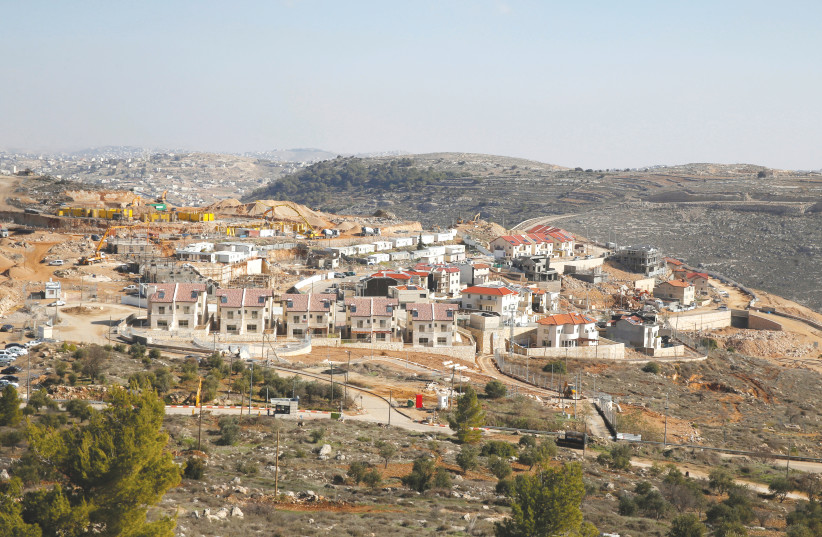
“In Efrat, we are not waiting for the official annexation of Judea and Samaria to the State of Israel,” Shefler said. Instead, he said, “We are practically connecting Efrat to Jerusalem.”
Speaking about the work done in the framework of this expansion, Shefler said that “10 years ago, about 8,000 residents lived here, and in two years, 16,000 residents are expected to live in Efrat.”
“This is our way of creating real sovereignty in Judea and Samaria,” he said.
Shefler also said that the construction plans included “expanding settlement eastward, which will serve as a protective barrier south of Jerusalem and prevent a territorial link between Hebron and Bethlehem.”
At the same time, Shefler stated that, alongside expansion and construction, a formal declaration from the Israeli government was still required.
“Settlement [expansion] creates facts on the ground, but national responsibility requires a clear political move. We expect the Israeli government to apply official sovereignty in Judea and Samaria. This is the necessary step that will formally express what already exists on the ground.”
Efrat is located outside Jerusalem, in the area designated as the West Bank.
During the Oslo Accords signed between Israel and the Palestinian Authority in the 1990s, the territories were split into three different designations: Area A, chiefly Palestinian towns and cities that are under the full security and civilian control of the PA; Area B, which is under Israel’s security control but the Palestinians’ civilian control; and Area C, which is under Israeli security and civilian control.
Pushing for sovereignty in the area
Right-wing ministers have pushed for Israeli sovereignty in the entire area, drawing sharp criticism from leaders of various countries worldwide.
The United Arab Emirates said earlier this month that any annexation of the West Bank would severely undermine the spirit of the Abraham Accords, which are set to normalize relations between the two countries.
Eliav Breuer and Amichai Stein contributed to this report.