
Despite a wide range of contradictory trends, Israel will have a larger influence in the region among Arab states after the Iran war, top Israeli defense sources said on Tuesday.
Among the contradictory trends cited by commentators have been that, at times, the Arab states seemingly want closer ties with Israel, seeing the power they can project by protecting Israel from Iran. At other times, however, the Arab states appear worried about the danger Iran poses or by the idea of Israel emerging as a regional dominator.
These contradictory trends could translate into either expanding the Abraham Accords to countries like Saudi Arabia, viewed as the crown jewel of normalization, or distancing Israel from cultivating further Arab normalization.
Top Israeli defense sources said that the picture would only become clear when the current war fully ends and the dust has settled.
However, these sources also pointed out that the various trends in the region go beyond views of Israel, given the UAE’s exit from the Organization of the Petroleum Exporting Countries (OPEC), which was once an entirely unified and seemingly all-powerful force in the global energy sector.
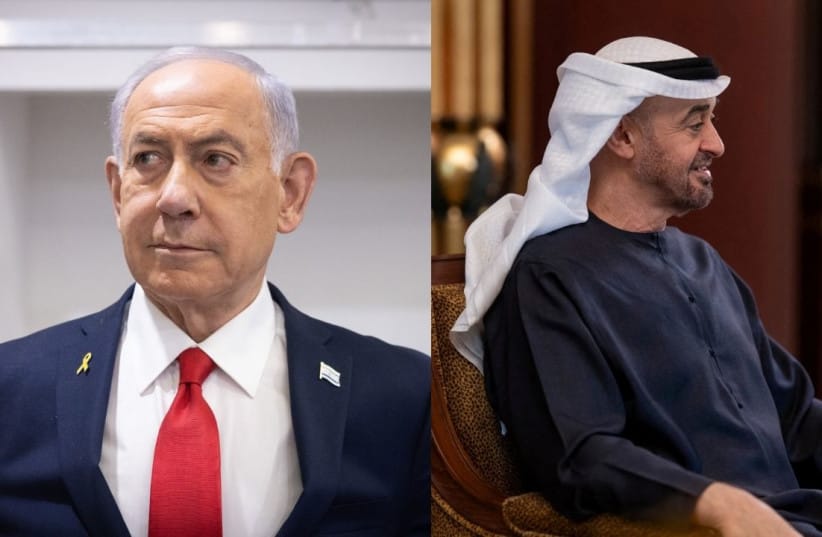
The UAE and the Saudis are now in open conflict on a wide array of issues.
According to sources, this means that they disagree on handling Iran and their economic interests, and that their handling of relations with Israel is just one of many major disagreements on a long list.
Despite these disagreements, the defense sources remained confident that Israel’s influence with Arab countries would grow after the war with Iran, including its defense sales to the region.
Sources also said that there is a clear paradigm shift in how future wars will be fought in the Middle East; most wars are expected take longer, in contrast to the past model of Israel winning quick and short wars.
To address this unique moment, Defense Ministry Director-General Amir Baram has recently made massive investments into developing Israeli weapons independence where possible, including a mix of new technologies and old-fashioned heavy weapons such as tanks, bombs, and bullets.
Baram streamlined the regulatory process around a year ago. He did this to hasten the production of certain items as Israel raced to keep up with the demand for weapons in ongoing wars since October 2023. Baram also approved a surge of foreign workers in defense production installations to speed up and increase production processes.
Amid these trends, Israel managed to break its record for defense sales for yet another successive year, reaching $19.22 billion, compared to $14.79 billion in 2024 and $13.07 billion in 2023.
Israel’s defense sales have increased every year since 2020. Notably, these sales have generally increased over the last decade, other than a couple of dips during the late 2010s.
The over 30% jump in defense sales between 2024 and 2025 came from what defense sources called the IDF’s unprecedented success in proving its weapons’ effectiveness in operations during ongoing wars. These sources also highlighted the country’s unique ecosystem for public and private sector cooperation, which serves to quickly turn new ideas into practical solutions.
Israel rose in defense sales to North America, Asia, Middle East.
Israel rose in defense sales to North America, Asia, and the Middle East. While sales dropped considerably in Europe, defense sources said that this was due to an unusual uptick the year before for the Arrow missile system, as well as a few other large sales. They said that, in comparison to 2023, Israeli sales with Europe remained steady.
Defense sources maintained this stance despite many European countries, especially France, sending mixed signals about their willingness to engage in sales with Israel due to disagreements over the wars in Gaza, Lebanon, and Iran.
This does not mean that Israel is unconcerned about future defense sales, however.
Following Russia’s invasion of Ukraine, Kyiv has become one of the most innovative producers of defense technologies, and is just as battle-proven as Israel in many ways. Furthermore, following Russia’s extended threat to Ukraine and Europe, many European countries have built up their defense sectors and no longer need Israeli weapons.
In some cases, Israeli defense products are superior, but some of these countries may deem their local products as “good enough” and less costly.
Earlier this week, the Defense Ministry accused France of not only partially boycotting Israel’s defense sector due to delegitimization concerns related to war, but also because the French military views Israel as a competitor.
Notably, there was some criticism that the Defense Ministry is not properly managing all of the new funds it has received and is not paying its debts to the Israeli defense sector fast enough. In response, sources said that the ministry received a budget of NIS 143 billion, although they had requested a sum of NIS 173 billion.
This would have created a shortfall in any scenario. And, because the war in Lebanon has continued after the ceasefire with Iran, sources said that all prior budget estimates were wrong, as they presumed that the April 7 ceasefire would end the war with Hezbollah as well.
Instead, Israel is fighting in Lebanon, and has recently initiated operations against top Hamas officials in Gaza, even if that front has not yet deteriorated into a full-blown war.