Nutuk, the drama series about the Druze community airing on Channel 12 on Monday nights, started out strong and is continuing to keep the tension high.
It’s the story of a Druze family whose young son, Daniel, experiences the phenomenon called “nutuk,” where he believes he can remember the person he is the reincarnation of. Educated Druze who are assimilated into mainstream Israeli culture don’t really literally believe in this phenomenon. So his parents, an unemployed hi-tech programmer and a doctor, are dismayed when he begins talking about his previous life. It turns out the man Daniel believes he is the reincarnation of was smuggling amphetamines out of Syria through tunnels, and that he disappeared while out on a drug run.
The smuggler’s family doesn’t know what happened to him, which leaves his wife in limbo, just like an agunah in Jewish tradition. Only this boy knows what happened, if it’s possible to believe that what he thinks he remembers is the truth.
The socially awkward Shin Bet (Israel Security Agency) investigator, played by Oz Zehavi, who is on the trail of the drug gang, is drawn closer to the boy’s orbit when the child’s grandfather, a general in the IDF in line to become chief of staff, becomes concerned about Daniel and begins asking questions. Meanwhile, the Shin Bet investigator begins looking into the drug-smuggling family, who live in the Golan Heights, and it turns out they feel strong loyalty to the Syrian government. There are a lot of twists here, and if you missed the earlier episodes, it would be best to see them on mako.co.il before jumping in the later episodes. People are talking about this show – on Eretz Nehederet, the Syrian president asked President Donald Trump about it while he was visiting the White House – and I can easily see it being sold to an international streaming service.
'Ramat Aviv Gimmel'
If you'd like to see an Israeli series but want something a little lighter, try Ramat Aviv Gimmel, Israel’s iconic nighttime soap from the late 90s, which is showing on the Israeli Channel on Yes TV in the early evenings. The creators had clearly seen more than a few episodes of Melrose Place, its obvious inspiration, and the real fun is seeing actors who have gone on to long careers in their early roles, among them Yael Bar Zohar, as the pampered rich girl at the heart of the series. Noa Tishby, who is now best known for her pro-Israel advocacy, appeared as a fashion designer who gets involved with various men, and it’s fun to see her play a sometimes devious heartbreaker.
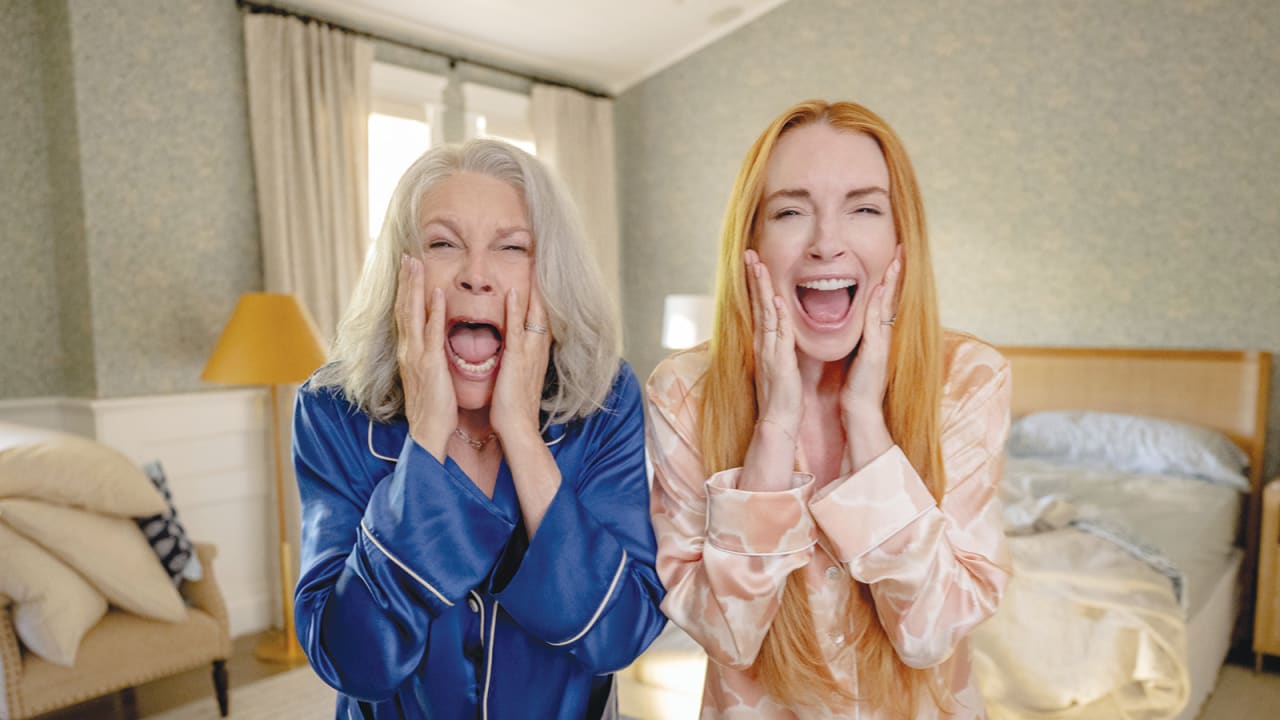
If you missed Freakier Friday when it was in theaters this summer, you can now catch up with it on Disney+, and it’s worth watching. When I heard the news about the sequel, I was concerned it would be the usual anemic follow-up, just an excuse to cash in on the previous hit. But it’s been reworked well, and Lindsay Lohan and especially Jamie Lee Curtis shine as older versions of the characters they played in the 2003 Freaky Friday, which was a remake of the 1976 version, which starred Jodie Foster as the daughter.
Freakier Friday is more complicated and a bit less involving than its predecessor, which was squarely focused on a mother and daughter getting to understand each other and actually creates a four-way place swap. Tess (Jamie Lee Curtis) is still a therapist, but she’s become a parenting podcaster. Anna (Lindsay Lohan), now a talent manager who has abandoned her adorable high-school band to work for other musicians, is raising her own daughter, Harper (Julia Butters, who was in The Fabelmans), a rebellious surfer.
Meanwhile, Anna has a new man in her life, Eric (Manny Jacinto), a London restaurateur in Los Angeles to open a new restaurant, who has a fashionista daughter, Lily (Sophia Hammons), with whom Harper doesn’t get along. Anna is contemplating uprooting Harper and moving to London with Eric and Lily. When the switch comes, courtesy of a typically theatrical movie psychic, Anna and Harper switch bodies, replicating the mother-daughter switch in the first film. The other switch, which is the most audacious choice the movie makes, is Tess and Lily switching places, and you can bet a teen girl is not too thrilled to suddenly be 60-something. Tess, on the other hand, loves every minute of being back in a flexible body. Predictably, Curtis steals the show, as she did in the 2003 film, and the scenes where she is reunited with Jake (Chad Michael Murray), the heartthrob who fell for her in the first movie, are the highlight. The two Freaky Friday movies can be seen on Disney+ as well.

The new show people are talking about most these days is Pluribus on Apple TV. I can’t remember when a show received such uniformly rapturous reviews, part of which I think can be attributed to the fact that it was created by Vince Gilligan, the writer/producer behind Breaking Bad and Better Call Saul.
The series has a very out-there premise, which is that signals or a code or a chemical – it’s not clear which, and it doesn’t really matter – sent to Earth suddenly turn everyone on the planet totally blissful. They are so full of warmth, they are completely united, and there is no conflict or violence on Earth, but there’s nothing interesting happening. They are just sort of smiley zombies. A handful of people – 12, according to the early episodes – are immune to whatever changed everyone else, and the heroine, Carol (Rhea Seehorn), a cranky romance novelist who feels what she writes is “mindless crap,” is one of these. The series is about her struggle to save humanity from this weird new syndrome, the bland leading the bland.
It’s certainly a striking idea, but in practice, it isn’t nearly as interesting as it is on paper. The show is incredibly slow-paced, with awkward dialogue that makes its points over and over. It plays like a combination of Invasion of the Body Snatchers (any version) and a largely forgotten 1968 comedy called What’s So Bad About Feeling Good? starring George Peppard and Mary Tyler Moore. In that movie, a toucan spreads a virus in New York that makes everyone joyful, and Peppard and Moore are a hippie couple given to pessimism about the world who create awful performance art and whose lives are transformed for the better once they get infected. It’s all very silly, but I think it was meant to comment on the possibility of what a joyful world would be like in similar ways to Pluribus. The difference is that it’s much more entertaining. Pluribus wants to tell us that being anxious, doubtful, discontented, and selfish is what makes us human, and that taking it all away would destroy us.
If you can understand that message already, you might want to skip the series.