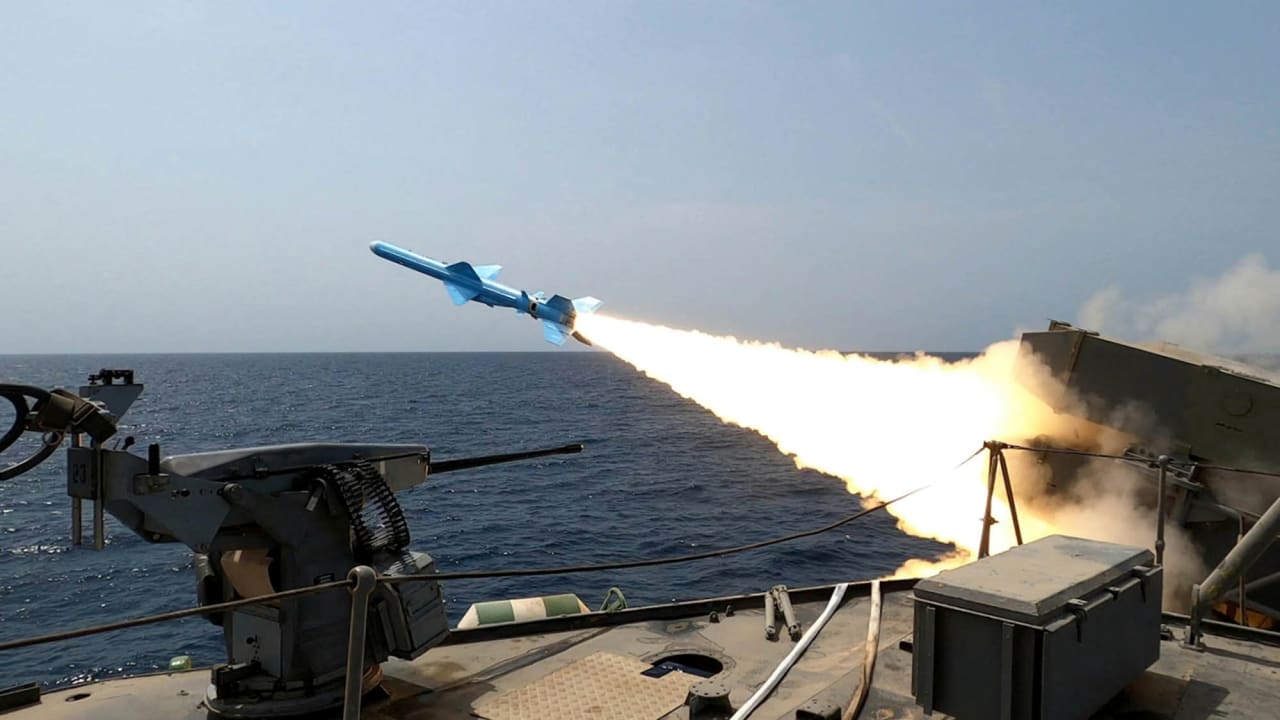
‘War,” says Prof. Jonathan Rynhold, “changes everything.” He speaks after the 12-Day War with Iran, a conflict that tested Israel’s military resilience and reshaped its diplomatic landscape.
Rynhold – head of Bar-Ilan University’s Department of Political Science, academic head of the Jonathan Sacks Institute, and prominent researcher at the Begin-Sadat Center for Strategic Studies (BESA) – sees Israel at a turning point. However, he emphasizes that the battlefield story cannot be understood without also considering the political dimension.

This duality explains why his colleague Prof. Eitan Shamir, head of BESA, views the war from a different perspective. “We faced a barrage of missiles, some lethal,” Shamir notes. “The lower civilian casualties were due to the population’s resilience, making a difference.” For him, the conflict highlighted both Israel’s vulnerabilities and strengths: “Investments in shelters, safe rooms, and missile defenses were essential. They were not just luxuries; they saved lives.”
Rynhold concurs but turns the focus on Washington. “With significant shifts in US policy during President Trump’s second term, Israel faces both opportunities and uncertainties regarding its conflict with Iran and the broader region,” he comments.

Many Israelis saw Trump’s support for direct strikes on Iran as an unprecedented show of solidarity. However, Rynhold urges caution. “No American president constantly considers Israel. They perceive it through the lens of America’s global interests.”
Read more >> https://besacenter.org/wp-content/uploads/2025/90902/index.html
This view is crucial for understanding Trump’s approach, which Rynhold describes as “belligerent isolationism.” It’s a doctrine that employs overwhelming force to deter or preempt threats to the US homeland, while avoiding costly commitments to allies. “If anyone attacks the US or its citizens, you respond with overwhelming force,” he explains. “But American lives and resources are not to be spent defending allies unless it directly concerns the homeland.”
According to that reasoning, an attack on a Saudi oil refinery caused no response, yet the killing of a single American contractor resulted in severe retaliation. What changed with Iran was intelligence indicating that Tehran might soon develop intercontinental missiles capable of reaching the US. “That meant it wasn’t just about Israel anymore,” Rynhold explains: “It was about America itself.”
Israeli operational success, he adds, also played a crucial role in dictating whether the US intervenes or not. “We disabled their air defenses, provided the intelligence, and supported the operation so American pilots weren’t at real risk,” Rynhold notes. “That made it easier for Trump. He could claim it was 100% successful and avoid escalation.”

Meanwhile, Shamir views the same conflict as proof of Israel’s ingenuity, but also its limitations.
“Israel finds it very hard to sustain such a major conflict with a regional power like Iran for long,” he warns. “It requires resources Israel may lack, so we must plan for short wars.” This dependence stands as evidence for the importance of alliances. “The critical need for support from great powers – the United States, of course – was proven beyond doubt.”
Read more >> https://besacenter.org/wp-content/uploads/2025/90902/index.html
BOTH EXPERTS agree: The alliance with America is vital, but its future isn’t guaranteed. Israel’s current $3.8 billion aid package expires in 2028, and Rynhold doubts another will be easily obtained. “MAGA Republicans don’t favor foreign aid, even for Israel. And among Democrats, at least half are now adversarial. That makes securing another deal very challenging,” he warns. So how can Israel restore the broad support it once had in Washington? Rynhold sees diplomacy as the key.
“If the world advocates for two states and you remain silent, then you will be judged accordingly.” He suggests a cautious approach: willingness to compromise with strict conditions on demilitarization and reform. “While the conditions can be demanding, you must put something on the table.”
Shamir echoes the importance of regional engagement, stating, “The way forward is to isolate Iran, and that means regional alliances.” He adds, “Israel must continue its military buildup but also focus on normalization and cooperation with moderate countries.”
Both men highlight that the struggle extends beyond battles and negotiations. Rynhold points out the significance of information warfare: “Muslim and Arab demographics influence American politics, even if they don’t reside here. This impacts how Israel is perceived, requiring us to rethink our approach in that space.”
Their insights lead to the same conclusion: The 12-Day War created a window, but Israel’s actions will shape the next decade. The Begin-Sadat Center for Strategic Studies calls this period “Israel’s new strategic opening.”
Rynhold warns and commits, saying, “The weapons and diplomatic support from America remain vital, but tactically we need more flexibility. And diplomatically, we must rebuild bipartisan support or risk losing our strategic edge.”
Shamir anticipates future conflicts, noting, “There will always be another round, and both sides are preparing. The question is whether Israel will be stronger then.”
Both acknowledge the scale of the challenge but believe that Israel can meet it. Rynhold concludes optimistically, “Long-term challenges are ahead, but Israel has thrived facing long odds. We must not rest on past achievements.”
Read more >> https://besacenter.org/wp-content/uploads/2025/90902/index.html
This article was written in cooperation with Bar-Ilan University.