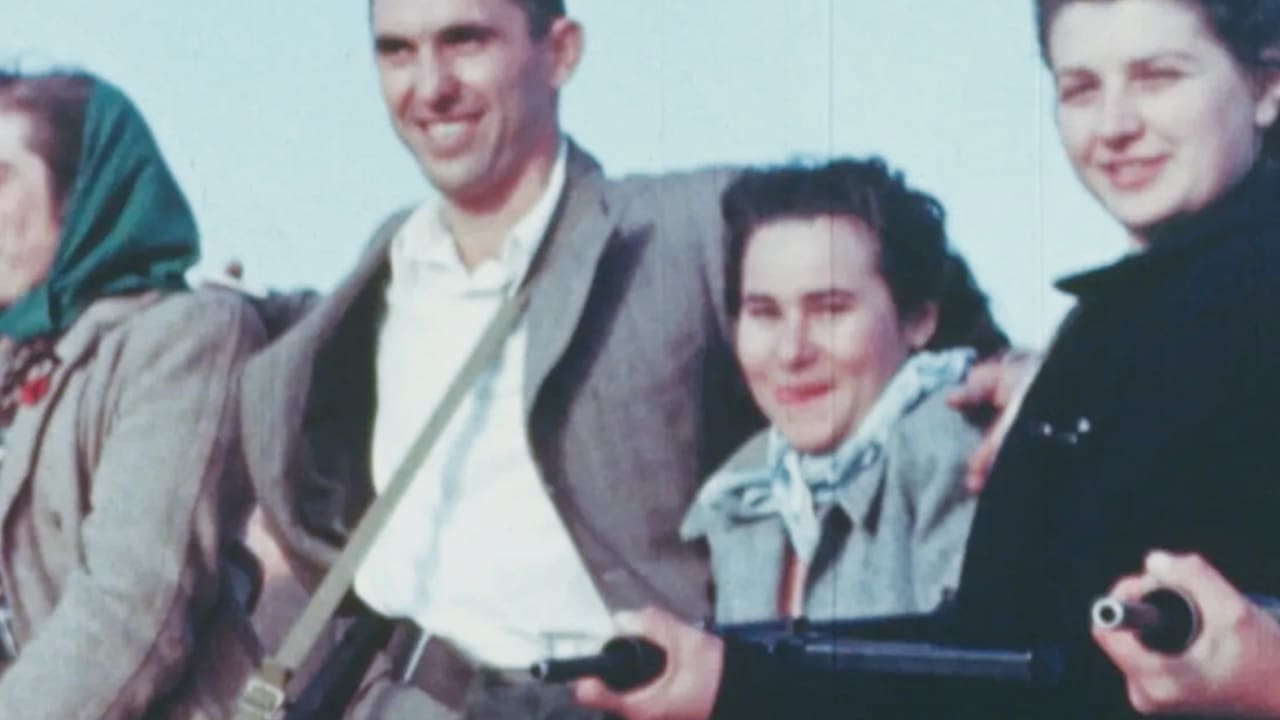
Neta Shoshani’s two-part documentary series 1948 – Remember, Remember Not, is available now on KAN 11 (kan.org.il) and has been the focus of considerable controversy. Shlomo Karhi, the communications minister, actually said that he would cut funding from KAN, Israel’s public broadcaster, if it aired this series about the War of Independence.
The Film Review Council also tried to stop screenings of it in 2024, after it premiered at the 2023 Docaviv Festival.
What has raised hackles is that it looks at the run-up to the war and the war itself from both Israeli and Palestinian perspectives, looking at casualties and killings on both sides, supported by testimonies from both Jews and Arabs and rare archival footage, much of which has never been screened in public before.
The first part looks at the war, and while we all know how that war ended, many of us do not know a great deal about how it began, or even what happened during the course of it, other than a few famous battles.
The second part looks at researchers, archivists, and members of the unit for finding missing soldiers, who are still searching for those who fell on the battlefield and have never been found. There is a great deal reported in this densely packed series, and what Karhi and others have mainly objected to are Arab accusations of atrocities by Jewish soldiers.

In a case like this, it’s important to watch the series rather than judging it based on statements by a government official, so you can make up your own mind about the controversial sections. I found the testimonies of those who fought the war moving, and some of the sections from their letters reminded me of Avi Nesher’s film Image of Victory, which is available on Netflix, about the fight for a kibbutz near the Egyptian border.
Re-watching Redford's hits
I hope soon the cinematheques will feature tributes to Robert Redford, arguably the last movie superstar, who passed away earlier this week, because his megawatt charisma and incredible good looks are best seen on the big screen. But until then, there are some small-screen options available if you want to reacquaint yourself with Redford’s movies, or watch them for the first time.
Although he was already a star when he made Butch Cassidy and the Sundance Kid in 1969, which is available on Disney+ and Apple TV+, this was something of a breakout role for him. In some of his early leading-man roles, he had been rather stiff, but here he relaxed and owned the screen, finding his greatest on-screen partner in Paul Newman.
The movie is one of the best caper-bromances-Westerns ever. As the master gunman and bank robber, the Sundance Kid, he was cool and confident, tossing off quips in the midst of all kinds of adventures. The dialogue by William Goldman was perfectly suited to Redford’s deadpan delivery.
Redford was reteamed with Newman a few years later in another caper film, The Sting, about con men in the 1930s, and this film is on Apple TV+. The Sting is a bit cutesier, and what people remember from it are the winks and jokes. But it’s still fun.
Most of Redford’s biggest hits are on Apple TV+, including the opposites-attract romance The Way We Were (1973) with Barbra Streisand, a period drama set in the 1930s. Everyone recalls the famous theme song and the close-ups of the actors looking at each other longingly, but it also features some surprisingly sophisticated political dialogue about isolationism and Stalinism. You can also see The Great Gatsby, Out of Africa, Indecent Proposal (in which Demi Moore does the most challenging acting of her career, pretending not to enjoy going to bed with Redford), the prison drama Brubaker, and many others.
Netflix has two of Redford’s most recent films. One is The Discovery, a rather forgettable movie about a scientist who proves there is an afterlife, which leads to a rash of suicides. The other, Our Souls at Night, re-teams him with his Barefoot in the Park and The Electric Horseman co-star Jane Fonda, and it’s a touching drama about a widower and a widow who find solace with each other.
The entire first season of Outrageous, the series about the Mitford family, which is running on Hot and Yes, has been released to the press, and we finally got to see how it handles the issue of how Unity (Shannon Watson) falls in love with Adolf Hitler (Paul Giddings).
Towards the end of the season, this sheltered British young woman heads to Munich to study and, enamored of the Führer’s charisma and rhetoric, stalks him like a groupie. He is seen only from a distance, or simply as a figure walking by. It’s as hard for the audience to understand why she is so crazy about him as it is for her sisters, but the script indicates that she always went to extremes and was the most eccentric member of an extremely eccentric clan. (This is not noted in the series, but the Mitfords’ father claimed he had only read one book his entire life, Jack London’s White Fang, because he thought it was so good that there was no point in ever reading anything else.)
The final episodes of the first season also detail the deepening relationship between Diana Mitford (Joanna Vanderham) and British fascist leader Oswald Mosley (Joshua Sasse), but as in the earlier sections, he comes off as no worse than any womanizing, blowhard politician.
I watched and enjoyed all of Outrageous, and after seeing the entire season, I still feel that it plays like a cross between Brideshead Revisited and a Wes Anderson movie. That’s good in that it’s entertaining, but it’s upsetting that very little weight is given to Hitler’s antisemitism and Mosley’s fascist politics.
I fear young audiences will have no clue as to why the rest of the Mitford family so disapproves of Unity and Diana’s literal embrace of fascist leaders. The last episode ends in the mid-1930s, so perhaps the second season will make clear how destructive Nazism and fascism were, as The Crown did so skillfully.