
On Oct. 7, 2023, life in Israel changed forever. Since that date, almost 22 months ago, Israel has been at war on seven fronts. From the brutal Hamas massacre on Simchat Torah, to Hezbollah’s missile attacks on Israel’s North; from the ballistic missiles fired from Yemen to the 12-day war with Iran, Israel has confronted challenges that few nations have ever had to face.
The UJA-Federation of New York has a long history of supporting Jewish communities worldwide. But since the harrowing events that began on Oct. 7 and have continued until now, the organization has mobilized at an unprecedented scale, leading significant initiatives to support communities in northern and southern Israel, and leading efforts to assist the survivors of the Nova music festival, attended by Israel’s tight-knit music festival community that was brutally disrupted by violence.
“We’ve become perhaps the largest philanthropic supporter of the Nova community,” Gabriel Sod, UJA director of government relations, said, emphasizing that addressing survivors’ immediate and long-term needs has been a top priority for the UJA. This support, which began with emergency funding, has evolved to include ongoing assistance for mental health and reintegration programs.
“We are one family, and they should never feel alone,” said UJA CEO Eric Goldstein. “For us, these are not words or a slogan. It’s a core belief that has guided our work from the earliest hours of the war. That’s why, well beyond our financial support, UJA and the families of the victims have become one united community.”

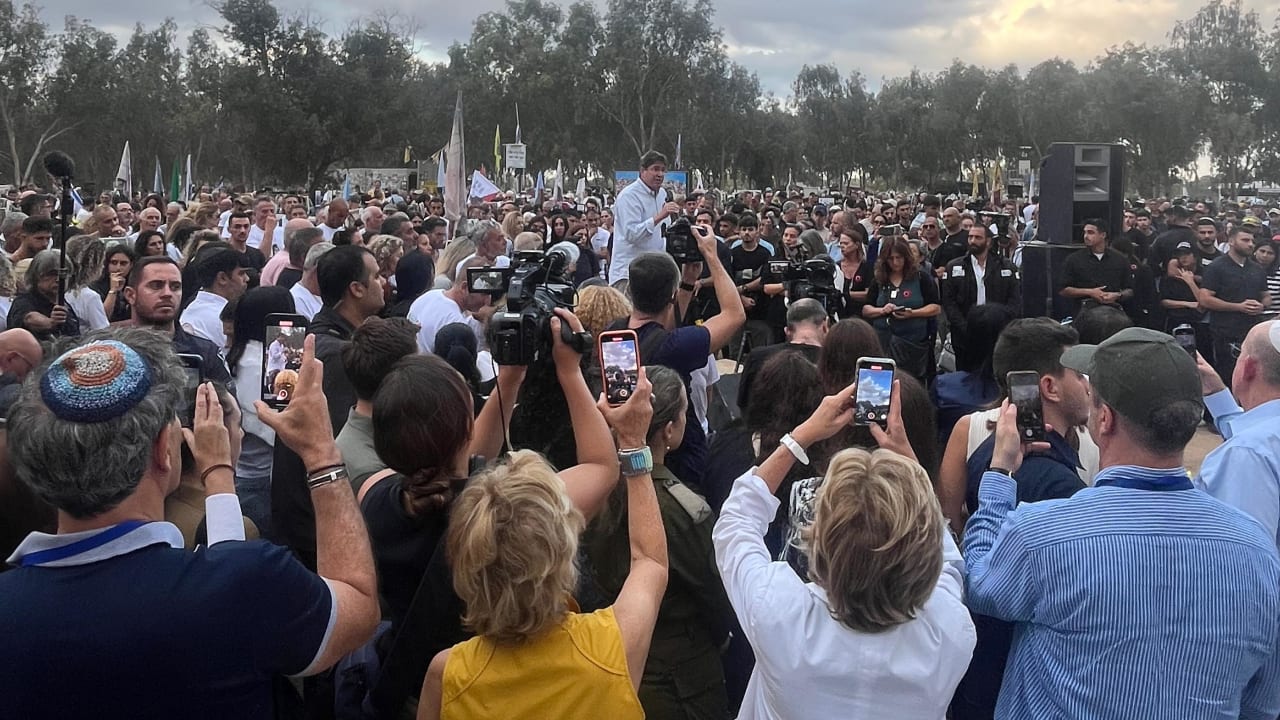
Last year, during the first-anniversary commemoration for the families of the Nova victims in Re’im, where the Festival was held, Goldstein was honored to deliver a heartfelt eulogy and a message of solidarity on behalf of American Jewry.
“Standing before the grieving family members on the morning of Oct. 7, 2024 – one year later – I felt the full weight of our responsibility,” Goldstein said. “In that raw moment of collective heartache, I wanted to convey the depth of our solidarity – to make clear that their extraordinary sacrifice will never be forgotten.”
When asked about the unique challenges Nova survivors face, Sod recounted: “At first, we saw a lot of people wanting to help, but not many knew how to address such complex trauma.”

That’s when SafeHeart stepped in – an organization that offers mental health resources for those who have faced traumatic experiences.
“The founders of SafeHeart already had experience before the war, working with trauma related to large events, especially where [narcotic] substances might have played a role,” Sod explained. “They realized that the Nova survivors needed a unique support system, and they came to us with this idea.”
The UJA’s backing provided SafeHeart with crucial resources to expand and adapt its mental health services for the Nova survivors. With UJA’s guidance, the organization could develop innovative treatment systems explicitly tailored for survivors, such as phone counseling and free therapy sessions.
Sod described the initiative as “a smart project led by the best trauma experts in the country, who understand the importance of specialized care.” SafeHeart’s ability to connect survivors with therapists attuned to their experiences has made it a vital part of the Nova community’s recovery.
Among UJA’s most innovative contributions is Adama Tova, a therapeutic farm that offers a peaceful environment for survivors. The farm, supported by UJA, brings together those who share the pain of loss, offering a refuge where they can heal at their own pace. It is a testament to UJA’s vision for holistic support, where psychological and emotional recovery are equally prioritized.
UJA’s focus has extended beyond the immediate. Over the past year, it has collaborated closely with organizations emerging to help the Nova community since the tragedy. As Sod described it, “Since the outset of the war, we’ve been dedicated to supporting these organizations from their very inception, providing them with seed funding and fostering innovation.”
“We’ve always believed in seeding grassroots movements,” Goldstein noted. “After Oct. 7, we activated our networks to help these groups build meaningful, long-lasting foundations. This ensures that they can continue to serve the community as needs evolve.”
One such partnership is with Tribe of Nova, an NGO founded by Nova party producers to coordinate survivor support. Tribe of Nova has become an anchor in the community. UJA’s substantial financial backing has enabled it to reach a greater number of people in a more meaningful way. “We believe in helping these organizations not only in their infancy but also as they develop into structured, impactful entities,” Sod said. “Our work with Tribe of Nova is proof of this commitment.”
UJA’s support extends beyond individual survivors. It has extended its resources to the families lost or affected by the attack. “Whether it’s bereaved families or those of survivors, it’s a journey toward recovery,” Sod said. “We accompany this process from beginning to end, and beyond.”
UJA is also working in partnership with Israel’s Welfare and Social Affairs Ministry, ensuring a networked approach to survivor support that fills any gaps. “We’re committed to leaving no one behind,” Sod asserted. “This is our purpose, and we’ll see it through as long as it’s needed.”
UJA has focused on reintegration and societal contributions as survivors and their families rebuild their lives. Its support for Israel’s Nova community is ongoing, and Sod is hopeful about the future; but he acknowledges that recovery is a long process. “The wounds are fresh, and while we are helping to create pathways for recovery, it will take time,” he said. “Our goal is to provide the means to move forward.”
Reflecting on the formidable efforts of UJA and its donors, Sod concluded, “The Nova community has faced unimaginable trauma, but they are not alone. UJA is here for them, just as we have always been here for Jewish communities in times of need.”
“From the Nova House to psychological care, our work is to help entire communities heal and thrive,” Goldstein added. “This isn’t a one-time response – it’s a commitment we will carry through the weeks, months, and years ahead.”
This article was written in cooperation with UJA-Federation of New York