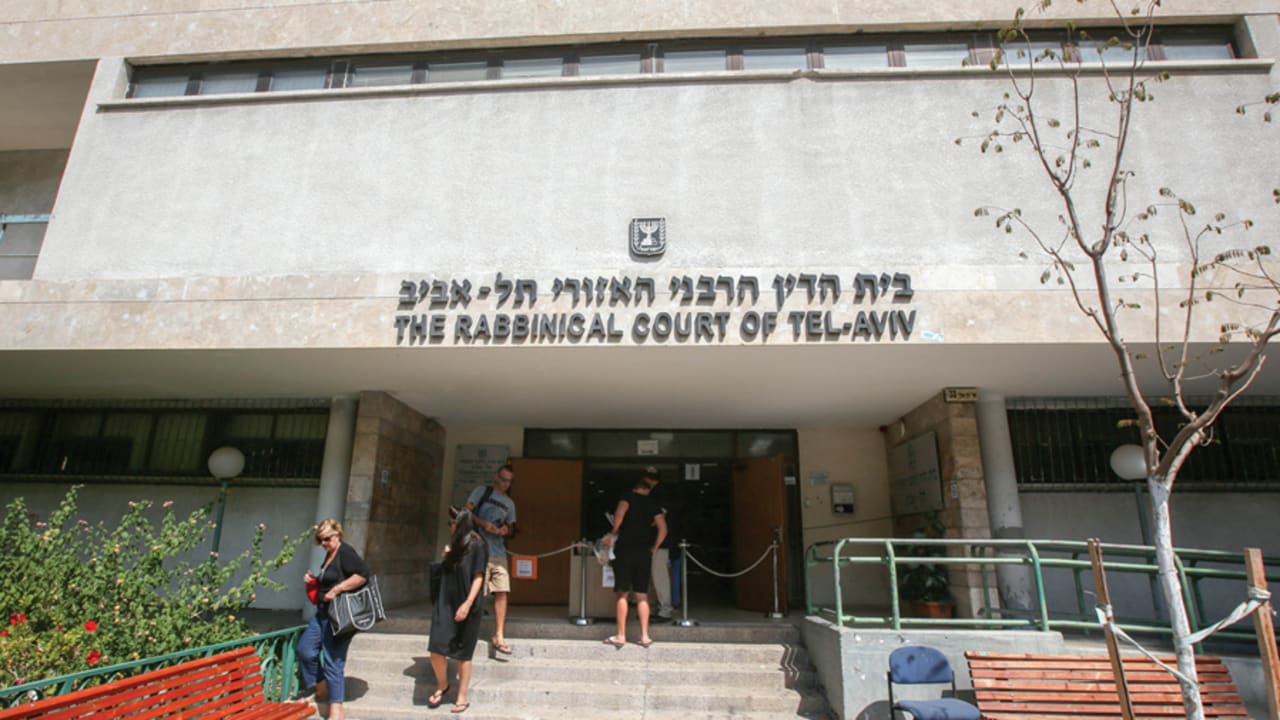
The Tel Aviv District Court on Sunday sentenced Ibrahim Shalhoub, 29, from the West Bank city of Tulkarm, to life imprisonment for the murder of Ludmila Lipovsky, an 83-year-old woman who was stabbed to death i in Herzliya in December 2024.
Shalhoub pleaded guilty and was convicted of murder under aggravated circumstances as an act of terrorism, as well as unlawful possession of a knife. The court also ordered him to pay the maximum compensation permitted by law – NIS 258,000 – to Lipovsky’s family.
According to the indictment and court findings, the attack took place on December 27, 2024, near a commercial area adjacent to an assisted-living complex in Herzliya.
Shalhoub armed himself with a knife and attacked Lipovsky at close range, stabbing her approximately 11 times. She later died of her wounds. Shalhoub was shot by security personnel and apprehended at the scene.

Shalhoub had been living in Israel after being relocated from the West Bank following the exposure of his past cooperation with Israeli security authorities. The court noted that he was living in Israel lawfully when he carried out the attack.
'Exceptionally brutal' act of terror against defenseless woman
In its sentencing decision, the court described the killing as an exceptionally brutal act of terror carried out against a defenseless elderly woman. Senior Judge Yaron Levy wrote that the offense gravely violated protected social values and was intended to terrorize the civilian population.
The ruling emphasized that the attack was committed during wartime, when Israel’s home front was under sustained threat. The court cited the broader social harm caused by such attacks, noting that beyond the murder itself, the act conveyed a message that no civilian or public space is safe.
During sentencing arguments, the prosecution sought a life sentence, stressing the severity of the attack and its timing. Prosecutor Hadas Forer Gafni told the court that the murder was carried out at a moment of heightened national anxiety, when Israel was facing attacks on multiple fronts.
“The horrifying murder was committed during a war, when fears are at their peak, and the state is under attack from every direction,” the prosecution said. “A terror attack of this kind in the heart of Herzliya is all the more severe.”
The court rejected defense arguments for leniency, finding no mitigating circumstances that could reduce Shalhoub’s culpability. In addition to the life sentence, the judges stressed the importance of deterrence and of imposing the harshest punishment available under Israeli law in cases of terror murder.
The sentence was handed down on Sunday, bringing the criminal proceedings to a close just over a year after the stabbing, which shocked residents of Herzliya and renewed public focus on lone-actor attacks carried out by individuals legally present inside Israel.
Mathilda Heller and Sam Halpern contributed to this report.