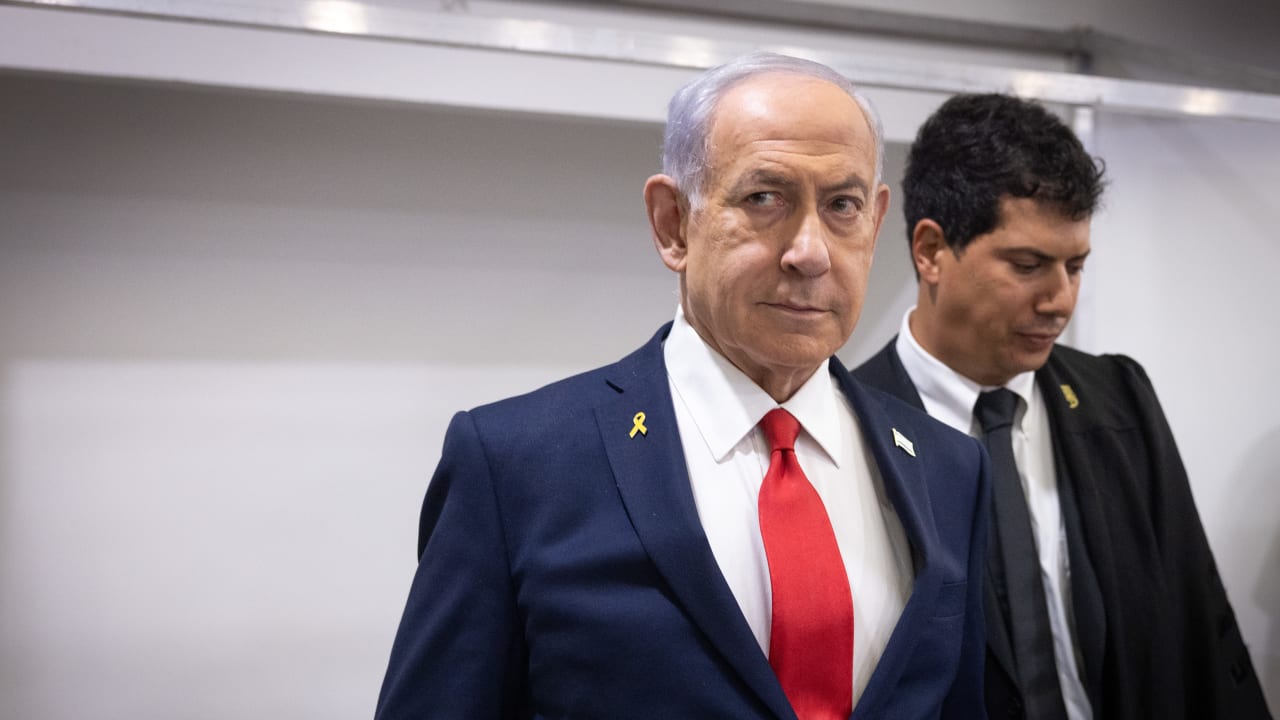
The criminal trial of Prime Minister Benjamin Netanyahu resumed Monday morning at the Tel Aviv District Court, with the premier requesting that the hearing conclude two hours early to allow him to attend a scheduled 40 Signatures debate in the Knesset.
The presiding judges, Rivka Friedman-Feldman, Moshe Bar-Am, and Oded Shaham, granted the request, setting the end of proceedings for 2:00 p.m. Cross-examination by prosecutor Yehudit Tirosh continued in Case 4000, also known as the Bezeq-Walla affair, which remained at the center of the day’s testimony.
Case 4000 concerns allegations that Netanyahu, while serving as communications minister, granted regulatory benefits worth hundreds of millions of shekels to Bezeq’s controlling shareholder at the time, Shaul Elovitch, in exchange for favorable and interventionist coverage of himself and his family on the Walla news website, then owned by Elovitch.
The prosecution alleges a quid pro quo amounting to bribery, fraud, and breach of trust. Netanyahu denies the charges, maintaining that regulatory decisions were professional and lawful and that Walla’s coverage was often hostile.
During the hearing, Tirosh pressed Netanyahu on what the prosecution describes as Walla’s repeated “responsiveness” to requests conveyed by Netanyahu, his family members, and aides – a pattern that, according to the indictment, went beyond routine media relations.

Netanyahu rejected the characterization, reiterating that he viewed the site as “super-hostile,” particularly in the run-up to the 2015 elections.
Tirosh confronted Netanyahu with phone records and prior police testimony in which he stated that he had severed contact with Elovitch after the 2015 elections. She noted that call logs showed continued contact in the weeks and months that followed, extending into 2016. “It does not make sense that you called three times,” Tirosh told Netanyahu, arguing that the frequency of the calls contradicted his claim of disengagement.
Netanyahu responded that his earlier statements were misunderstood, saying the relationship had weakened rather than been completely cut off.
He attributed renewed contact to pressure from then-spokesman Nir Hefetz during the election period, insisting that the interactions reflected disappointment with Walla’s coverage rather than an expectation of favorable treatment. “I wanted one thing – that the site change,” Netanyahu said, adding that when that failed to happen, discussions increasingly turned to Elovitch potentially selling the outlet.
The prosecution also questioned Netanyahu about alleged involvement in discussions over editorial appointments and personnel changes at Walla.
Tirosh cited testimony and correspondence suggesting that requests were made to replace editors or reporters perceived as hostile.
Netanyahu denied directing specific appointments, saying he spoke only in general terms about changing “the DNA” of the site and arguing that calls for greater ideological diversity in the media were part of a broader democratic debate, not tied to regulatory action.
Throughout the exchange, Netanyahu repeatedly rejected any linkage between media coverage and regulatory decisions, insisting he never conditioned government action on editorial treatment.
Tirosh countered that the evidence presented by the state showed a sustained effort to influence coverage while Netanyahu held regulatory authority over Bezeq.
Netanyahu reiterated his need to depart the court early due to his parliamentary duties. The 40 Signatures debate scheduled for later on Monday was set to focus on violence in Arab society. The trial is set to continue later this week.