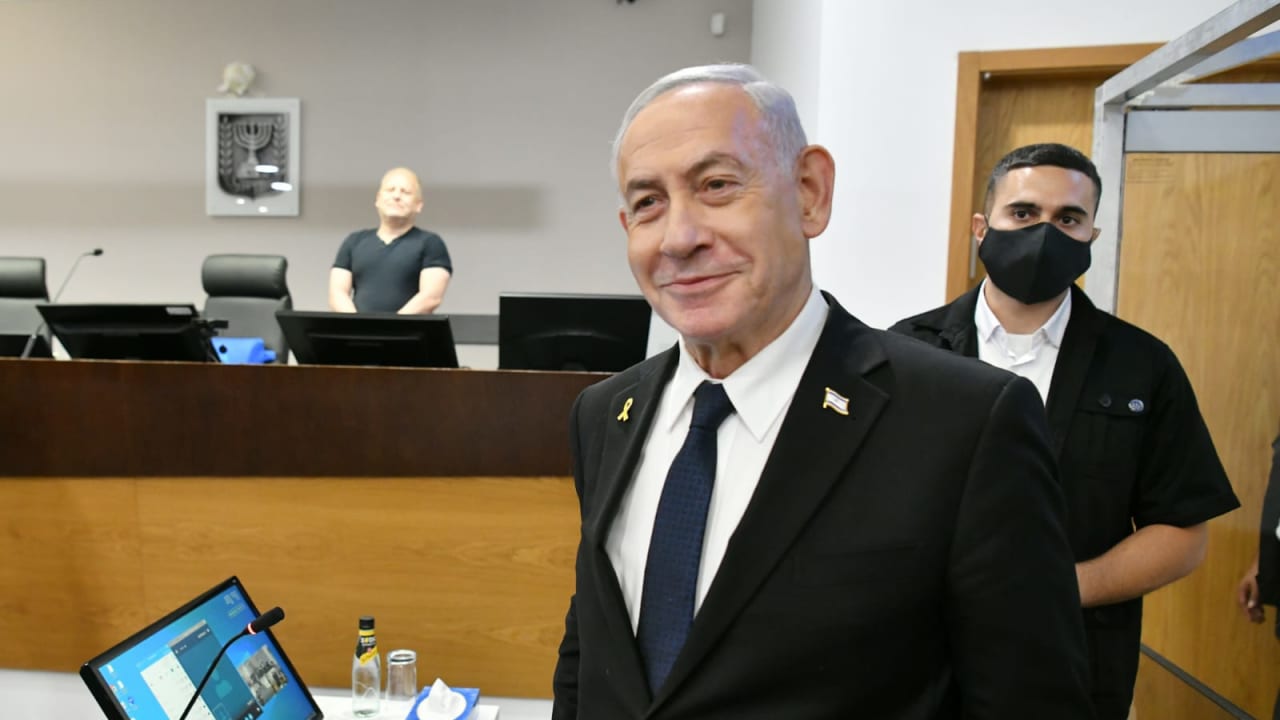
Prime Minister Benjamin Netanyahu denied the suggestion by the prosecution in his criminal trial testimony hearing on Monday that billionaire Arnon Milchan and Indian business mogul Ratan Tata had high expectations for profit in a business venture for a joint Israel-Palestinian-Jordanian industrial zone in 2009.
The hearings resumed on Monday after a near-month hiatus due to the strikes in Iran and the prime minister’s diplomatic trip to the United States.
Netanyahu is on trial in three cases and has pleaded not guilty to all of them.
The case in focus on Monday was Case 1000, which examines his long-time friendship with the billionaire Hollywood producer.
The prime minister is on trial for advancing legislation favorable to Milchan while receiving gifts from him in the form of cigars and champagne worth thousands of shekels. He was charged with fraud and breach-of-trust.

The concept of the venture was to manufacture different kinds of vehicles for sale to neighboring Arab countries, in an effort directed at local economic cooperation.
Tata was slated to be a key investor alongside Milchan, and Netanyahu, too, supported the venture.
Tensions ran high in the courtroom on Monday.
Netanyahu attacked Tadmor personally, calling his worldview “narrow” and “cynical,” and charging that he was unable to understand the bigger picture of these business deals, rife with the larger goals of regional peace and prosperity. The prime minister said that was how he understood it.
Tadmor insisted that, at the end of the day, those were business dealings, the goals of which are to make money, outlining his thesis.
Questioned by Tadmor, Netanyahu confirmed that Milchan had strong connections with world leaders and Israeli leaders, and that he saw himself as a “proponent of peace.”
Tadmor tried to push the thesis that Milchan was close to many political leaders. Netanyahu responded by insisting that the relationship he and his family had with Milchan and his family was “unique, deep, and personal,” unlike others.
Netanyahu's friendship with Milchan was presented as deeply personal
What this does for Netanyahu is to eclipse what the indictment claims he did, by presenting the friendship as deeply personal and that political considerations were not a factor.
The prime minister denied the proposition by Tadmor that his relationship with Milchan strengthened specifically while he was finance minister from 2003 and 2005, insisting that the friendship started back in 1999 and remains strong and steady.
What Tadmor did was present several examples of approaches by Milchan to his good friend Netanyahu on issues pertaining specifically to his business ventures.
Examples include his investment interests in Channel 10 and laws surrounding competition of other media groups, along with requests by senior figures, including former Netanyahu aide-turned state’s witness Nir Hefetz, to recommend them to key positions.
One of the examples the prosecution raised was Tata and a proposal for trade reforms in the Jordan Valley area. Tadmor here presented transcripts from Netanyahu’s police interrogations which purportedly reveal the financial elements of the proposal. Tadmor pointed out that this didn’t line up with Netanyahu’s main testimony, in which he said that the initiative was philanthropic.
Netanyahu denied any knowledge of conversations between Milchan and Tata on their personal business plans, and he charged at the prosecution that it was getting stuck on small things that he hadn’t concerned him at the time.
“The only thing I was concerned about was what they could do for the country? That’s it,” he said.