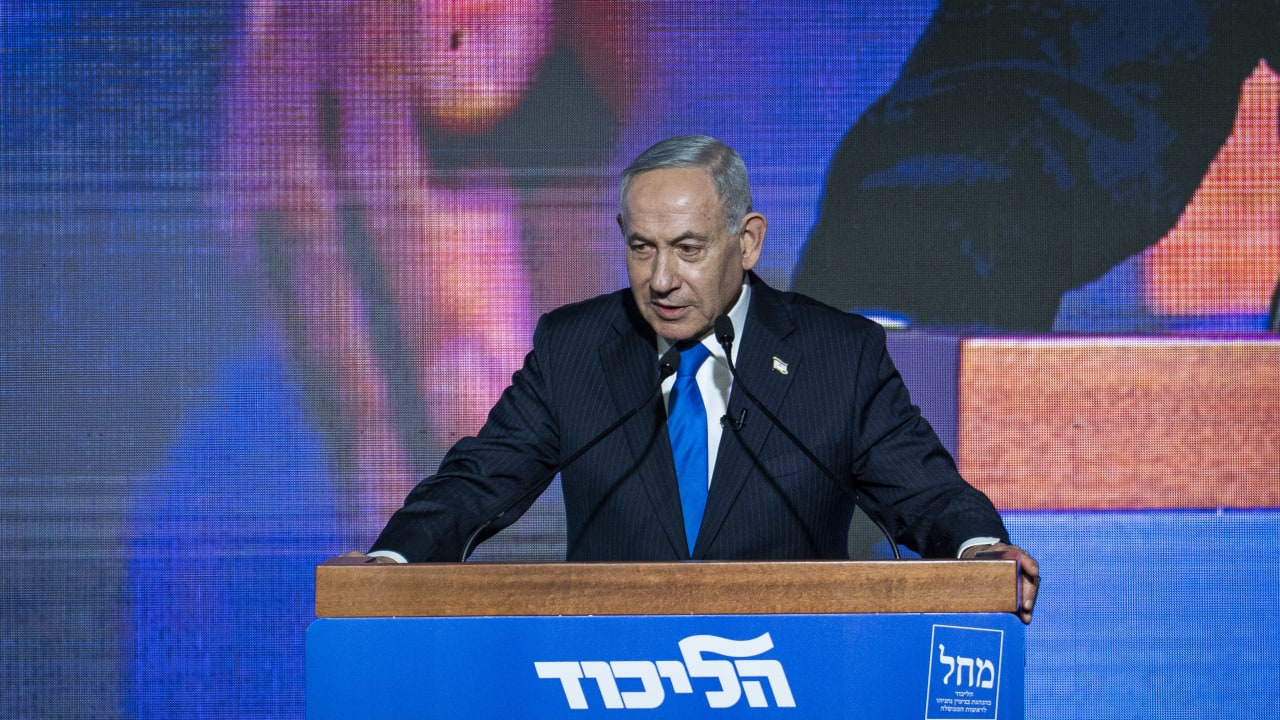
All signs indicate that Prime Minister Benjamin Netanyahu will not legally contest the findings of the Case 3000 Submarine Affair state inquiry, which issued him an interim warning in 2024 that his actions had endangered national security and Israel’s foreign relations.
The affair refers to multiple spin-off issues, but it broadly involves questions of whether the submarine and other naval vessels were necessary purchases, whether the processes leading to their purchases were above board or harmed national security, and whether some actors involved in the sales conspired in a bribery scheme to skim money off the top.
Leading up to the November 1 start of the final stage of the inquiry, The Jerusalem Post has confirmed reports that Netanyahu and his legal defense team have neither reviewed the full file of allegations against him nor have they provided a list of defense witnesses.
In contrast, the other four individuals facing warnings have had their legal teams undertake detailed reviews of the material against them.
The other four officials who were given an interim warning in June 2024 by the state inquiry, led by former chief justice Asher Grunis, include former defense minister and IDF chief Moshe Yaalon, former Mossad chief and national security council chief Yossi Cohen, former navy chief V.-Adm. (ret.) Ram Rothberg, and former NSC official Avner Simhoni.

Haaretz has reported, and the Post has confirmed, that Cohen will call as many as 19 witnesses to defend his actions and reputation, while the others are also expected to call witnesses.
The interim warnings to Netanyahu were that his “conduct in the matters under investigation by the committee resulted in wide-reaching and systematic disruption in work processes, power structure, and harm to decision-making mechanisms in a number of sensitive issues. This therefore endangered national security and harmed the foreign relations and economic interests of the State of Israel.”
Essentially, this meant that the state inquiry board believed Netanyahu had circumvented almost the entire national security establishment to approve purchasing the submarines and other ships, to avoid their views that other military purchases were even more pressing.
In addition, the board viewed Netanyahu’s green-lighting to Germany, which manufactured the submarines, to sell submarines also to Egypt, as problematic, something he also kept from top Israeli defense officials.
Generally, Netanyahu has publicly rejected that he made any errors in the submarine affair, noting that the Israel Navy has said it needed more submarines and, as prime minister he has a broader understanding of what is needed for Israel’s foreign affairs than the picture which other defense officials may have, including the defense minister, IDF chief, and Mossad chief,
However, he has not addressed more specific allegations about why he concealed various actions from these officials, as opposed to informing them that he was overriding their objections as would be standard.
Defense officials took actions that may have undermined Israeli relations with Germany, Egypt due to Netanyahu's concealment
The concealment of his decisions, according to the state inquiry, led defense officials to take actions in the dark and at times undermined Israeli relations with both Germany and Egypt.
All of this also comes to the fore, as the Dolphin II-class INS Drakon just docked in Israel last Thursday, providing the IDF with its first new submarine in 12 years.
This state inquiry should not be confused with Case 3000, the criminal bribery case ongoing at the Tel Aviv District Court.
In that case, Netanyahu’s former National Security Council (NSC) chief Avriel Bar Yosef and former chief-of-staff David Sharan, two former top aides to then-minister Yuval Steinitz (Rami Taib and Yitzhak Liber), former minister Eliezer Zandberg, former Shayetet 13 commander R.-Adm. (res.) Shai Brosh and former IDF official and middleman Miki Ganor were all indicted.
Former close Netanyahu advisor, lawyer, and cousin David Shomron, along with former IDF navy chief V.-Adm. (ret.) Eliezer "Chayni" Marom, were also initially up for indictment, but succeeded in fending off their indictments late in the proceedings.
The criminal Case 3000 is moving very slowly because of the near-decade of allegations (2009-2017) which it covers, the number of defendants, the extreme concerns of information security – and a mini trial against Ganor, which only ended in 2025 with the court saying Ganor could not withdraw his admissions of guilt and accusations against others made at an earlier point when he was cooperating with the prosecution.
Ganor later attempted to break off from the prosecution when he realized how much money he would lose even as a state witness.
Netanyahu was not criminal defendant in Case 3000
Netanyahu was never a criminal defendant. As former attorney-general Avi Chai Mandelblit said: There was no strong evidence that he knew that several of his aides were involved in the alleged bribery scheme.
Mainly, the state inquiry is seeking to determine whether officials failed in their senior government roles and harmed national security – both to set the record straight and to improve such decision-making processes for the future.
Meanwhile, the criminal case is determining whether the defendants took, gave, or facilitated bribes related to the submarines.
There was also a separate referral by then-state comptroller Joseph Shapira against Netanyahu regarding the Stock Affair, another spin-off of the Submarine Affair.
In mid-October 2020, Mandelblit announced he was closing the Stocks Affair without ever having declared Netanyahu a criminal suspect, much the same way that he closed off any allegations against the prime minister in Case 3000, the Submarine Affair.
Netanyahu was questioned as a neutral witness in Case 3000 but was not exposed to the same kind of aggressive questioning to unmask inconsistencies that he received in Cases 1000, 2000, and 4000 in a trial ongoing for more than six years.
A major point that the Movement for Quality for Government in Israel (MQG) took aim at was Mandelblit’s argument that he had no way to prove Netanyahu had any criminal intent, which meant there was also no basis to criminally question him.
In a legal brief by the NGO, MQG flagged a public statement that Netanyahu made about his cousin Natan Milikovsky and Milikovsky’s business interests – which eventually linked up to the Submarine Affair.
Netanyahu said that the company that he and his cousin had both invested in was “a company with fantastic technological potential but was being managed disastrously. My cousin identified this – he is a genius.”
According to the NGO, this showed that Netanyahu was well-versed in Milikovsky’s involvement in the company and, by extension, took actions to help Milikovsky’s business interests in exchange for his cousin helping him achieve an NIS 16 million profit through the company.
But Mandelblit dismissed these allegations, and even after the state inquiry warned Netanyahu, the state prosecution rejected reopening any criminal probe against him.
In 2021, after earlier stages of the probe and awaiting later decisions, Milikovsky died at age 69, and he could no longer be called as a witness.