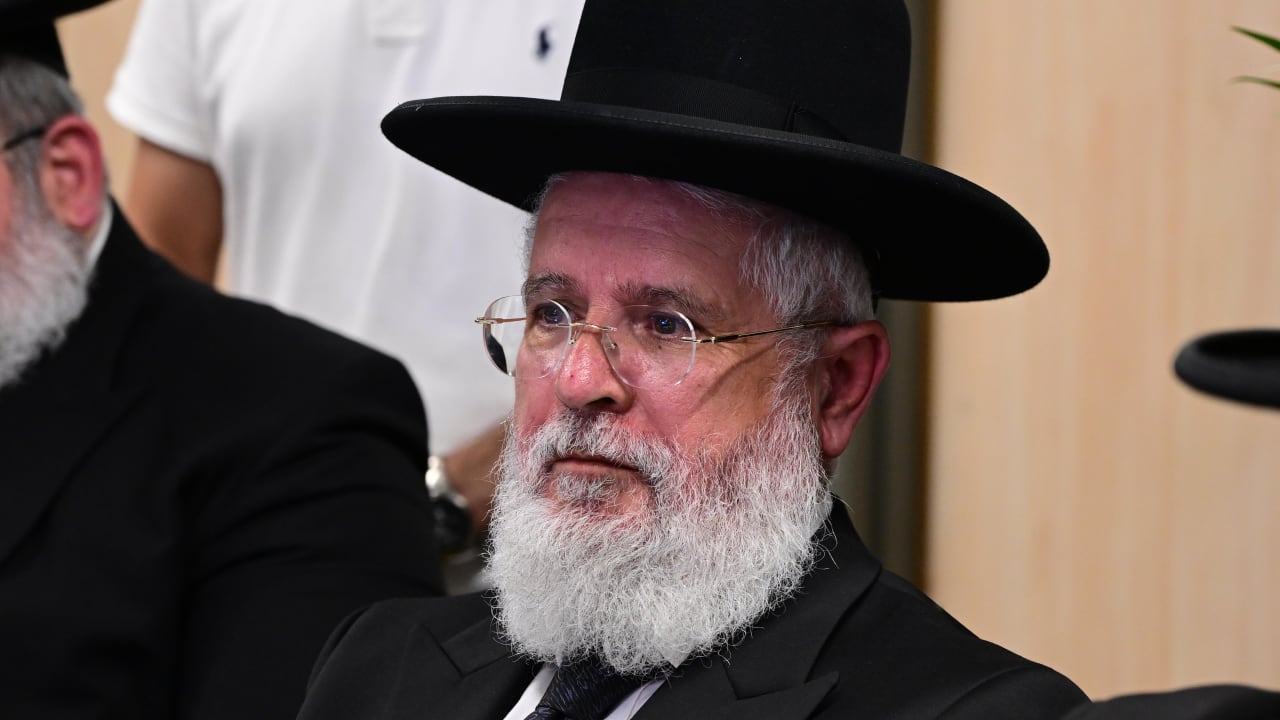
Rabbi Zevadia Cohen was elected chief rabbi of Tel Aviv-Jaffa on Sunday, ending a nearly nine-year vacancy in one of Israel’s most symbolically charged rabbinical posts after months of High Court delays and a political battle over who should shape religious leadership in the city.
Cohen, head of the Tel Aviv rabbinical courts and the candidate backed by the religious party Shas, was chosen by the 64-member electoral body after a contested process that pitted the Religious Services Ministry’s influence against a cross-faction group of municipal officials who argued that Tel Aviv’s rabbi should reflect the city’s diverse population.
The role had been vacant since former chief rabbi Israel Meir Lau left office in 2017. But Sunday’s vote was not only about filling an empty seat.
In Tel Aviv, the city rabbi signs off on marriage registration and kashrut certificates, carries informal religious influence, and automatically becomes a member of the Chief Rabbinate Council. The role also carries unusual weight because of the city’s national standing and the economic reach of its kashrut system.
Cohen’s main rival was widely seen as Rabbi Haim Amsalem, a former Shas MK who later broke with the party and has presented a more integrationist line on ultra-Orthodox participation in Israeli society.

Other candidates included Rabbi Tzvi Yehuda Lau, son of Israel Meir Lau, and Rabbi Aryeh Levine, the longtime rabbi of north Tel Aviv.
Former IDF chief of staff and lawmaker Gadi Eisenkot weighed in ahead of the vote, framing the race as part of a broader national debate over military service and religious leadership.
“City rabbis, like Israel’s chief rabbis, must be leaders who carry a clear commitment to enlistment in the IDF and to national-civilian service,” he said.
He called on mayors across Israel “not to lend a hand to the election of a rabbi who does not support IDF enlistment,” saying that residents who served in the army, both in mandatory service and the reserves, “deserve a city rabbi who represents them and the values of military service, mutual responsibility, and Israeli solidarity.”
The fight began in December, when a cross-faction group of Tel Aviv-Jaffa council members petitioned the High Court, arguing that the Religious Services Ministry had turned the legally required consultation with the city council into a hollow formality. They said that the ministry had advanced its slate of representatives for the electoral assembly without giving the council enough time or information to review them.
Flaws in the consultation process
Though Supreme Court President Isaac Amit had frozen the January 6 election, citing flaws in the consultation process, he did not rule on the broader claims against the system itself.
After the process was amended, further challenges focused partly on the political affiliation of ministry-appointed representatives and partly on whether new candidates could enter the race in the period after the election had been postponed.
The court ultimately allowed the election to move forward, and it was reset for Sunday.
Religious pluralism and civic groups reacted to Cohen’s victory by warning that the process illustrated the need to change how city rabbis were chosen.
Tani Frank, director of the Judaism and State Policy Center at the Shalom Hartman Institute in Jerusalem, said Cohen’s election was “a loss in the battle, but not in the war.”
“The result of the Tel Aviv city rabbi election only underscores the urgent need to change the regulations and transfer the authority to choose city rabbis to local elected officials,” Frank said.
“The task now is to prepare the ground from today for the next city rabbi election, to ensure that the rabbi is chosen by representatives of the residents and the city’s different communities and not parachuted in from above.”
Only that way, he said, would the rabbinate and religious services “return to those for whom they were intended: the public.”
Rabbi Dr. Kenneth Brander, president of Ohr Torah Stone, said that Tel Aviv was a city “searching for spiritual connection.” He pointed to the Friday night life in the city and the growth of kosher restaurants, including restaurants that had become kosher to be able to serve soldiers during the war.
“The Chief Rabbinate should be a source of unity, grounded in compassion and inclusion, strengthening the Jewish character of the State of Israel while recognizing that Tel Aviv is not Jerusalem and requires a more pluralistic approach to public life,” Brander said.
“For those who care deeply about Jewish identity, top-down religious mandates don’t work,” he added. “If utilized properly, this moment can help reset public trust and strengthen the role of religious leadership based on religious engagement in Israel’s shared civic life.”
Rabbi Seth Farber, founder and chairman of the Jewish life advocacy organization ITIM, congratulated Cohen and called him “a great Torah scholar and a highly respected rabbinical judge.”
Farber said ITIM had worked throughout the election process to ensure that it was conducted properly. He praised the elected officials and residents who fought over the character of Tel Aviv’s local rabbinate.
“We hope Rabbi Zevadia will act on behalf of all Tel Aviv residents and for religious services that bring the city’s residents closer to their Jewish identity,” Farber said.
Cohen’s election now turns the fight from the courtroom and electoral body to the office itself.
Will Tel Aviv’s new chief rabbi be seen as a Shas-backed appointment imposed through a centralized process? Or will he be able to build broader trust in a city where debates over public prayer, gender separation, kashrut, and religion in the public sphere have repeatedly spilled into the streets?