
On the International Day for the Elimination of Violence Against Women, a Knesset report revealed that more than 300 women have been murdered in Israel since 2015, while the Israel Police, the Israel Prison Service (IPS), and the National Security Ministry failed to appear at a parliamentary hearing convened to address the crisis.
The findings, compiled by the Knesset Research and Information Center for the Committee for the Status of Women, show a sharp rise in femicide, alarming enforcement gaps, particularly affecting Arab women, and repeated missed warning signs. The absence of the state’s key enforcement bodies from the hearing set off intense criticism and underscored what lawmakers and advocacy groups say is a growing governmental abandonment of the issue.
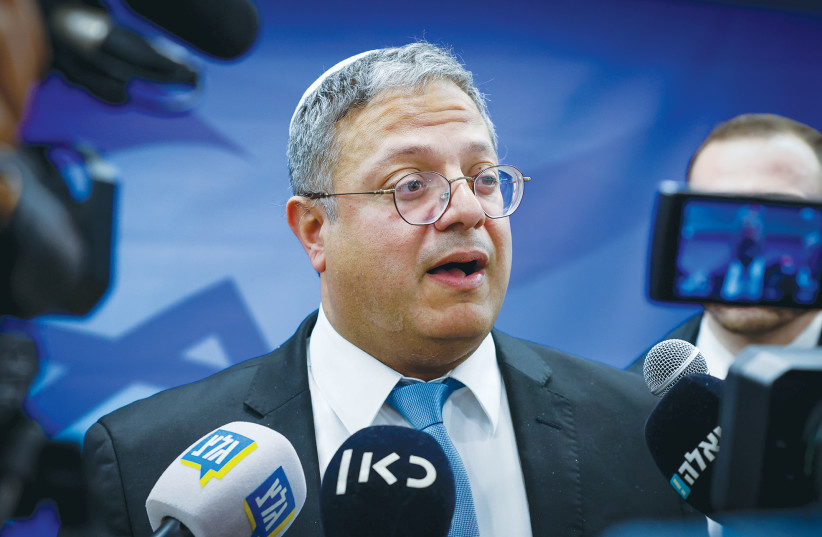
Per reports, the directive to authorities not to send representatives to the meeting came from National Security Minister Itamar Ben-Gvir, who later in the day said he skipped the committee session because he was simultaneously visiting the IPS’s new Misgav Unit – a real-time monitoring force he established in 2024 to protect women at risk. He argued that the committee meeting would have been “political theater,” while his on-site visit with police and IPS representatives constituted “real action” to safeguard threatened women.
The report, prepared at the request of committee chair Yesh Atid MK Meirav Cohen, paints a grim picture: 269 women were murdered between 2015 and 2024 – an average of about 27 per year. The year 2024 was the deadliest of the decade, with 35 women murdered. Yet the first eight months of 2025 alone already match that toll, bringing the total number of women killed since 2015 to more than 300.
Arab women remain disproportionately affected. Fifty-three percent of women murdered between 2015 and 2025 were Arab, compared to 42% Jewish women, despite the population proportions. In every year since 2019, Arab women have constituted between 51% and 59% of all women murdered.
Israel’s deadliest year for women in decades.
The overall number of femicides in 2025 is now believed to exceed 40, making this one of the country’s deadliest years for women in decades.
Around 30% of all murders of women in the past decade remain unsolved, but the disparity between communities is stark: Nearly half of all murders of Arab women – 46% – were not solved or did not result in indictments, compared to only 9% of murders of Jewish women.
Among solved cases, about half of the victims were killed by their partners, 30% by another family member, and 20% by someone known to them. For Jewish women, the partner-murder rate stands at 59%. For Arab women, family-member murders (excluding partners) account for 41%, while partner murders account for 34%, though the high unsolved rate means these figures represent only a partial picture.
The report also reveals repeated warning signs: More than a third of women murdered in 2024-2025 had previously filed a complaint about domestic violence, including 43% of Jewish victims and roughly a third of Arab victims. In murders committed by a partner, the rate of prior complaints rises to 41%; in murders committed by another family member, it reaches 56%.
Nine murders in 2025 were committed by suspects described as having severe mental-health challenges, mostly family members who were not partners.
Cohen opened the session by calling the absences “an affront to the Knesset” and “a betrayal of the women of Israel,” announcing she would convene the committee inside national police headquarters to demand answers.
The empty reserved seats at the hearing were instead filled by survivors of domestic violence, bereaved families, and women’s organizations, who described systemic neglect, ranging from delayed responses and unenforced restraining orders to critical data that they say the government has withheld from the public.
Cohen sharply criticized the government’s handling of the crisis, saying the data “should shake and upend the country.” She pointed to frozen budgets, the halted funding for the Michal Sela Forum (a nonprofit dedicated to developing technology to prevent domestic violence), and the failure to advance long-promised reforms. Women’s organizations noted that Israel still lacks dedicated legislation defining femicide as a distinct crime and has yet to ratify the Istanbul Convention on combating violence against women.
“The message being sent to violent men is that the field has been abandoned,” Cohen said. She announced that the committee would draft an emergency national plan and submit it to the government regardless of ministerial cooperation.