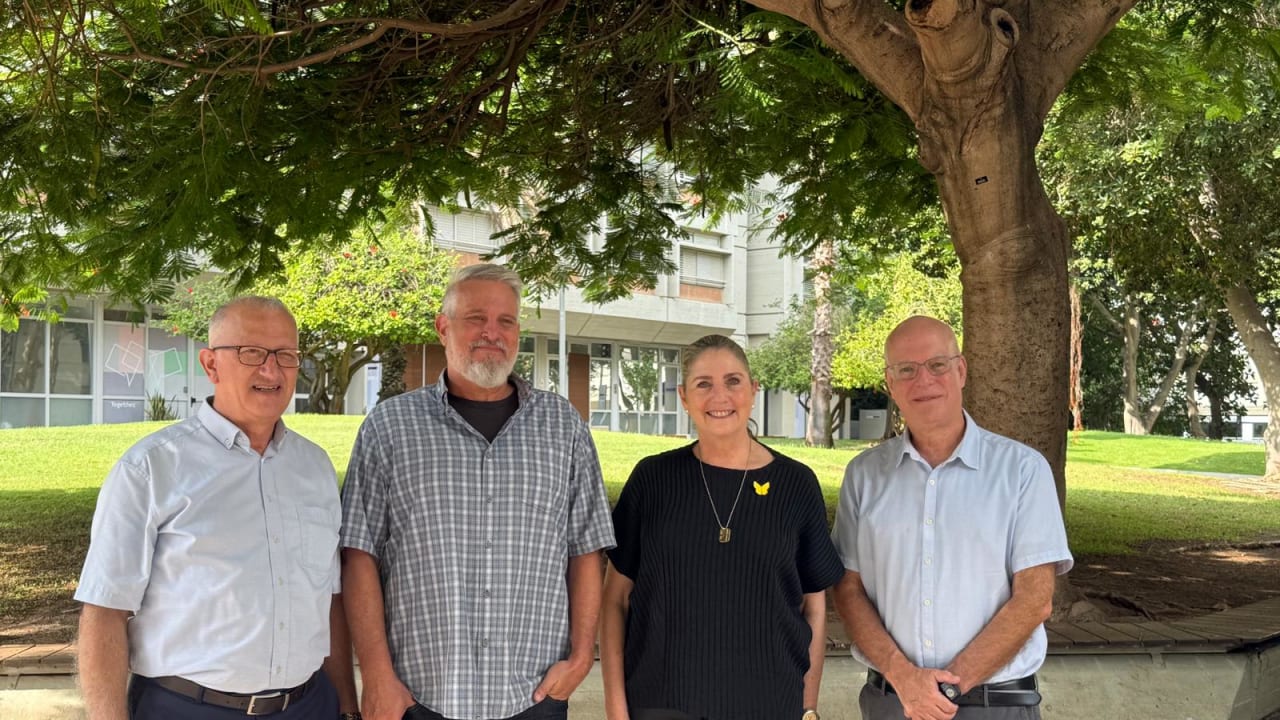
This morning, Israel’s First Lady, Michal Herzog, visited the National Center for Traumatic Stress and Resilience at Tel Aviv University. She was welcomed by TAU President, Prof. Ariel Porat, and Head of the Center, Prof. Yair Bar-Haim, who presented the Center’s impressive activities, including the treatment of hundreds of soldiers and civilians suffering from post-trauma following the Iron Swords War.
The Center’s clinic, established shortly after the outbreak of the war, is the largest PTSD clinic in Israel. Each week, dozens of new requests are received from civilians and soldiers, most of whom were affected by the war. The clinic’s staff reports that the volume of requests is exceptionally high, reflecting the severe psychological distress caused by the ongoing conflict. During her visit, the First Lady met with the Center’s diverse team of professionals, listened to their methods for addressing trauma, praised TAU for its vital work, and pledged to support their efforts in any way she can.

Mrs. Herzog said: "I was deeply moved to witness the extraordinary work of the dedicated professionals who provide life-saving care to trauma victims of the war. The mental resilience of Israeli society is a national asset, and the important work being done here demonstrates how professional and compassionate care can change lives. I thank Tel Aviv University for its leadership and commitment to supporting soldiers and civilians in their most difficult moments, and I will do all I can to raise awareness and support this vital effort."
Recently, the Center, led by Prof. Bar-Haim, published a comprehensive study showing that the war has exacerbated mental health difficulties, with approximately 12% of participants reporting significant post-traumatic symptoms.
Prof. Bar-Haim stressed the urgency of the situation: "We are in a state of emergency in Israel’s mental health system. I call on policymakers to act now to establish long-term solutions to this crisis — solutions that look decades ahead. We must accelerate and enhance the training of therapists and establish strong clinics that specialize in trauma care."
This article was written in cooperation with Tel Aviv University.