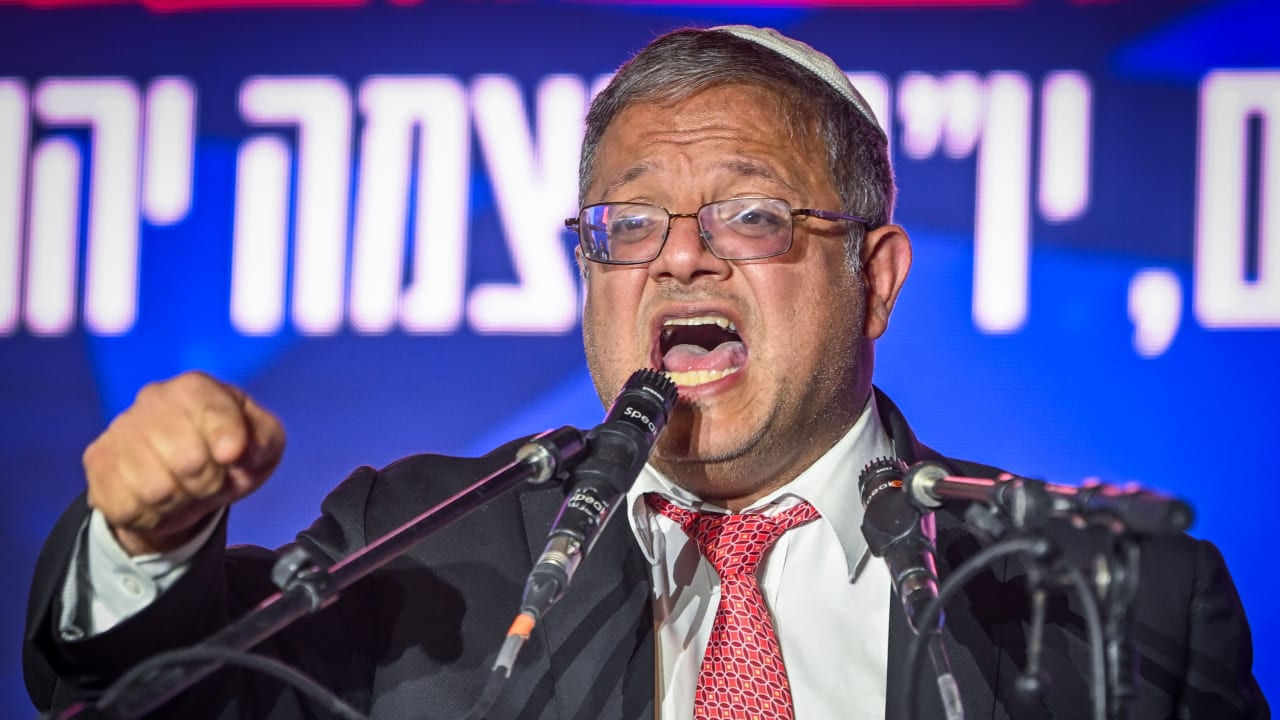
Communications Minister Shlomo Karhi and National Security Minister Itamar Ben-Gvir issued a sharply worded letter on Monday morning to Attorney General Gali Baharav-Miara, over the latter’s request for clarification regarding their decision last week that international news outlets required advance permission from the IDF Censor to stream footage from sites of Iranian missile hits.
The IDF Censor, Kobi Mandelblit, issued a directive on June 18, whereby any footage from missile sites, both by Israeli and international news outlets, required approval before publication. However, on June 20, Karhi and Ben-Gvir said in a joint statement that they had decided, following “joint staff work”, that international media would require permission prior to any filming from the sites, not just before publication.
The two ministers did not explain the grounds for their decision to require permission for the filming itself, nor for the differentiation between Israeli and international outlets.
The attorney-general’s office requested that the minister explain the “staff work” they had conducted and explain the factual and legal basis for their directive. The request itself was made public in a statement by the two ministers, who criticized it. In the statement, the ministers accused the AG of “searching for a way to thwart” the effort to “prevent the enemy from targeting us.” In a post on X on Saturday night (June 21),
Karhi added that if the AG was not “committed” to preventing intelligence breaches via live footage from missile impact sites, she should at least “not disrupt” the effort. Karhi also called Baharav-Miara to resign.

Delayed response
Despite the AG’s request on Friday that the ministers respond immediately due to the “urgency” of the issue, the answer only came on Monday morning. In a detailed letter, the two ministers explained that they had based their decision on the censor’s directives, and that the directives were already being implemented de facto via a WhatsApp group for foreign correspondents, in which they were notified about permissions to stream footage from impact sites. The ministers stressed the danger of filming impact sites as they revealed information that could help make further enemy strikes more precise. They also argued that the freedom of speech of foreign outlets was “not equal” to that of Israeli civilians.
Karhi has recently promoted a bill that would turn the “Al-Jazeera Law” from temporary to permanent. The law, which was first passed in April 2024 and has been extended periodically, gives the government the power to block operations of foreign media outlets in Israel if they are deemed to be harmful to national security. The law has so far been applied to the Qatari network Al-Jazeera and the Lebanese outlet Al-Miadin.
Civil rights, some opposition MKs, and legal experts warned during the legislative process that the law could create a “chilling effect” and deter outlets from reporting freely in Israel. They also pointed out that the law did not actually lead to its intended outcome, since the outlets in question are still available digitally in Israel.
Karhi and others countered that freedom of the press was not absolute, and certain foreign outlets had proven to be hostile to Israel to the point of presenting a security threat.
Since the outbreak of war between Israel and Hamas in Gaza, foreign media outlets have not been allowed into the Gaza Strip independently, and have been limited to entries into the Strip guided by the IDF’s Spokesperson’s Unit.
The Union of Journalists in Israel commented that the directive issued by Israel Police's legal adviser, which permits any officer to decide, on the ground, whether the livestreaming or photographing of a site by journalists constitutes "a threat to the security of the State [of Israel]."
The Union said the move "is the last nail in the coffin of free press in Israel. This document is not legal, not reasonable, and contradicts previous police directives."
The Union demanded the police chief, Insp.-Gen. Danny Levi canceled the directive and ruled that only the senior officer in the field at the relevant time makes the call, permitting military censor guidelines first.
Sarah Ben-Nun contributed to this article.