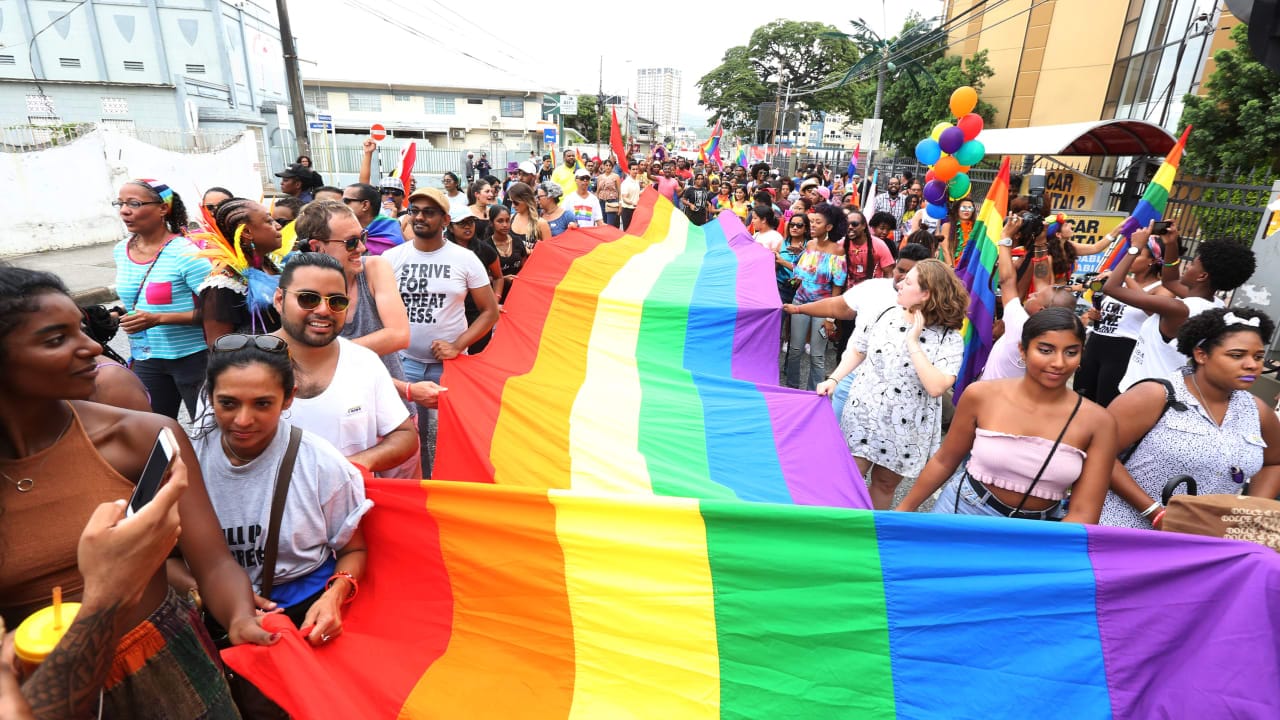
Trinidad and Tobago's ban on consensual same-sex relations between adults was overturned by the United Kingdom's Judicial Committee of the Privy Council on Tuesday, ending a nearly decade-long legal battle and striking down legislation dating back to the country's colonial era.
The London-based court ruled that the Caribbean island nation's laws on same-sex relations were not in keeping with "fundamental individual right to respect for private and family life," the BBC reported.
'Fight for full equality'
The court's ruling marked the end of an 11-year legal battle brought by 62-year-old dual Trinidad and Tobago and UK citizen Jason Jones, who said he hoped the decision would "accelerate the fight for full equality."
The ruling overturned provisions that criminalized so-called "buggery" and "serious indecency," which carried potential prison sentences of up to five years, according to CNN.
Activists argued that the laws' continued existence reinforced discrimination against homosexual people, CNN reported.
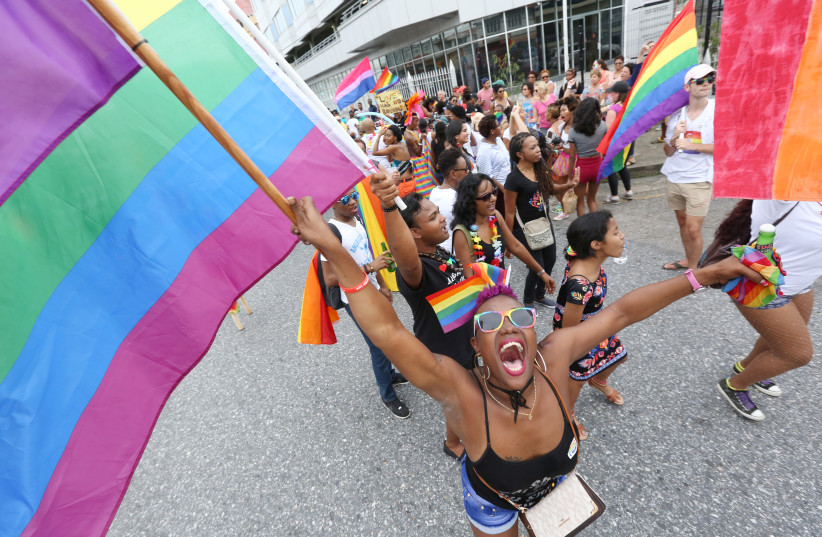
Delivering the judgment, Judge Philip Sales said that, "Whatever might have been the position in 1986, the current understanding of the fundamental individual right to respect for private and family life is that it protects such a core part of human identity as one’s sexual orientation and the sexual activities carried out in private between consenting adults to give expression to that identity."
"Laws which seek to criminalize such activities cannot be justified," Sales said.
Privy Council's ruling is final
Jones first brought his legal challenge in February 2017, arguing that the legislation violated his constitutional rights. He initially won his case in April 2018 before Trinidad and Tobago's High Court, when the provisions were declared unconstitutional.
However, the country's Court of Appeal partially overturned that decision in March 2025 on an appeal from the Trinidadian government, prompting Jones to take his case to the Privy Council in London. The court's decision on Tuesday was final and could not be appealed, according to the BBC.
The BBC noted that the ruling marked the first time the Privy Council had decided a case concerning the decriminalization of consensual same-sex relations, with campaigners hoping the decision could encourage similar legal challenges elsewhere in the Commonwealth.
Trinidad and Tobago is an independent republic and a member of the British Commonwealth, but it still recognizes the Privy Council as its final court of appeal. The government has previously pushed to replace the London-based institution with the Caribbean Court of Justice.
“The decision is going to be binding in Trinidad and Tobago. But as a matter of logic, if you are a part of the appellate structure of the Judicial Committee of the Privy Council… it is unlikely that a case from a different jurisdiction would be decided in a different way,” Ria Mohammed, an attorney and director of the Caribbean Centre for Human Rights, told CNN.
Mohammad described the irony she saw in the legal battle: a former British colony reliant on the judicial system of its former colonial ruler to challenge a law rooted in its colonial-era policy.
“That is the ultimate irony, and it also is a moment for us to sit and reflect about what are we really doing?” she said.
“It really is about us having a mature conversation about what kind of society do we want to build.”