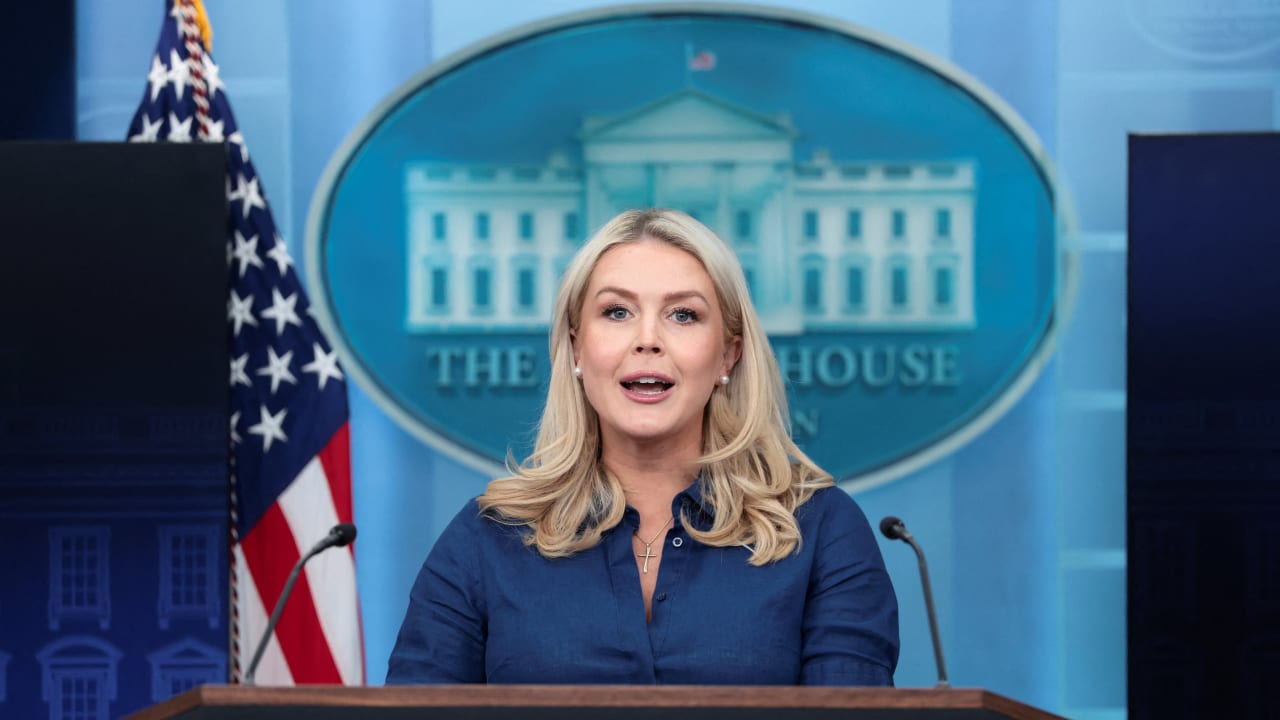
White House press secretary Karoline Leavitt celebrated the United States-Iran ceasefire agreement, announcing that US President Donald Trump is dispatching a negotiating team to Pakistan for talks on the deal during a press conference on Wednesday.
The team will be led by US Vice President JD Vance, Leavitt stated, with US special envoy Steve Witkoff and Jared Kushner also participating. The first round of talks is set to take place on Saturday.
Leavitt also noted that Iran had indicated to the US that it would be willing to turn over its stock of enriched uranium.
"That is a red line that the President is not going to back away from, and he's committed to ensuring that takes place," Leavitt told the briefing.
Asked whether the Iranians had given an indication they would hand over the uranium, Leavitt replied: "They have, yes." She did not give further details.

She also told reporters that before the US and Iran agreed to the current ceasefire agreement, Iran had originally put forward a proposal that the US deemed to be unacceptable.
Trump wants to see Strait of Hormuz fully open
Leavitt additionally addressed the Strait of Hormuz, stating that Trump wants to see the Strait of Hormuz open up for oil tankers and other traffic without any limitations, including tolls.
"The immediate priority of the president is the reopening of the strait without any limitations, whether in the form of tolls or otherwise," Leavitt said.
The US has seen an uptick in traffic in the Strait of Hormuz on Wednesday, Leavitt told reporters.
Leavitt was asked who currently controlled the Strait of Hormuz and declined to answer.
The Strait of Hormuz is one of the world’s most strategically vital maritime chokepoints, with about 20% of the world’s seaborne crude oil and liquefied natural gas flows passing through it.
Amid ceasefire talks with the US and Israel, Tehran has sought to formalize this control by proposing fees or tolls on vessels passing through the Strait, and Trump on Wednesday suggested the US and Iran could collect tolls in a joint venture.