
I've been obsessively following every internal development at CBS News since Bari Weiss took over. The staff revolts. The leaked memos. The reorganizations. The public statements from unnamed employees claiming she's destroying journalism. The whole messy, dramatic transformation.
Why? It's hard to say exactly.
Maybe because she's one of the bravest journalists out there, maybe because she's actually making a change instead of just talking about it, maybe it's the creativity: the willingness to blow up conventions and try something different. It's definitely also the fact that she's an American Jew and an American Zionist who's doing more for Israel than most of us.
Whatever the reason, I can't look away. And neither should any journalist who cares about the future of this industry.
This story started in 2020, when Weiss published a 1,200-word manifesto accusing The New York Times of creating a hostile work environment where colleagues called her a Nazi in company Slack channels and Twitter mobs determined what could be printed in America's paper of record.
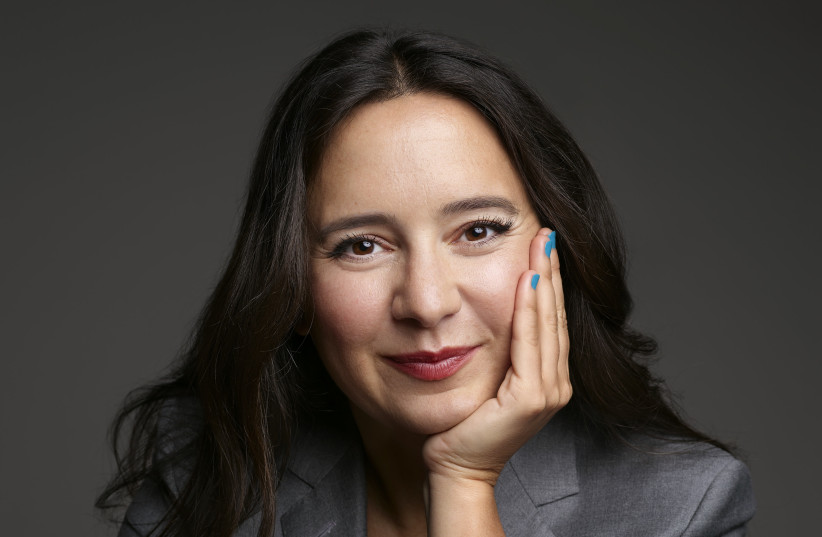
Editor-in-Chief of CBS News
Then she built her own media company, sold it to Paramount, and became editor-in-chief of CBS News.
That's a revolution disguised as a resignation.
Weiss's resignation letter laid out the specifics. Colleagues called her a Nazi and a racist in company Slack channels. TheTimes had "become a kind of performance space" where "what we are allowed to say and write is policed by a staff more interested in signaling virtue than pursuing truth."
The most damning line: Twitter had become the paper's "ultimate editor."
I know this reality very well. A reporter writes something factually accurate but politically uncomfortable. Internal Slack channels light up before the piece even publishes. Colleagues who haven't read it start calling it dangerous, harmful, irresponsible. Editors get nervous. They add caveats, soften language, sometimes kill the piece entirely, because the internal cost outweighs everything else.
This happens constantly. It's gotten worse since 2020.
Weiss described the paper's workplace where "self-censorship has become the norm," where younger staffers lived "in a world where intent doesn't matter, where ideology trumps facts, where dogma is more important than discourse."
The Times never disputed the factual claims. They said they were disappointed she left.
That tells you everything.
Most people who leave toxic workplaces leave quietly. They sign NDAs, take severance, and move on. Weiss published a detailed account of institutional dysfunction at America's most important newspaper and dared them to sue her.
They didn't. The truth has a way of protecting itself.
Weiss started The Free Press.
A lot of journalists talk about doing this. They fantasize about going independent, draft business plans they never execute. Weiss actually built something. An actual newsroom. Real journalists. Investigations that mattered. A subscription model that worked.
I've watched dozens of journalists try this. Most fail within eighteen months. They underestimate what it takes to manage people, to maintain editorial standards while worrying about payroll, to build an actual institution instead of just a personal brand. Weiss hired editors. She created structure. She built something that could survive without her.
The reason it worked: there was an audience. Millions of people who wanted journalism that didn't treat them like idiots or bigots for asking obvious questions. People are exhausted by being told what to think instead of being given the information to think for themselves.
The audience existed because the Times, and outlets like it, had abandoned them. When you create a newsroom culture where certain questions can't be asked, certain facts can't be reported, and certain perspectives can't be expressed, you're serving your staff instead of the public.
Weiss found those people. She spoke to them directly. She didn't apologize for it.
Then Paramount bought The Free Press and made her the boss of CBS News.
Think about that path. Legacy institution to insurgent startup to leadership of another legacy institution, this time reporting directly to the owner. Journalism careers are supposed to follow the ladder: climb, make the right friends, keep your head down, wait your turn.
Weiss built her own ladder.
The Jewish question
Weiss refused to be quiet about being Jewish.
Part of what made her position at the Times untenable was her willingness to defend Israel and call out antisemitism without the usual qualifications. In her resignation letter, she specifically mentioned being "openly Jewish" as one of the things that made her a target internally.
After October 7, when Hamas massacred 1,200 people and campus protesters chanted for intifada, when Jewish students needed security escorts to go to class, Weiss didn't equivocate.
Even before that terrible day in October 2023, she said what needed saying: "The Jewish people were not put on Earth to be anti-antisemites. We were put on Earth to be Jews."
That line cuts through everything. The endless apologizing, the ritual self-flagellation, the instinct to make yourself smaller. Weiss rejected all of it. She refused the defensive crouch that so many Jewish writers adopt as the price of admission to elite spaces.
I've seen talented reporters soften their coverage of sensitive issues because they're afraid of being called biased. I've seen editors kill stories about threats to Jewish communities because they don't want to seem "tribal." I've had conversations with writers terrified to put their byline on anything related to Israel - that's become our reality post October 7.
That fear is poison. It corrupts judgment. It makes cowards of people who should be fearless.
Weiss refused it and thrived anyway, which proves something important: the people who tell you that visibility is professional suicide are often the ones who benefit from your silence.
The David Ellison factor
David Ellison runs Paramount now. After October 7, he put out a public statement supporting Israel. He reportedly also committed $1 million to humanitarian relief, including to American Friends of Magen David Adom. He bought The Free Press and put Weiss in charge of CBS News.
He made bold decisions. Even when I'm almost sure, many of his friends told him he is crazy.
Media owners shape the prism through which you will be consuming your news. They influence the culture, the hiring, the risk tolerance, what stories get pursued, and which ones get killed. Everyone knows this. Nobody likes admitting it because it punctures the myth of editorial independence.
I've worked under different ownership structures. I've seen what happens when an owner cares about a community and what happens when they don't. The difference is everything. An owner who's willing to back you when the blowback comes, who understands that some stories are worth the heat; that changes what's possible.
Ellison made a bet on Weiss. He looked at what she built, looked at the audience she commanded, and decided that was worth something. Worth bringing into CBS News, even knowing the staff would revolt.
They did revolt. Weiss is still there.
That tells you who has power.
What we, as journalists, should learn
Most journalists will read this and think: "Easy for her. She had a platform. She had connections. She could afford the risk."
How about looking at it this way: She made the platform. Built the connections. She decided the risk was worth taking when everyone else decided it wasn't.
I've hired dozens of journalists. I've promoted many into leadership. The ones who succeed build things. They don't wait for permission. They see an opening, and they pursue.
Weiss makes people uncomfortable. Journalism that doesn't make anyone uncomfortable is just public relations and press releases.
For Jews, for Israelis, for anyone who's watched the past few years and felt the ground shifting: There's something clarifying about Weiss's trajectory. A Jewish woman can walk into the biggest rooms in American media, take incoming fire, and keep building. An owner can back that person openly and put real money behind supporting Israel after the worst attack on Jews since the Holocaust.
I've spent my career watching talented people compromise themselves into irrelevance. They make the safe choices. They avoid the controversial stories. They keep their heads down. Then they wonder why their work doesn't matter anymore.
Weiss demonstrated something most journalists only talk about: you can leave, you can build, you can come back with leverage, and you can do it all without apologizing for who you are.
The journalists who figure that out early, who understand that the old rules are gone and new ones are being written right now, those are the ones who'll lead the next generation of media institutions.
Study what Weiss did. Then go do your own version of it.