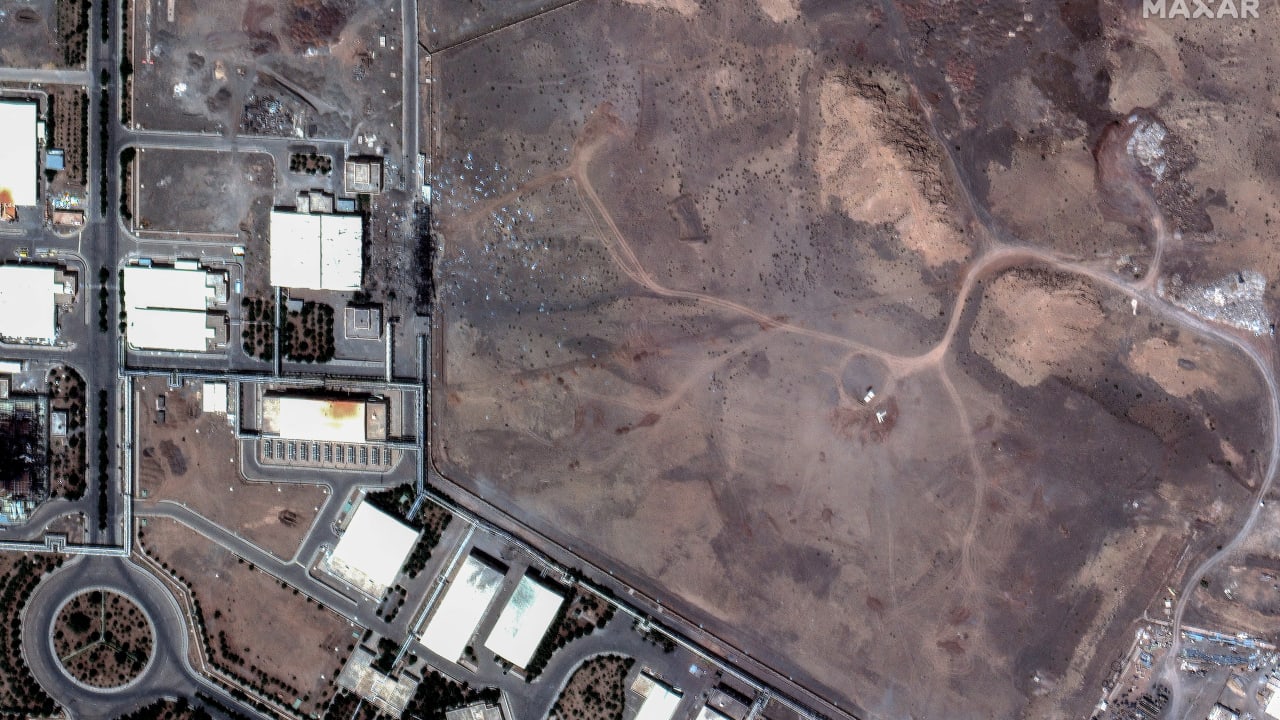
The UN nuclear watchdog's 35-nation Board of Governors passed a resolution on Thursday saying Iran must inform the watchdog "without delay" of the status of its enriched uranium stock and bombed atomic sites, diplomats at the closed-door meeting said.
The resolution's purpose was primarily to renew and adjust the International Atomic Energy Agency's mandate to report on aspects of Iran's nuclear program but it also stated Iran must quickly provide the IAEA with the answers and access it wants, five months after military strikes by Israel and the US.
Iran, which says its nuclear aims are entirely peaceful, warned before the United States and Europe's top three powers submitted this resolution that if it passed, it would "adversely affect" Tehran's cooperation with the agency.
"Iran must ... provide the Agency without delay with precise information on nuclear material accountancy and safeguarded nuclear facilities in Iran, and grant the Agency all access it requires to verify this information," the draft resolution text submitted to the board and seen by Reuters said.
The resolution passed with 19 votes in favor, three against and 12 abstentions, diplomats said. Russia, China and Niger were the countries that opposed it.

No inspectors let into the nuclear sites
Iran still has not let inspectors into the nuclear sites Israel and the United States bombed in June, and the IAEA says that accounting for Iran's enriched uranium stock, which includes material close to weapons grade, is "long overdue" and the issue needs to be addressed "urgently."
The IAEA cannot inspect the bombed facilities or verify Iran's uranium stock until the country has submitted a report updating the agency on what has happened to them. The bombed sites include Iran's three enrichment facilities that were operating at the time.
When Israel first bombed Iran's nuclear facilities on June 13, the IAEA estimates that Iran had 440.9 kg of uranium enriched to up to 60% purity, a short step from the roughly 90% of weapons grade, in a form that can easily be enriched further. Iran says it can enrich to whatever level it wants in view of its peaceful aims.
That amount of uranium is enough material in principle, if it were to be enriched further, for 10 nuclear bombs, according to an IAEA yardstick.
Western powers say there is no civil explanation for enriching to such a high level, and the IAEA says that producing and storing so much of it is "a matter of serious concern."
Iran has made ongoing accusations that the IAEA provided information to Israel, which enabled the June attacks by the Israeli air force on Iranian nuclear facilities. Some Israeli officials find this situation ironic, given that a 2018 Mossad operation, which raided Iran's nuclear archives, supplied the IAEA with much of the information it has on Iran's nuclear program.
IAEA Director-General Rafael Grossi has dismissed Iran's accusations as ridiculous and denied his agency has shared information about Iran's nuclear program with Israel to assist in the attacks on Iranian nuclear sites that occurred this past June.
Iran's nuclear sites were already publicly known
Grossi emphasized that the nuclear sites targeted in these attacks were already publicly known, and much of the activities within those facilities are well-documented.
He also noted that Iran cannot hide operations behind these facilities for long, after being attacked five months ago, as a strategy to postpone IAEA inspections.