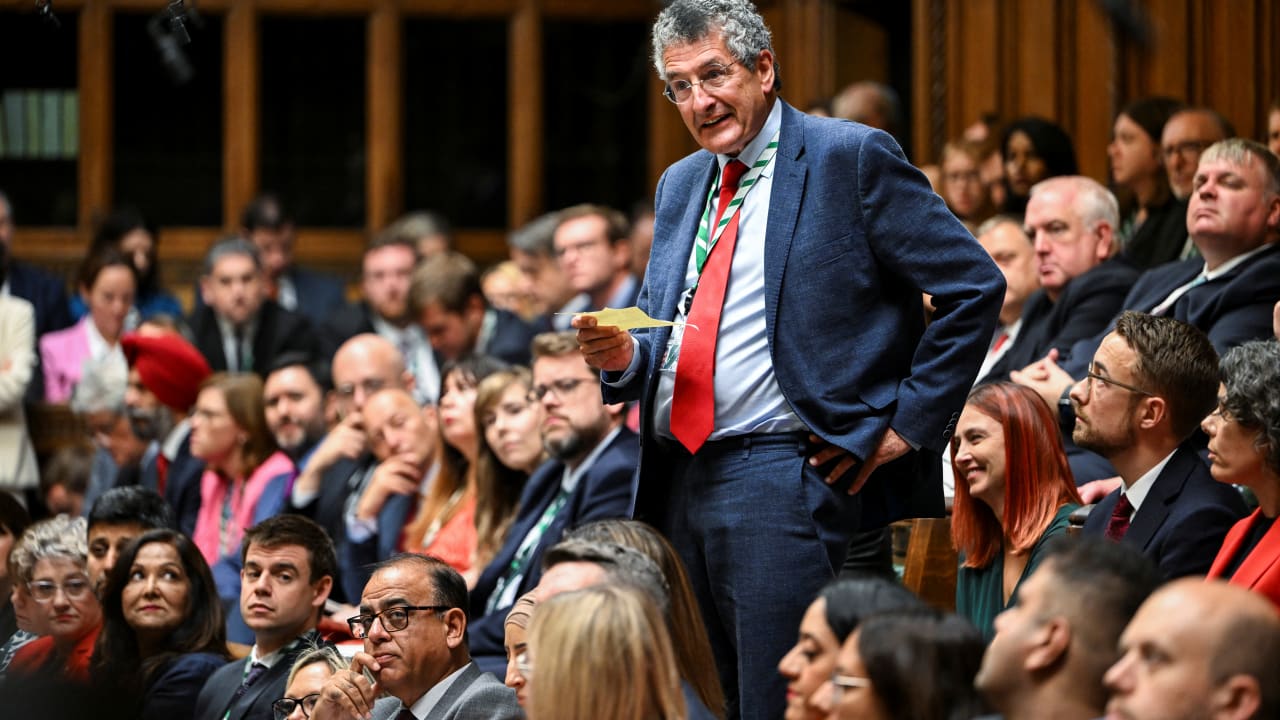
British Member of Parliament Peter Prinsley wrote an op-ed in The Guardian on Saturday, where he described his views on being denied entry into Israel last week.
In the op-ed, he commented that "Israel once represented hope for a generation of Jews," but that he was "left wondering: what has become of the state of Israel?" while commenting on his identity as a British Jew.
He claimed that the purpose of his visit was to "begin to understand the state of healthcare for Palestinians in the West Bank."
Instead of being allowed into Israel, he claimed he was made to wait while border police "made up their minds about me."
According to Prinsley, the document refusing his entry referred to the reason as "public security or public safety or public order considerations." In the op-ed he claimed that he was not given an explanation how a former surgeon and current parliamentarian "might post any threat at all."

"I decided to join the delegation because it would have given me an opportunity to talk to doctors, patients and medical charities on the ground, and expand my knowledge of the horrendous events in the Middle East and how it is affecting medical facilities, medics and the patients they treat. As parliamentarians, we have a responsibility to be as informed as possible," he wrote.
"Transparency is the only way we can work towards a peaceful solution to this devastating war. It is only through talking and understanding that we have a chance for peace. Only with openness and honesty can progress be made in good faith," he argued.
"Gaza has already been totally cut off to journalists, diplomats and human rights advocates. Parliamentarians are now being denied entry to the West Bank," he claimed.
Why was Prinsley due to visit the West Bank?
Prinsley, along with fellow MP Simon Opher, was traveling to the West Bank as part of a parliamentary delegation organized by the Council for Arab-British Understanding (CAABU).
The two MPs were crossing into Israel from Jordan on Monday when they were reportedly stopped by Israeli authorities. Opher told the BBC the two were held in a passport office before being told they were not allowed in on “public order” grounds and “escorted to a bus” back to Jordan.
“It is deeply regrettable that Israeli authorities prevented [us] from seeing first hand the grave challenges facing medical facilities in the region and from hearing the British government’s assessment of the situation on the ground,” the two MPs said in a joint statement on Tuesday.
Mathilda Heller contributed to this report.