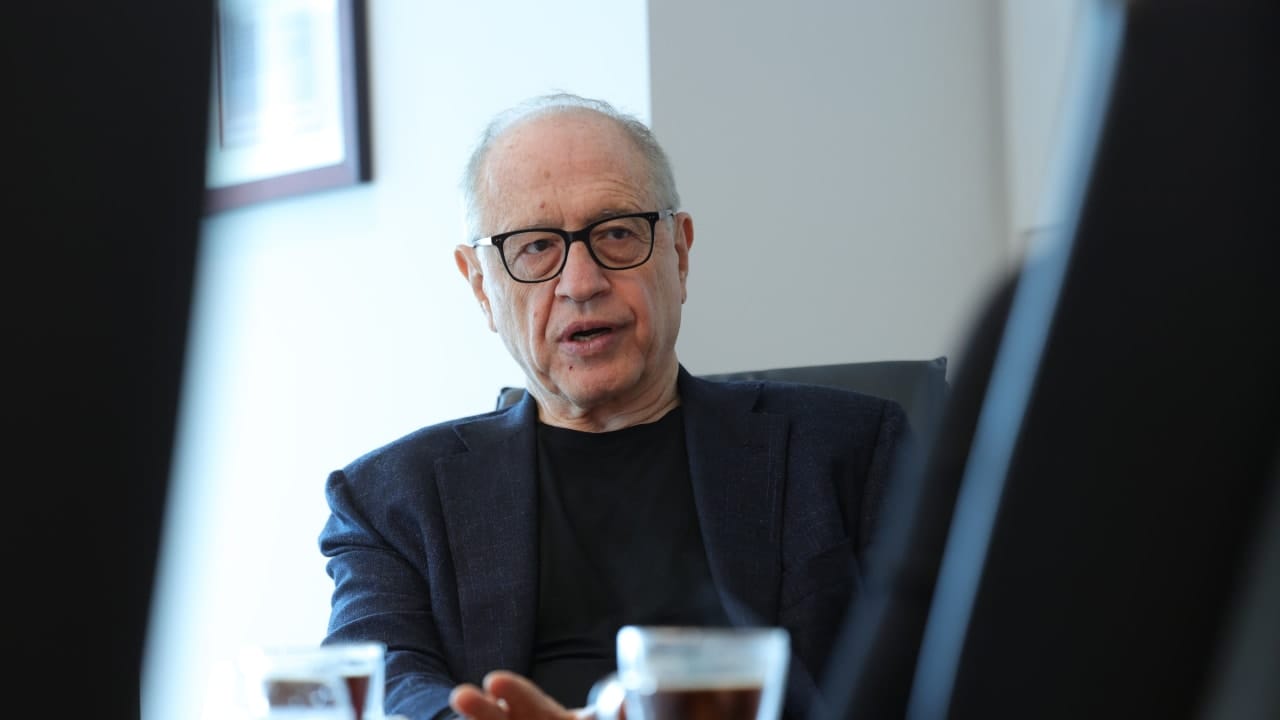
When US law firm Greenberg Traurig opened its offices in Saudi Arabia and the United Arab Emirates around three years ago, it had already been present in Israel for more than a decade.
For Richard Rosenbaum, the firm’s executive chairman, there is no contradiction in operating in countries with vastly different political relationships, including Saudi Arabia, which has no formal diplomatic ties with Israel.
The firm opened its Tel Aviv office in 2012, at a time when, according to Rosenbaum, some international law firms were reluctant to publicly acknowledge their work in Israel. Greenberg Traurig took a different approach.
“We are proud that we’re here,” he told The Jerusalem Post on Thursday. “And it’s something that we don’t hide.”
That openness has not prevented the firm from expanding into the Gulf, where it now has offices in Riyadh, Dubai, and Abu Dhabi. However, Rosenbaum stresses that the expansion was driven by business opportunities rather than any ambition to advance regional diplomacy.
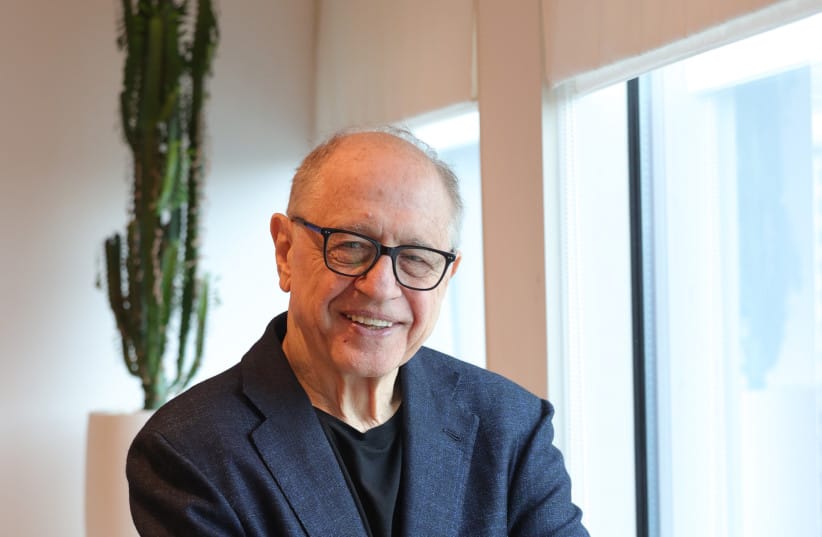
Business cooperation between Israel and the Gulf
“When we opened the Riyadh and Dubai offices three years ago, we were sensitive to potential issues, but really, we focus on business.”
“We’re not a political organization. We’re not a religious organization. We’re a business serving clients. And there’s a lot of business that goes on between Israel and the Gulf. For us, as long as our partners in the region are comfortable, we are comfortable.”
When asked whether local companies or investors had shown reluctance to work with a firm that openly maintains an Israeli presence, he said they had not.
“Nobody has raised this as a negative. And we believe it’s a positive.”
In fact, Rosenbaum suggested that business relationships across the region may be more extensive than the public realizes, even in places where formal diplomatic ties remain absent.
“I think, probably, there is more than people realize that goes on,” he said. “But in terms of business, people not only coexist, but fairly actively help each other.”
Greenberg Traurig’s original involvement in Israel, he said, was motivated partly by a desire to support the country during a difficult period, rather than purely by business considerations. The small Israeli firm eventually developed into a full office.
That included introducing clients to financing, transactions, and other business opportunities – an approach that Rosenbaum believes can also help strengthen relationships across today’s markets.
Nevertheless, when asked whether business cooperation could help pave the way toward diplomatic normalization, Rosenbaum was careful not to exaggerate the firm’s influence.
“We’re not here to create world peace. That’s not us,” he said. “The firm is a business, and we help our clients navigate whatever the situation might be, wherever it might be.”
On a personal level, however, he expressed hope that the fighting would eventually end and that relations between Israel and its neighbors would normalize.
“It ultimately is in the best interest and security of our families, our children, and in all these cultures,” he said.
Fighting antisemitism in the US
The firm’s willingness to publicly identify with Israel extends beyond its regional business operations. In the US, Greenberg Traurig has also been involved in legal efforts addressing antisemitism, particularly on college campuses since the October 7 massacre.
“I think it’s pretty clear that antisemitism is an issue that has become more troubling as time has passed,” Rosenbaum said.
“Not every Jew agrees with every action that Israel takes, but we support Israel,” he said, adding that rising antisemitism had reinforced the importance of Israel’s existence for Jews around the world.
Rosenbaum said the firm has supported legal efforts to challenge antisemitism on campuses, including work aimed at uncovering the sources of funding behind some campuses’ protest activities.
Some of that work was done pro bono, while other matters have involved paying clients, he added.
Rosenbaum has also personally supported United Hatzalah, the Israeli emergency medical organization, since October 7.
Despite these efforts, he says that fighting antisemitism is “a challenge” and “is continuing to be a challenge.”
However, Rosenbaum drew a distinction between the broader rise of antisemitism and the situation within the American legal profession.
He told the Post that he has seen relatively little evidence of active antisemitism within major US law firms, and suggested that, in some respects, the profession is more welcoming to Jewish lawyers than it was when he began his career.
“There was more of that when I was young. There were definitely firms when I was young that didn’t have many Jewish partners. In fact, the genesis of Greenberg Traurig has to do with this issue.”
The firm was founded in Miami in 1967 by three Jewish lawyers at a time when Jewish attorneys faced barriers to employment at established law firms, Rosenbaum explained. He recalled that, even when he joined the firm decades later, some social clubs and events in south Florida remained closed to Jews.
This experience, he said, has helped create a corporate culture that values inclusion.
“The original firm, similar to a few very good firms in New York today, was created as an opportunity for people who weren’t getting hired elsewhere,” he said.
Rosenbaum said that approach continues to influence the firm’s leadership and hiring practices, which he described as rooted in the firm’s identity rather than external pressure to meet diversity targets.
“It was not because we wanted to satisfy some quota or because somebody forced us to, whether legally or otherwise. It was because it’s who we are.”