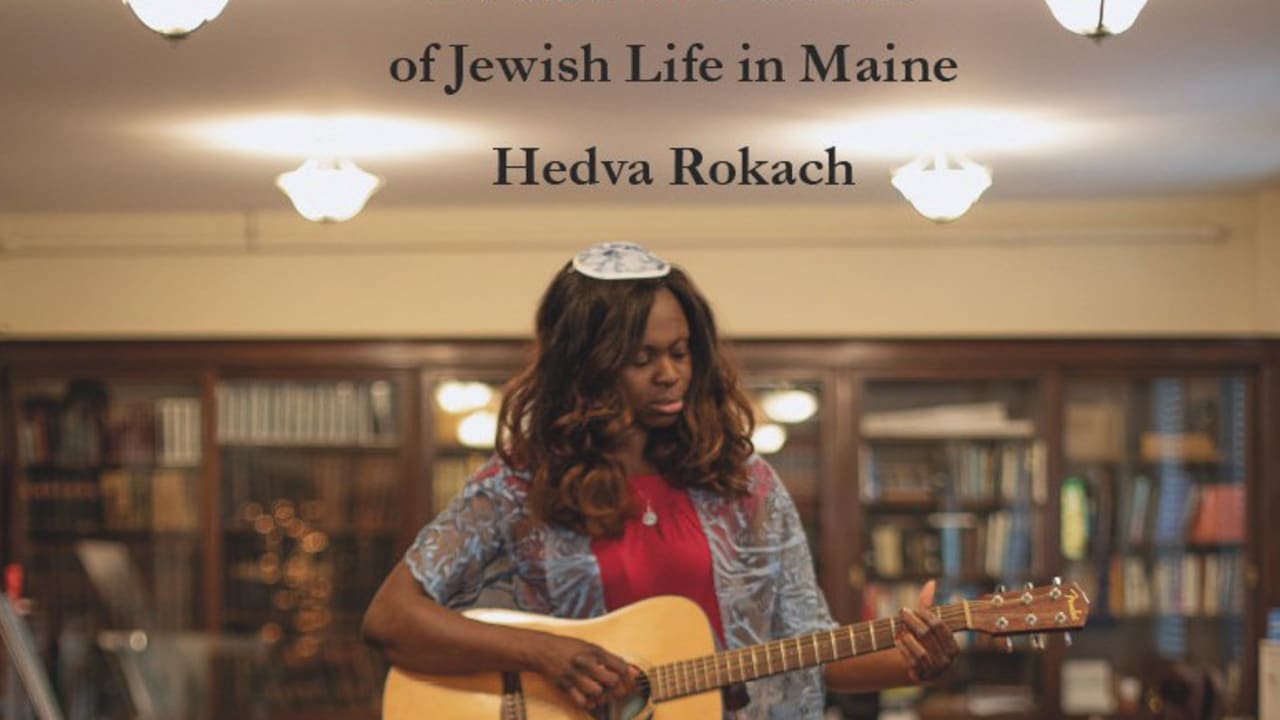
When Israeli photographer Hedva Rokach spent the spring of 2025 traversing 7,000 miles across and down the state of Maine, she found much more than lobster.
She discovered Maine Jews, who make up a little over 1% of the state’s sparse population. Rokach photographed some 300 of them, living in far-flung rural towns, farms, and enclaves – some off the grid, some totally connected to community.
The result of the six-week journey with her partner, Itay Bahur, is a photographic exhibition titled There Is Always an &, featuring nearly 200 of the subjects, that opens March 5 at the Maine Jewish Museum in Portland, the state’s biggest city.
According to the museum’s executive director, Dawn LaRochelle, who conceived the project, the exhibition explores the idea that identity is not an “either/or” proposition.
“This exhibition was born from a desire to shatter toxic binaries,” said LaRochelle. “Too often, identity – especially Jewish identity – is flattened into caricature. The ampersand insists that we are more complicated than that.”

From Sushi Girls to Maine
LaRochelle and Rokach first met when the photographer’s series Japanese Sushi Girls was exhibited at the Maine Jewish Museum last year, after debuting in 2024 at the Tikotin Museum of Japanese Art in Haifa. That series focused on a group of Israeli women who got together during the Israel-Hamas War to make sushi for IDF soldiers. They signed notes to accompany the delivery: “From the Japanese Sushi Girls.”
While spending time in Portland, her first visit to the US, Rokach, who lives in Or Akiva, started taking photos of the people she was meeting and writing down their details.
“Dawn came to me with the idea of creating an exhibit, so I came back in June with Itay – and the museum set up shoots for around 45 people that answered their appeal to take part in the project,” Rokach told The Jerusalem Post on Sunday.
“But we thought that it wasn’t enough to represent the variety of Jews in Maine, so we did something very Israeli. We picked up the phone and made lots of calls to people we had met on the previous trip and asked them to connect us with people they knew.
“We traveled around 7,000 miles around the state, places that most Mainers probably never get to, like Fort Kent near the Canadian border. There are Jews everywhere. I met legislators, artists, fishermen.”
While the portraits include racial, ethnic, and gender diversity, There is always an intentionally embraces a broader understanding of diversity within Jewish life – diversity of geography, religious expression, profession, generation, family story, and personal journey.
“One common trait is that people who end up living in Maine mostly just want to be left alone,” said Rokach. “But the variety was huge and covered all kinds of ways in which they expressed their Judaism. I included converts as well as non-Jews who are part of Jewish families because they’re all part of Maine’s Jewish life.”
In addition to the exhibition, the photographs are featured in a new 270-page book, Faces and Facets of Jewish Life in Maine.
The project has also grown into a broader initiative focused on bridge-building and relatability, including a bilingual Hebrew-English companion book being distributed free to every high school in Maine and professional video interviews of 25 of the photo subjects, accessible by QR code in both the exhibition and the book.
“We’re building relatability,” LaRochelle said. “When students see Jewish Mainers who share their geography, their professions, their humor, and their struggles, it becomes harder to ‘other’ someone you recognize.”
Rokach was scheduled to attend the opening of the exhibition on March 5, but the current war against Iran has closed Israeli airspace.
“We’ll see what happens. It’s disappointing but not a disaster,” she said. “It’s just the opening of an exhibition. As an Israeli, you learn to take things in proportion. Hopefully, the skies will open up and we’ll get there sometime during the exhibition’s run.”
The exhibition will run through May 3 and conclude with a public poster presentation by students from Colby College, where the museum’s historian in residence is incorporating the project into coursework on Maine Jewish history.
For more information, visit mainejewishmuseum.org