
The population of Israelis in Budapest has exploded in recent years, in part due to the post-October 7 global environment, with Hungary becoming a haven for Israeli tourism, study, and business.
Rabbi Shmuel Raskin, the director of the Keren-Or Chabad Israeli Center, which caters to Israelis and Hebrew speakers in the country, has had trouble keeping up with demand for the center’s facilities.
Each Shabbat, Raskin said, he hosts 700 Israelis, with people filling the dining room hall and overflowing into other chambers. Chabad is already looking to open up a second location to accommodate the increased demand.
“Over the last five years, there has been an expansion of Israelis in Budapest,” said Raskin.
Many of the thousands of Hebrew speakers heard on the streets are tourists, a common sight near Chabad centers worldwide.
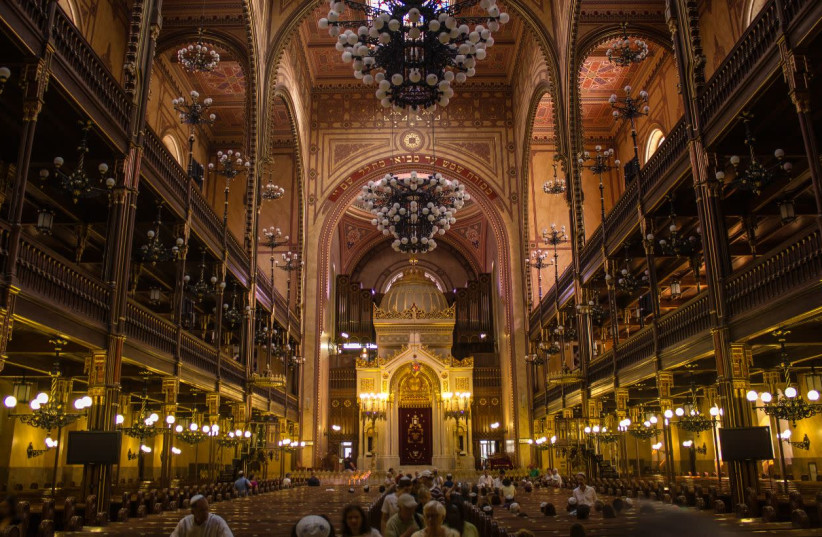
Hungary becomes safe European haven for growing Israeli crowd, Megyeri says
Hungary has become one of the most popular destinations for Israelis traveling abroad, according to Jonatan A. Megyeri, the public relations director at the Association of Hungarian Jewish Communities (EMIH).
This is corroborated by reports from Ben-Gurion Airport, which indicate that over the last three months, Hungary has ranked among the top 10 destinations for departures from Tel Aviv. There are typically eight flights a day from Israel to Budapest.
Yet not all of the Israelis who grace the halls of Keren-Or are tourists. Many live in the country for work or visit to find a local job. Raskin and several Israelis said that many companies, both Israel-based and international, have factories, branches, or information technology centers in Hungary.
Megyeri said there had also been significant Israeli investment in Hungary. That business relationship, he believes, lent a degree of comfort to Israeli tourism.
Hundreds of medical students have come to study in Hungary as well. An annex to Keren-Or serves as a classroom where students from a nearby university can take a course in medical ethics. When not operating as a classroom, the annex welcomes Israeli students for special programs and activities.
The effects of an influx of Israelis are evident beyond Keren-Or. Walking in the city streets, it is not uncommon to overhear Hebrew. These people make easy marks for EMIH’s “Mitzvah tank,” which drives around the city, offering Jews the opportunity to put on tefillin or take candles for Shabbat.
Graffiti is another common sight in some of Budapest’s alleys, but in the Jewish Quarter, visitors may also unexpectedly spot memorial stickers for fallen IDF soldiers and October 7 massacre victims. These stickers are ubiquitous in Israel, but they can also be found in Hungary, such as on bollards next to the footwear on the Shoes on the Danube Bank memorial.
EMIH’s chair and chief rabbi, Slomó Köves, said there was a proliferation of “beautiful” kosher restaurants that had opened in response to community needs and tourist demand. Nitavalo, opened by chef Aharon Faigen seven years ago in the Jewish Quarter, offers high-end kosher Israeli fusion cuisine and is regularly packed with locals and Israelis alike.
Köves and other Hungarian Jews said that the country had become a shelter for Israelis in a continent that had become less hospitable to Jews in the wake of the October 7 massacre. No country has been spared from the global wave of antisemitism, but officials said that the phenomenon had been stunted in Hungary.
While there were weekly anti-Israel marches through London, Köves said that there were little to no demonstrations in his country. The Hungarian government had cracked down on the demonstrations just after October 7, rejecting them as pro-terrorism rallies in support of the 2023 pogrom in southern Israel.
Raskin said that Budapest and his center offered Israelis an opportunity to set aside politics and focus on connecting with their Jewish roots. He said he wanted to give Hebrew speakers a place in which they would feel welcome.
With many Israeli families living in the city, their children have been studying at international schools and needed help learning their heritage, he said.
Raskin’s center offers Sunday schooling, bar mitzvah programs, and Shabbat and holiday programs for children. He has also helped some Israelis start their families in Budapest and has even officiated at the weddings of 20 couples in recent months.
The Keren-Or rabbi’s only regret was that amid the surge in Israeli activity, “we don’t have enough space to welcome everyone” until another location was added.