

Just a few weeks into the Israel-Hamas War, journalists and social commentators began using the phrase “October 8th Jews” to describe Jews who suddenly felt that their Jewish identity and/or their connection to Israel needed strengthening. The term “October 8th Jews” signals a moment of awakening, re-engagement, or reconciliation with one’s Jewish identity.
The phenomenon of October 8th Jews plays out in a variety of ways.
Some, who were already somewhat connected to their Jewish identity or to Israel, deepened their engagement in the wake of Oct. 7. Those who felt relatively disconnected from Jewish communal life or from Israel began seeking out new avenues of connection. Even some liberal or progressive Jews became disillusioned by antisemitism in the progressive movements with which they had been aligned and turned in the direction of the Jewish community.
That looked like more active synagogue involvement, attending Jewish cultural or educational programs, donating money to Israel, lighting Shabbat candles, developing a social media presence in order to defend Israel, or simply living with a more explicit Jewish identity.
The testimony of hostages who returned
A special category of October 8th Jews are the significant subset of hostages who spoke after their release about how their Jewish identity and ritual lives were activated and intensified while in captivity.

In July of 2025, after being held by Hamas for 484 days, Keith Siegel, who was released on February 1, 2025, told Israel National News, “In captivity, I put into my life more Jewish [elements] – praying, my Jewish identity, and my feeling of how important it is to me to be a Jew increased immensely. The terrorists were constantly trying to convert me to Islam… The more they did that, the more I felt that me being a Jew gave me a lot of strength.”
Sasha Troufanov was 27 when he was kidnapped on Oct. 7 from his parents’ home in Kibbutz Nir Oz. After his release 498 days later, he spoke at the Palm Beach Synagogue about his life before Oct. 7. “One of the things I realized I had done wrong was that I wasn’t open to believing in God,” he said.
“My life had been pretty good; I had a good job, a good salary, a great girlfriend, everything I had ever wanted, but I hadn’t been happy at all. I was always planning ahead; I didn’t focus on doing right in the present. October 7 made me realize I can’t control what’s ahead; I can only control what I do in the present.”
On February 16, 2025, he put on tefillin for the first time in his life. “Doing a mitzvah, making a blessing before eating, kissing a mezuzah, or praying is a chance to feel gratitude and say ‘Thank you’ for what God has given you,” he said.
In a viral video, Or Levy, released on February 8, 2025, after 491 days in captivity, said, “Before Oct. 7, I wasn’t really a big believer. One should assume that when you’re there [in] a living hell, you would lose the little belief that you had, but for me, it was the opposite.”
During his time in the Hamas tunnels, Levy began talking to God. “I would talk to God, ask Him for something to save us. And you know that mostly every time that I said it… something good happened. It can be one pita divided by four. It can be a cup of tea, which means nothing to most of you, but when you’re there, it can change how you see a day.”
Youth leaders in Israel report that these and similar testimonies of Jewish hostages becoming more connected while under the brutal thumb of Hamas have inspired tens of thousands of Israeli youth to strengthen their own Jewish identities and ritual lives.
In a recent article in Mishpacha magazine, journalist Jonathan Rosenblum quoted an unnamed guest on Yinon Magal’s The Patriots, a right-wing Israeli talk show, describing the uptick in Israeli youth keeping Shabbat as a direct outcome of the spiritual testimonies shared by the returning hostages.
“I’m talking about tens of thousands of teens. What happened is that an entire generation of Israelis has grown up ignorant; the education system failed to provide them with any knowledge of Judaism. And then the Oct. 7 massacre happened. And they saw all the hostages returning and speaking about Hashem. It’s affecting everyone!”
Sivan Rahav-Meir on October 8th Jews
In January 2025, Israeli journalist Sivan Rahav-Meir wrote about the things October 8th Jews told her while she was visiting Canada.
“Since the attack on Oct. 7, we’ve been reciting the ‘kiddush’ blessings every Shabbat.
“After Simchat Torah, I visited Israel for the first time in my life, and I’m 30. I went to volunteer. I’m going back in the summer and bringing friends.”
“After Oct. 7, I started learning Hebrew online and also coming every week to a Torah class at the synagogue.’
“For the first time on campus, I’m wearing a Star of David necklace despite hostile reactions. I’ve never been so moved by something.”
“On the surface, what does the first part of each sentence have to do with the second?” she wrote. “If Hamas slaughtered, burned, and kidnapped Israelis in the Gaza periphery, does someone in Toronto start learning Hebrew and making ‘kiddush’?
“The answer is yes. This global phenomenon is called ‘October 8th Jews,’ the Jews who woke up the day after. Their hearts were opened, and they suddenly understood that they are part of a bigger story – a battle over consciousness and faith, over identity.”
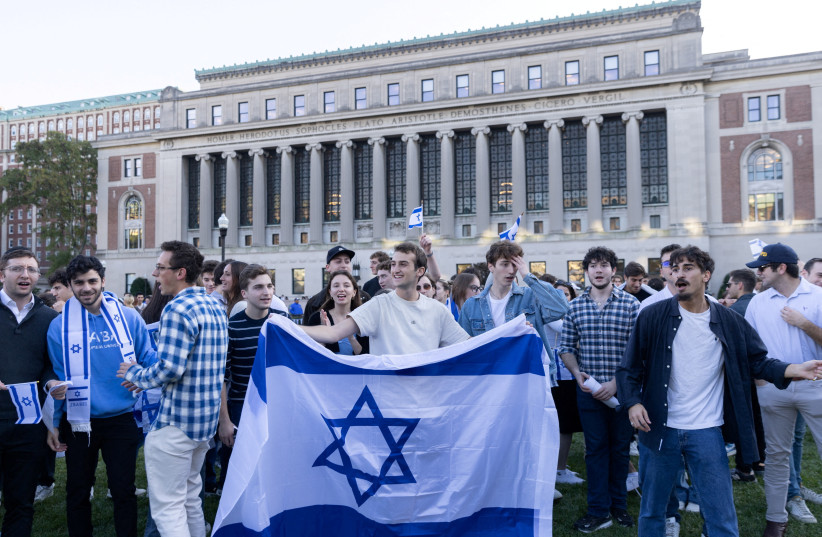
Voices of October 8th Jews
Sixty-eight-year-old New Jersey resident Mollie Golbin grew up in the 1960s. “My Jewish identity growing up was cultural – in name only. Even though my parents were brought up in kosher homes, my [nuclear] family was religiously non-observant. We did celebrate Passover, Rosh Hashanah, and Hanukkah. The first life cycle event I remember was when my brother was born, and we had his bris (ritual circumcision).
“I was not given any Jewish education, although living on Long Island at that time, I was pretty involved in our local synagogue youth group because my best friend went there for Hebrew school. So I went to a lot of social activities there but never to Hebrew school. My parents did not feel it was important for either me or my sister, but my brother had to go [to prepare for his] bar mitzvah.
“Prior to Oct. 7, 2023, I would describe myself as a secular and cultural Jew but certainly not very observant. When my two sons were born, my husband and I made a conscious effort to make sure they went to Hebrew school and that we celebrated all of the life cycle events with them.
“Back in the 1990s, I even took a class sponsored by the Melton Center that I referred to as my ‘Super Jew’ class. I learned a lot in that class, and I feel that it helped me reconnect at that time. Both of my sons had bar mitzvahs, and they both continued on through confirmation. Then it basically stopped for all of us, except for the holidays and when one son got married.
“Fast-forward a few decades, and I had very close family, who are observant, make aliyah. I went to visit Israel several times, did some of the touristy things, but my relationship to Israel was not so different from when I’d go visit them in their previous locations. It was just another place in the world.
“However, the only caveat to that last statement would be that on my very first visit, when I went to the Kotel and stood in front of the wall, I was moved in a way deeper than I had ever thought I would be. I still cherish that feeling all these years later.
“When Oct. 7 occurred, and it was on Shabbat, and I could not reach my family, it was one of the most helpless feelings I’ve ever had. I did not comprehend the extent of what happened, and because it was Shabbat, their phones were off. That event was definitely life-changing and eye-opening for me on several levels.
“I became obsessed with the safety of my Israeli family, and I learned a lot more about the Iron Dome, safe rooms, and sirens than I ever really wanted to. My family and I were in constant contact, especially the first year or so, and tried to touch base on WhatsApp almost daily.
“I downloaded [an Israeli news] app to get updates. I followed the feeds coming through on social media regarding the war updates. I learned more about the geography of Israel. I donated money to the IDF and other organizations fighting this war. It all was never far from my mind or my heart.
“Prior to Oct. 7, I hardly ever lit Shabbat candles. After Oct. 7, I light Shabbat candles, as well as a candle in memory of those murdered, whenever I am home on a Friday night. I also recite a prayer taken from something I read right after the war began.
“I became more aware of the high level of antisemitism in the world as a whole, although for me, in my personal life, it’s not a major issue. I do not belong to a synagogue, and I still do not consider myself to be a religious or observant Jew. But, I would say that after Oct. 7, I became a more aware Jew… and maybe even a more proud Jew,” she related.
Native New Yorker Vanessa Hidary said that she was “raised as a Reform Jew in a Reconstructionist congregation” and as “a half Ashkenazi, half Syrian Jew.” She’s been exploring Jewish identity in the spoken arts scene, a space she described as one that “leans progressive, left-leaning, and liberal.”
Reflecting on her upbringing “in a home of die-hard Democrats” who supported leftist causes, Hidary said about her professional milieu, “This aligned perfectly with my values.”
Her previous trips to Israel were driven by her art, not by politics, and she “remained unscathed” by the “bits of anti-Israel or antisemitic rhetoric” that periodically arose in her world.
“Then came Oct. 7, 2023. Like many Jews, I can tell you that day changed everything.
“Watching the horrific events unfold, I knew my life as a Jew – and as an artist – would never be the same. I felt a visceral lightning bolt go up my spine. I knew I needed and wanted to speak out for Israel and Jews worldwide. By Oct. 8, there were still no ‘thoughts and prayers’ for Israeli victims of terror. I posted an Israeli flag on Instagram and immediately lost followers.
“From there, a new journey began: one of speaking up for my brothers and sisters in Israel and publicly ‘coming out’ as a Zionist at a time when the word had been hijacked and turned into a slur. I found myself increasingly isolated within my social and artistic communities. Conversations about the conflict often felt one-sided and lacking nuance. The fallout was painful – losing 25-year friendships, fracturing relationships with colleagues, and watching fans and followers disappear.
“Yet, this unexpected chapter also sparked a renewed sense of purpose. In June 2023, I traveled to Israel with a delegation of Jewish educators sponsored by the Jewish Education Project. The program took me to massacre sites and memorials, where I heard directly from survivors of the Oct. 7 attacks. I extended my stay to perform and lead writing workshops in Jerusalem and Tel Aviv,” she elaborated.
By documenting the war through the lens of a Diaspora Jew, Hidary rebuilt her social media presence over the past two years. She was honored by the Anti-Defamation League as one of the 2024 Heroes Against Hate for her online advocacy.
Hidary said that next week, she will return to Israel to participate “in the Tel Aviv Institute’s Jews Talk Justice program, spearheaded by [social media influencer] Hen Mazzig. This first-of-its-kind laboratory trains influencers, artists, leaders, and advocates to stand up for Jews online.
“I’ll be extending my stay to perform and speak with groups such as The Fourth Quarter, Slam Poetry Tel Aviv and Jerusalem, and appear on the JNS podcast The Quad featuring Fleur Hassan-Nahoum, [former] deputy mayor of Jerusalem.”
Follow her on Instagram @vanessahidary.

Delilah Hirshland was a college freshman at UCLA on Oct. 7. In Ha’am, UCLA’s Jewish news magazine, she wrote about her experience as an October 8th Jew.
“Judaism wasn’t central to my identity. I hadn’t received a formal Jewish education and didn’t have a bat mitzvah. The closest I came to embracing my heritage was lighting the menorah candles with my mom and sister during Hanukkah each year. It wasn’t that I was embarrassed about being Jewish, but it simply wasn’t a significant part of my everyday life. I had more or less let it fade into the background among my other identities.
“But suddenly, with the weight of Oct. 7 hanging over me, I felt a stark shift. The political discussions I once thrived on felt empty in the face of the massacre. I felt alone, isolated in my beliefs and my identity, and even more so when I realized how little my new friends truly understood about who I was. My Jewishness had suddenly become the most important thing about me – the thing that defined how others saw me.”
Florida-based actor, director, martial arts fighter, CEO, and social media personality Ilan Muallem was raised in a home fragranced with occasional synagogue attendance and Shabbat dinners, “but [we] didn’t keep Shabbat. In high school, it was no longer relevant in my life, and I didn’t really think about being Jewish much.”
With most of his family living in Israel, Muallem, 43, described his connection to Israel as “a big part of my identity. More so than being Jewish even.” Before Oct. 7, he said that, ritually speaking, “I did nothing related to Judaism.”
Muallem described the impact of Oct. 7 on him as “Massive. More so, the world’s response to it. Antisemitism is at an all-time high, and I speak on it daily. There is so much hate that it can get you down sometimes. It seems like a mind virus has taken hold of the world [preventing them from being] able to think rationally. It’s become an obsession for many to hate us.”
In the aftermath of Oct. 7, Muallem now studies Torah weekly. “I am more involved in the community. I learned how to put on tefillin, and I am overall more connected to it [Judaism].”
The aftermath of Oct. 7 was the catalyst for him to take a stand on social media and start posting videos in support of Judaism and Israel. His social media advocacy on behalf of the Jewish people stems from what he described as “a realization that the fears of my grandparents still hold true today. That the world has a massive double standard for Jews, and that if we don’t stick together, we won’t last.”
Follow him on Instagram @ilan_muallem_official.
Arguably, the most high-profile October 8th Jew is 55-year-old New York actor and comedian Michael Rapaport. Immediately after Oct. 7, he started speaking out, loudly and forcefully, in support of Israel on social media. Since Oct. 7, he has returned to visit Israel again and again.
In an interview with The Jerusalem Post’s David Brinn in May 2024, Rapaport, whose style is best described as brash, announced, “When people feel comfortable talking s*** about Jews and Israel, I feel that I need to articulate my feelings in a way that is as aggressive as possible... and that’s exactly what I do. Oct. 7 just brought it all to a whole other level.”
In an interview with Inbal Hananel on Ynet last October, Rapaport said, “My Judaism has changed 100%. I am more in tune with it. I’m more proud, I’m more aware, I’m more educated. I’m more proactive in every single way possible, and I’m really glad about that.”
In response to Hananel’s question “Do you believe in God differently?” Rapaport responded, “Yes. I believe in God in a different way. I believe in Hashem in a different way. I celebrate and understand Him in a different way. I think we have nothing but faith. You have to have faith. That’s been one of the good things that has come from this last year for me personally.”
Follow him on Instagram @michaelrapaport.
Shani Rosenzweig is a 31-year-old living in Florida. She described her upbringing as an engaged Jew. “I grew up in a Modern Orthodox home and attended Jewish day school and Jewish summer camp. I made aliyah with my family in 2010 and moved back to the States after high school. Being Jewish was all I knew. The holidays, traditions, family time, and education built me into the person I am now.
“Prior to Oct. 7, my Jewish identity was just one way I described myself. I married Jewish, celebrated the holidays as traditionally as possible, and surrounded myself with other Jewish people. I lived in a Jewish part of town, where interactions with people of other religions weren’t common. I had only Jewish friends until college. I was proud to be a Jew and knew the struggles and triumphs that come with the religion,” she said, while also acknowledging that she lacked a deep understanding.
Then something shifted for her. “I rebelled outside of the Modern Orthodoxy of my home at the age of 14 and never went back to that particular sector of Judaism.”
Describing her complex relationship with Israel, she said, “Prior to Oct. 7, I thought of Israel as the place I lived and had visited over 40 times, the place my family and my husband’s family live, and a place filled with a dense history that was hard for me to understand.
“I moved to Israel when I was just 15, and I struggled. I wanted to move back to America to be with my friends, so I never took the time to build a sustainable life there. I enjoyed visits after I moved back, but I never really thought about it beyond that.
“Everything changed for me after Oct. 7. My husband is Israeli and was away training for work. He called me and said there was a full-on war in Israel. I was home alone that Saturday, with no plans to celebrate Simchat Torah, so I stayed home and was glued to the news the whole day. Thankfully, I was able to get in touch with family and friends in Israel, ensuring their safety. The next few weeks were a blur. I took off work, spent quality time with my Jewish friends, and was constantly on social media waiting for the next big update.
“My husband and I moved to another state three weeks later. Six months after the move, I found myself looking for work and decided to get involved in Jewish communal work. If you had asked me on October 6 if that was something I would ever do, I would have respectfully laughed in your face. My own mother would not have believed it. But I needed to get involved in Jewish work,” she confessed.
“As a Jew living outside of Israel during that time, I needed to find a way to give back, make a change, and impact other Jews. I got a job with Hillel, working on college campuses to enhance Jewish life in the aftermath of Oct. 7 and the college encampments. Since then, we moved again, and I joined the Jewish Federation in my town as the assistant director of Israel engagement, deepening my desire to make a difference to Jews in the Diaspora during these times.
“Given my history of partially growing up in Israel and not being happy there, I had never imagined willingly wanting to work in the Jewish communal space, and I didn’t think about Israel on a daily basis. Watching the horrors of that day unfold before my very eyes changed everything about my relationship with the world as a Jew.
“Seeing how the world reacted against Jews after Oct. 7 reinforced the need in me to change career paths and get involved in Jewish work. I am more proud to be a Jew now, and it is the first way I describe myself when asked about who I am,” she elaborated.
“My husband and I are more involved in our Jewish communities, as our desire to make those connections has grown. We also light Shabbat candles as often as we can. Recently, I returned to school to earn my master’s degree in Israel education – something I never thought I’d do. These changes have all stemmed from the aftermath of Oct. 7.”
Echoing the haunting last words of murdered American-Israeli journalist Daniel Pearl, she concluded, “My name is Shani Rosenzweig, and I am a Jew.”
The writer is a freelance journalist and expert on the non-Jewish awakening to Torah happening in our day. She is the editor of three books on the topic: Ten From The Nations; Lighting Up The Nations; and Adrift Among The Nations.