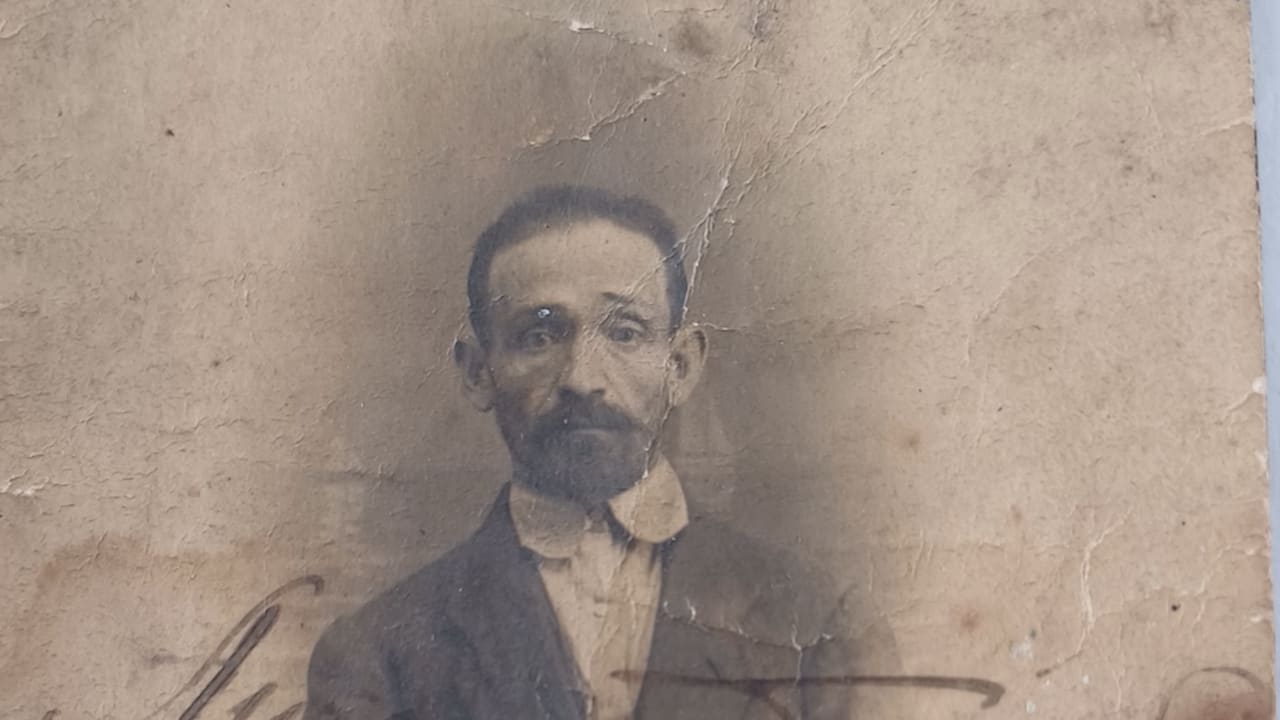
One thousand and thirty-one previously unidentified victims of the 1941 Babyn Yar massacre have been named, the Babyn Yar Holocaust Memorial Center announced amid simultaneous ceremonies in Jerusalem and Kyiv commemorating the 84th anniversary of the mass murder.
Research over the last three years with partners like the International Holocaust Remembrance Alliance has led to the identification of these new victims, adding them to the database of 29,732 names.
During the same period, an additional 2,000 records were corrected, with details such as age, address, family ties, professions, and circumstances of death clarified.
At the ceremony at the National Library of Israel, its Memorial Center’s chair, Natan Sharansky, said that they were getting close to naming all 33,771 Jews murdered during the Babyn Yar massacre 84 years ago. In 2006, Haaretz had reported that only 10% of the victims had been identified by Yad Vashem.
According to the Memorial Center’s statistics, 301 of the victims were infants, and another 5,363 were children and adolescents. The youngest was three days old, and the eldest, 104. Still unknown are the ages of 5,865 of these victims of the Nazi-led massacre.

Allowing the memories to live on
As part of the Jerusalem ceremony marking the anniversary of the mass murder, held in conjunction with the March of the Living, a reading of the newly identified names, a Kaddish memorial prayer, and a panel on the challenges of remembrance during wartime took place.
The ability to remember was a recurring theme during the event, with National Library chairperson Sallai Meridor detailing in a speech how there was an attempt by the Nazis to hide their crimes ahead of the Soviets’ advance by burning the bodies.
In essence, the Nazis attempted to incinerate their victims and scatter their ashes into the wind, so that not even their memories would remain, said Meridor; the Memorial Center has, nevertheless, been able to restore these memories.
Sharansky said in his own address that Babyn Yar was therefore not just a symbol of atrocity, but also a symbol of the erasure of the memory of people and crime.
Growing up in the Ukrainian Soviet Socialist Republic, there was a massacre pit not far from where he lived, Sharansky continued, but the knowledge of the site’s true character was not common knowledge. Soviet Union leader Joseph Stalin was “in a struggle against Jewish identity,” and the Soviet government discouraged discussion of the Holocaust.
Even in Israel, many had not heard the name of Babyn Yar, March of the Living Israel CEO Revital Yakin Krakovsky told The Jerusalem Post.
This fact, she said, was a testament to Nazi and Soviet efforts to suppress history. Until 10 years ago, the massacre site was a park; there were no memorials present. Now there are metal columns there, pierced by bullets and a crystal wall, with the memorial installations visited by over 300,000 people since the war in Ukraine began.
Yakin Krakovsky said that Babyn Yar should be a symbol of the Holocaust no less than the Auschwitz-Birkenau death camp is. At least 1.1 million Jews were murdered at that camp, and at least 1.5 million Jews were murdered in the occupied Soviet Union during the “Holocaust of bullets,” she said.
Memorial Center CEO Anna Furman said in a statement that her team was revealing the truth by returning the names of Babyn Yar victims “from oblivion.”
“Each name shows the scale of the tragedy and its devastating impact over the generations – the Holocaust and the wars that followed,” said Furman.
“Behind every spoken name we see poems unwritten, music unplayed, discoveries unmade, and children unborn. Each fate matters and holds the power to change the world,” she continued. “These discoveries hold historical value: They return memory to those who were denied it and remind us that evil has an end.”
The center sought to reconstruct the memory of victims, such as the story of Red Army soldier Zindel Kravetskyi, who returned to Kyiv after the city’s liberation and sought official recognition of his murdered family. The names of his children, eight-year-old Aron, four-year-old Vova, and six-year-old Zoia, were missing from Holocaust records, and in one case, the birth date was incorrect.
Sharansky said during the event that “every person has a name,” and looking at their photographs and hearing their name spoken for the first time in decades gives the dead the respect they were denied with such a horrific end.
The March of the Living is working to ensure that future generations remember the names of the victims, with Yakin Krakovsky likening this effort to the commandment to recount the story of the Exodus during the Passover Seder.
She said that the organization operated under the principle espoused by Holocaust survivor and author Elie Wiesel that “whoever listens to a witness becomes a witness.”
Though the number of survivors was dwindling, a significant number of younger generations were rising to tell their story, Yakin Krakovsky continued. Their life was not merely history, she said, but integral to Jewish identity.
The correction of stories and restoration of names would not have been possible without the creation of a digital database utilizing the archives that were made available to the Memorial Center by the Ukrainian government.
"Every Ashkenazi Jew has a babushka from Odessa"
The Ukrainian Ambassador to Israel, Yevgen Korniychuk, said that he was happy to have supported access to the archives because “we are not just friendly nations, we are family – every Ashkenazi Jew has a babushka [grandmother] from Odessa.”
Partnering with the National Library and the German Bundesarchiv (Germany’s federal archives), the center has digitized eight million items of archival materials since 2020, working with documents, photographs, testimonials, records, and court cases stored at 19 institutions across 13 regions in Ukraine.
Over seven million items were digitized during the war alone. Yakin Krakovsky said that the pace of digitization accelerated during the war, driven by the need to conserve historical materials that could have been destroyed.
She also noted that there were cases of non-Holocaust related Ukrainian archival materials being stolen by Russian forces.
The digitization process occurred very much “under fire,” said Sharansky. The Memorial Center continues to operate during the war, though, he noted, the invasion had stalled its plans to build a museum.
With “two wars for the future of the free world in progress,” Sharansky said, referencing the ongoing Israel-Hamas War in addition to the Russia-Ukraine war, “you need to understand how important it is to preserve history during war.”
Further, the center has used its expertise in data verification to help Ukrainians record the history and the names of the victims of the war between Russia and Ukraine. The Closed Eyes database contains the names, biographies, and circumstances of death of 5,026 individuals and has received the support of Ukrainian First Lady Olena Zelenska.
The September 29-30, 1941, Babyn Yar massacre was a mass execution of over 33,000 Jews by Nazi forces and Ukrainian auxiliaries in a ravine near Kyiv. The victims were ordered to bring their valuables, money, and linens to the site.
They were then forced to undress and line up at the edge of the ravine, where they were gunned down en masse, their bodies piling on top of one another. Over the following years, the site became a mass grave for at least 100,000 more victims, including Jews, Romani, and Soviet prisoners of war.