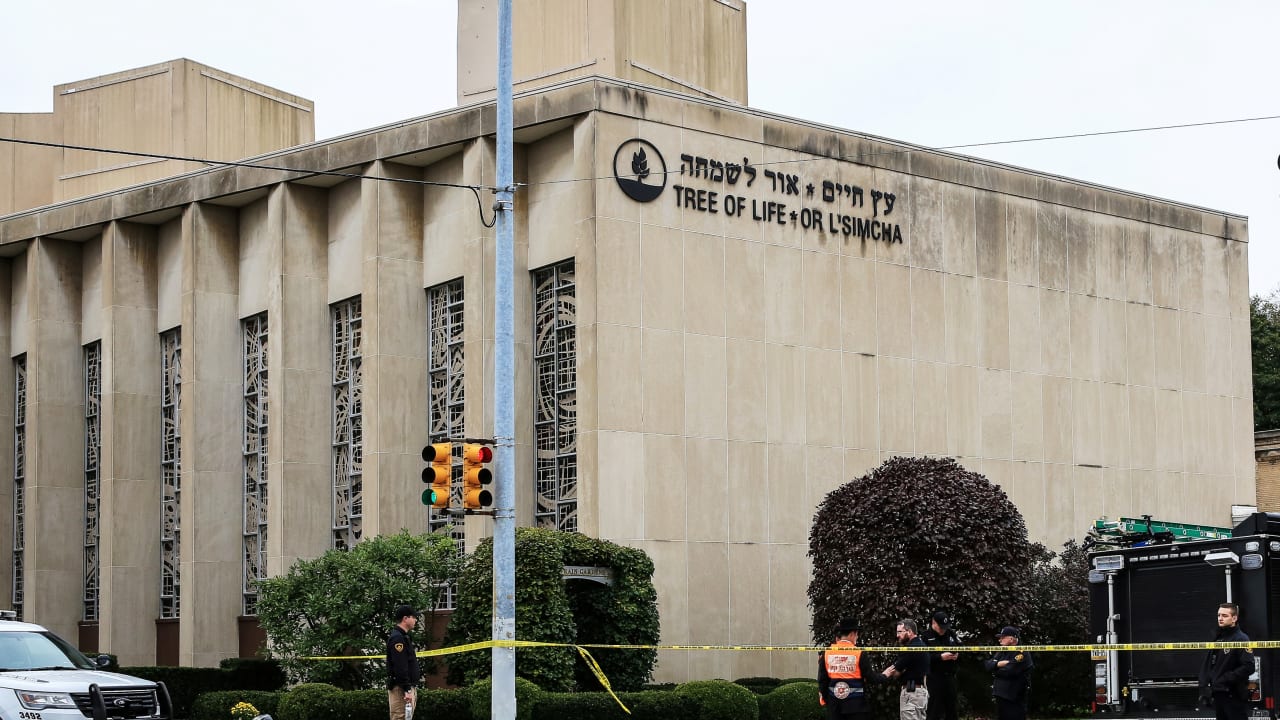
The Secure Community Network (SCN), the safety and security organization for the Jewish community in North America, announced the launch of “Standing with Strength: Stories of Survival” last Thursday. A new oral history initiative developed alongside Emmy- and Golden Globe-nominated producer Craig Turk, it will preserve firsthand accounts from individuals who survived targeted antisemitic terror attacks.
The project compiles testimonies from survivors of major terror attacks targeting Jewish institutions across the US, specifically focusing on the atrocities in Pittsburgh, Poway, Colleyville, Overland Park, and Surfside. Featuring 10 participants who recount the events, their immediate responses, and the critical survival lessons learned, the initiative directly integrates these oral histories into SCN’s security training programs throughout North America.
The project highlights how security preparedness and training save lives during targeted attacks. Many featured in the project credit the security training they received directly from SCN and local Jewish Federations with helping them develop the situational awareness and survival skills needed to endure anti-Jewish terror attacks. SCN is now incorporating these hard-won lessons into its security training infrastructure, which has instructed more than 91,000 community members since 2024, to prepare individuals to recognize, prepare for, and respond to threats.
Michael Masters, national director and CEO of SCN explained to The Jerusalem Post that the project originated directly from the survivors, who wanted to share everything from foundational resilience against violence to practical, granular survival details.
Masters told the Post that SCN is weaving these testimonies directly into its ongoing educational work by having survivors actively participate in community training. As an example, Masters pointed to one participant who survived being a hostage for 11 hours at Congregation Beth Israel in Colleyville, noting that the survivor volunteered to turn his experience into a dedicated course that he now travels and delivers on his own.

Survivor testimonies highlight how security training and preparedness can save lives
Masters said, “The survivors who came forward gave us something no report or statistic can: the truth of what it takes to live through the unthinkable. The vulnerability we need to guard against the most is the feeling that it could never happen here. These stories are proof that it can, and proof that preparation saves lives.”
While highlighting that SCN has built a robust training infrastructure, instructing over 40,000 community members last year alone, Masters stressed that Jewish communities face a threat environment “unlike anything that’s been witnessed in North America,” noting that SCN referred over 850 threats to life to law enforcement last year.
Urging the need to expand, Masters noted, “We’ve got a population of 7.2 million, and so we really need to elevate the community getting involved, getting engaged, and also expanding the security initiatives around the country that work as part of our federation system to be resourced to be able to do this work at the scale that we know is necessary.”
Turk told the Post that, as soon as he heard about it, he felt an immediate desire to participate. Turk said, “As soon as the idea just began to take the faintest of shapes, I thought what an incredible honor to be able to participate in something like that.”
Turk noted that the survivors view sharing their stories as a moral and civic duty rather than something to avoid. Turk explained that these individuals choose to speak out despite the heavy emotional toll, telling the Post that it’s really hard “to revisit these absolutely frightening, terrible, [and] devastating” experiences to their lives and the lives of the ones they love, but “all of them stood up to it with such grace. It was extraordinary.”
Survivor testimonies connect remembrance with preparedness for future attacks
Turk also told the Post that capturing the faces and voices of those who lived through these atrocities creates a profound human connection. He stated: “Being able to see these faces and hear these voices will help people connect to these experiences in the most profound way possible.”
Turk added, “These modern-day heroes offer lessons in resilience we can’t afford to forget. SCN is doing essential work by connecting memory to preparedness, ensuring we are ready not if, but when, the next crisis emerges.”
The Post spoke with survivor Audrey Glickman, whose testimony is included in the project. Glickman recounted her experience surviving the October 2018 massacre at the Tree of Life congregation in Pittsburgh’s Squirrel Hill neighborhood, emphasizing the life-saving impact of preparedness.
Glickman, who was leading the service when the gunman attacked, told the Post how she and her partner sought shelter during the attack, hiding in a small room beside the choir loft behind the ark, where they covered themselves with their prayer shawls (tallitot) and crouched on the floor.
Glickman said that having previously undergone security training meant that standard survival protocols kicked in automatically, noting, “You know run, hide, fight, and it kicks in automatically once you’ve had the training. And maybe every couple years, you should probably go over it again, but once you’ve had it, you remember somehow.”
Glickman added, “Think about it ahead of time, and then your brain will just do it.”
SCN security operations help prevent violent attacks on North American Jewish communities
The launch coincides with a sustained and elevated threat environment facing North American Jewish communities, where security training and real-time intelligence operations serve as vital safeguards against violent extremism. Through its 24/7 Jewish Security Operations Command Center (JSOCC) and national monitoring networks, SCN’s active threat management has successfully intercepted and thwarted multiple violent plots before they materialized.
Case studies illustrating this impact include the arrest of an offender in Ogden, Utah, possessing six operational homemade bombs and an assault rifle; the federal indictment of a suspect following an armed standoff in Atlanta; and the interception of a heavily armed individual targeting a rabbi and imam in Needham, Alabama.