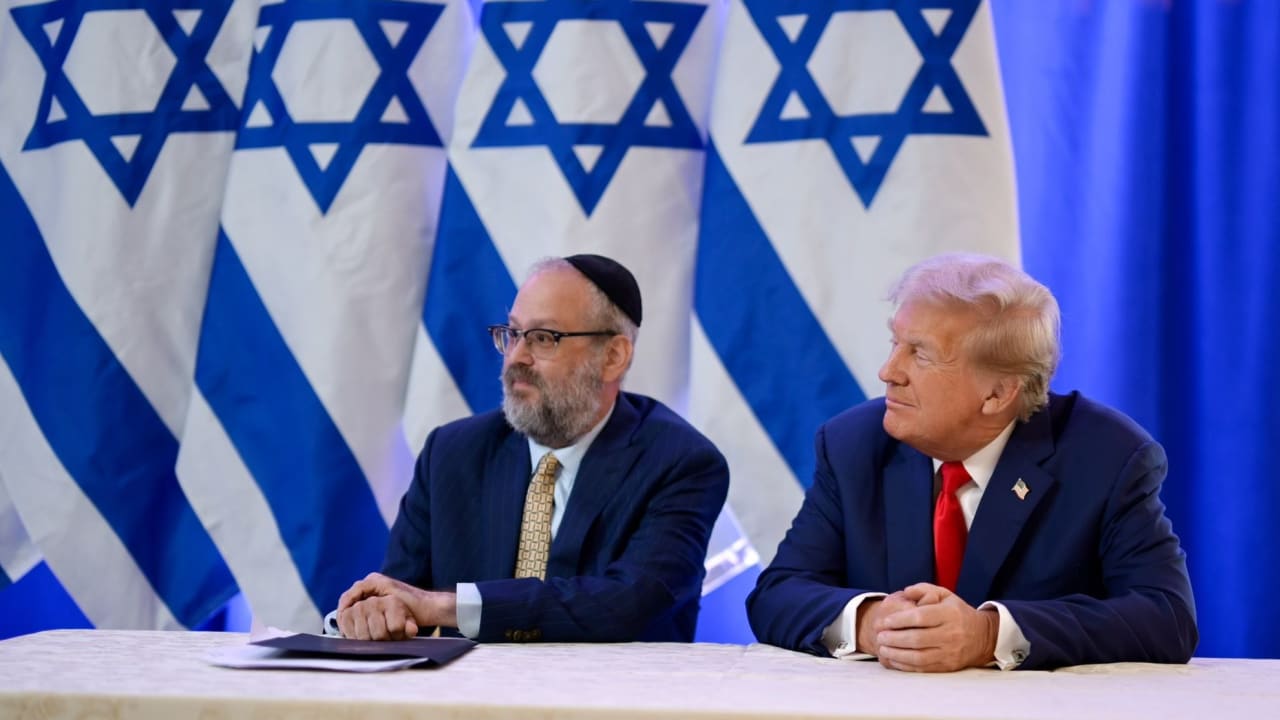
The United States Foreign Relations Committee held a hearing on Wednesday for the nomination of Rabbi Yehuda Kaploun to become Special Envoy to Monitor and Combat Antisemitism (SEAS). Kaploun was one of six nominees for ambassadorial positions reviewed by the committee, with the candidates presenting their vision of their anticipated positions and answering questions by members.
The Florida Chabad-affiliated rabbi detailed his past experiences with antisemitism, including a childhood recollection of being heckled with cries of “dirty Jew” when walking to synagogue in Connecticut as a child and the loss of his cousin during the October 7 massacre.
“It is a daunting task. Antisemitism is a symbol of larger hatred. History has proven that when a country starts with allowing antisemitism, the results are not kind to that country,” Kaploun told the committee in his statement. “Antisemitism is anti-American. Those who chant ‘death to the Jews’ all too often chant ‘death to America.’”
Committee chairman James Risch noted the importance of the SEAS role in his opening remarks. With the rise of antisemitism in the United States and around the world since October 7, the Republican senator said Kaploun would face a great task if his nomination were to be confirmed.
The Idaho politician said that he had always seen the antisemitism expressed in Palestinian textbooks as being on one side of the topic of Jew hatred and America on the other, and was disturbed to see so many in the US supporting Hamas.

Importance of education in response to Americans who engage in antisemitism
Kaploun, in response, emphasized the importance of education in response to Americans who engaged in antisemitism. He extolled the principle of freedom of speech and said that the way to combat antisemitism was through teaching history.
Those who deny the Holocaust should be confronted by the words of American soldiers who liberated the concentration camps, said the rabbi. He also said in his statement that he believed teaching about the history of the American Jewish community and the “Judeo-Christian values on which the country was founded” was essential.
Ranking member Jeanne Shaheen expressed in her opening remarks that she hoped Kaploun would explain how he planned to prevent antisemitism from becoming a partisan, working across the aisle and with different religious communities.
“Fighting antisemitism requires bipartisan effort,” said the New Hampshire Democrat.
Kaploun added that bipartisan support was needed “to educate the world to respect one another.”
“I am not a miracle worker. We cannot do this alone. We do this by building bridges through education and friendships and dialogue,” said Kaploun.
Senator Chris Van Hollen questioned Kaploun about his thoughts on President Donald Trump’s response to pundit Tucker Carlson platforming Christian white nationalist Nick Fuentes. According to CBS, Trump had said that he didn’t know much about Fuentes and that it was up to viewers to decide, but no one could tell Carlson who to interview.
Kaploun said that Trump and Secretary of State Marco Rubio had made it clear that antisemitism had no place in America. Antisemitism was not just an American problem, said Kaploun, and freedom of speech and expression is an important part of the government’s policy and the nation’s foundational principles. Antisemites could hate, according to Kaploun, but opponents of that hatred also had the right to educate.
Van Hollen also asked Kaploun if it was antisemitic to criticize the Israeli government. Kaploun referred to the International Holocaust Remembrance Alliance (IHRA) working definition of antisemitism and explained that singling out Israel and engaging in double standards approaches antisemitism.
The Maryland Democrat submitted to the record a letter of opposition against Kaploun’s appointment, penned by Congressman Jerry Nadler and supported by 17 other Democrat congresspeople. Nadler and his peers alleged that Kaploun, a longtime Trump ally, was a partisan choice who ignored antisemitism in the Republican camp.
The congresspeople criticized Kaploun for not responding to Trump’s remarks at a 2024 election event that the Miami businessman organized, in which the then-candidate allegedly said that the “Jewish people would have a lot to do with a loss.” The representatives said that this comment was an example of antisemitic scapegoating.
Kaploun also did not respond to reported incidents in which antisemites or links to radical figures had been hired by the Trump administration, according to the letter.
“To represent the United States’s fight against antisemitism, a nominee must be able to, without hesitation, call antisemitism out in all of its forms, no matter how powerful the utterer,” read the letter. “Any failure to wholeheartedly condemn such antisemitic motifs must be disqualifying, especially for the United States government’s chief antisemitism official.”
The letter also charged Kaploun of making highly partisan statements, according to Mishpacha Magazine, telling American Jewish leaders to vote for Trump because “Democrats refuse to even recognize the butchers of women and kidnappers of children as terrorists.”
“Such a sweeping, false accusation against those charged with considering his nomination raises serious concerns about Mr. Kaploun’s judgment, temperament, and his ability to work effectively across party lines,” said the congresspeople.
The period for submitting letters of support or opposition for Kaploun and the other nominees is set to remain open until Thursday morning.