Antisemitism has risen significantly in Massachusetts public schools since the October 7 massacre, according to the Massachusetts Special Commission on Combating Antisemitism draft final report, which also provided a series of recommendations, including new classroom resources and reporting programs.
Last Wednesday’s report – which was the culmination of 10 hearings and analysis of state statistics, Jewish NGO audits, and academic surveys by the multi-branch government commission – found that Massachusetts kindergarten to grade 12 (K-12) schools saw various manifestations of antisemitism over the last two years.
The commission heard of incidents of swastika graffiti, Holocaust jokes and denial, and harassment and discrimination against Jewish students. Jewish students also faced harassment based on perceived or actual ties to Israel, with some being called “Zionist” in a derogatory manner.
Testimony warned that students were increasingly being exposed to neo-Nazi, pro-Hamas, and other radical right and left ideologies through social media. Concerns were also raised about the content that students were being exposed to in the classroom, which some testimonies alleged contained inaccurate and harmful material relating to the Jewish people and Israel.
The Department of Elementary and Secondary Education (DESE) reportedly has limited monitoring ability of the curricular materials used to teach about antisemitism, Jewish history, and identity. DESE created a 2018 content standard for the Middle East conflict but had limited authority in requiring its adoption.

It was recommended by the commission that the Board of Elementary and Secondary Education (BESE) establish a body to ensure the implementation of a genocide education program and that the DESE develop a model curriculum for teaching about antisemitism, Jewish identity, history, and contributions to America.
To a similar end, schools were also asked to work with community groups to create a Jewish American Heritage Month.
The DESE would also provide “appropriate” resources for classroom instruction on Levantine history and the Middle East conflict. Schools were also called upon to include antisemitism and antisemitic myths and tropes in digital literacy programs.
The commission acknowledged that antisemitic incidents were likely to be drastically underreported. Jewish students were further likely not to report incidents due to fear of retaliation and the belief that there would be no response by authorities.
DESE is limited in its ability to address antisemitism
This was not unfounded, as DESE also had limits in its ability to address antisemitism incidents. It was recommended that the commonwealth establish a statewide bias reporting program, which would also allow bias incident data to be collected and centralized.
Another reason that incidents were underreported was that administrations didn’t provide staff with clear instructions or means on how to report the incidents. There was also likely a lack of understanding among educators of what constituted antisemitism or violated school rules.
Programs for staff on combating bias often neglected to include antisemitism. The commission recommended the institution of mandatory anti-bias training that included antisemitism.
The commission also found that antisemitism had become a “serious concern” in higher education, with Jewish students, faculty, and staff feeling that campuses had become hostile, where harassment and ostracization occur for expressing Jewish identity or a connection to Israel.
Some were told to state their views on the Israeli-Palestinian conflict and publicly denounce Israel. Jewish students consequently have often chosen to conceal their identities.
Testimony detailed instances in which Jews on campus were subjected to Holocaust jokes and denial, including being told to go to “the gas chambers.” Others were called “Zionist,” as if the term were a slur, and had allegedly been subject to physical assaults and vandalism that included the destruction of mezuzot.
One academic boycott at the University of Massachusetts-Amherst excluded anyone associated with “Israeli institutions,” but the administration reportedly responded “swiftly” to the incident. The commission recommended that administrations coordinate with law enforcement to share intelligence and responses to risks against vulnerable students.
They also called for the review and clarification of policies on discrimination and the dissemination of policies about bias harassment.
Like K-12 schools, Jewish students expressed a lack of clarity about the process for reporting antisemitic incidents and the belief that those reported were not suitably addressed. The commission recommended clear and available means for reporting discrimination to the administration.
It also praised Tufts University, the University of Massachusetts-Amherst, and Wheaton College for their reporting mechanisms.
The Massachusetts Department of Higher Education was told to encourage academic institutions to conduct surveys on the campus environment. The commission suggested institutions, like Harvard University, install a coordinator responsible for overseeing Title VI civil rights compliance.
Another issue that was shared by K-12 and secondary education institutions was the concern about antisemitism not being included in bias training. One noted that Brandeis University, Harvard University, and Simmons College had begun incorporating antisemitism into the program. It was recommended by the commission that other institutions institute training that included the topic of antisemitism.
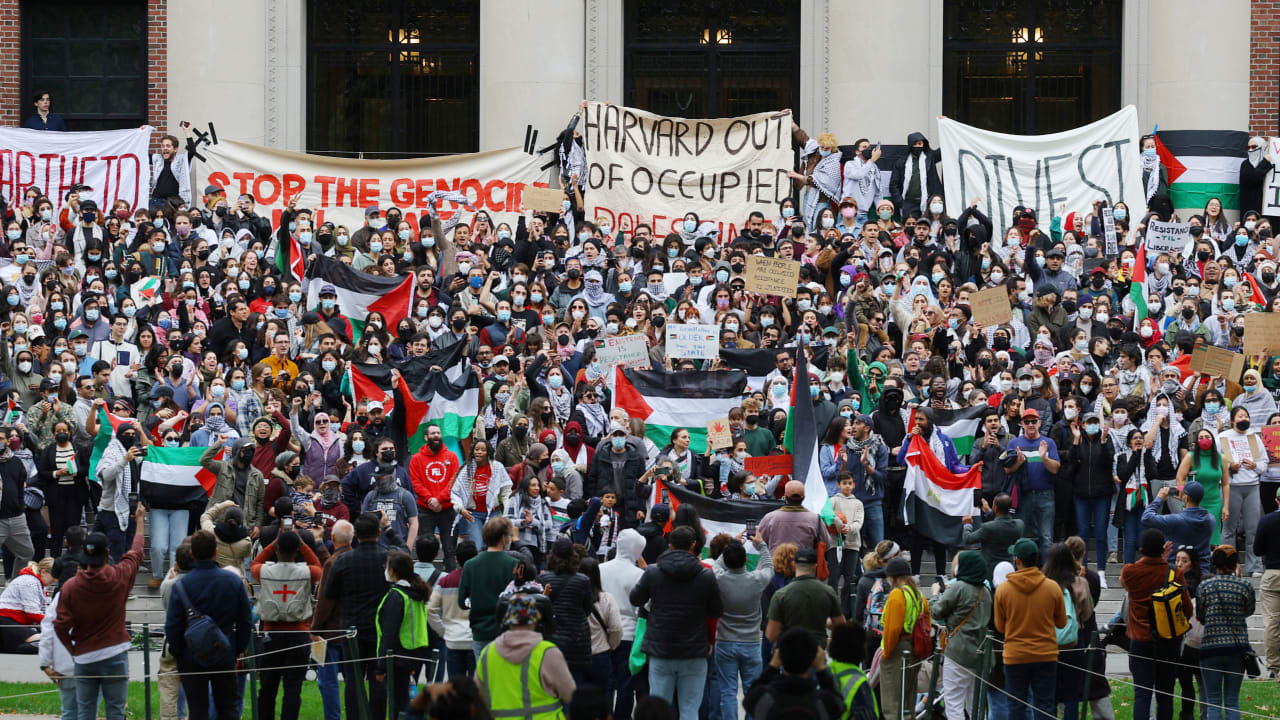
Colleges and universities have reportedly been inconsistent in enforcing policies governing protests, which have at times disrupted classes and included intimidating conduct. Students reported instances in which classes were held at a protest encampment or extra credit was offered to participate in a pro-Palestinian protest.
Institutions were called upon to enforce codes of conduct for protests and introduce rules on time, manner, and place restrictions as adopted by MIT, Harvard Business School, and Boston University.
The commission called on academic institutions to refrain from participating in academic boycotts targeting individuals based on race, religion, or national origin, warning that they were inconsistent with anti-discrimination laws and the principles of free expression and exchange of ideas.
Institutions were called upon to adopt policies that upheld those principles. Antisemitic hate-motivated crime in Massachusetts rose by 20% in 2024, according to the report, with 84.4% of religious bias crimes being committed against Jews.
The commission was established in 2024 to review and issue recommendations on rising incidents of antisemitism in the state.