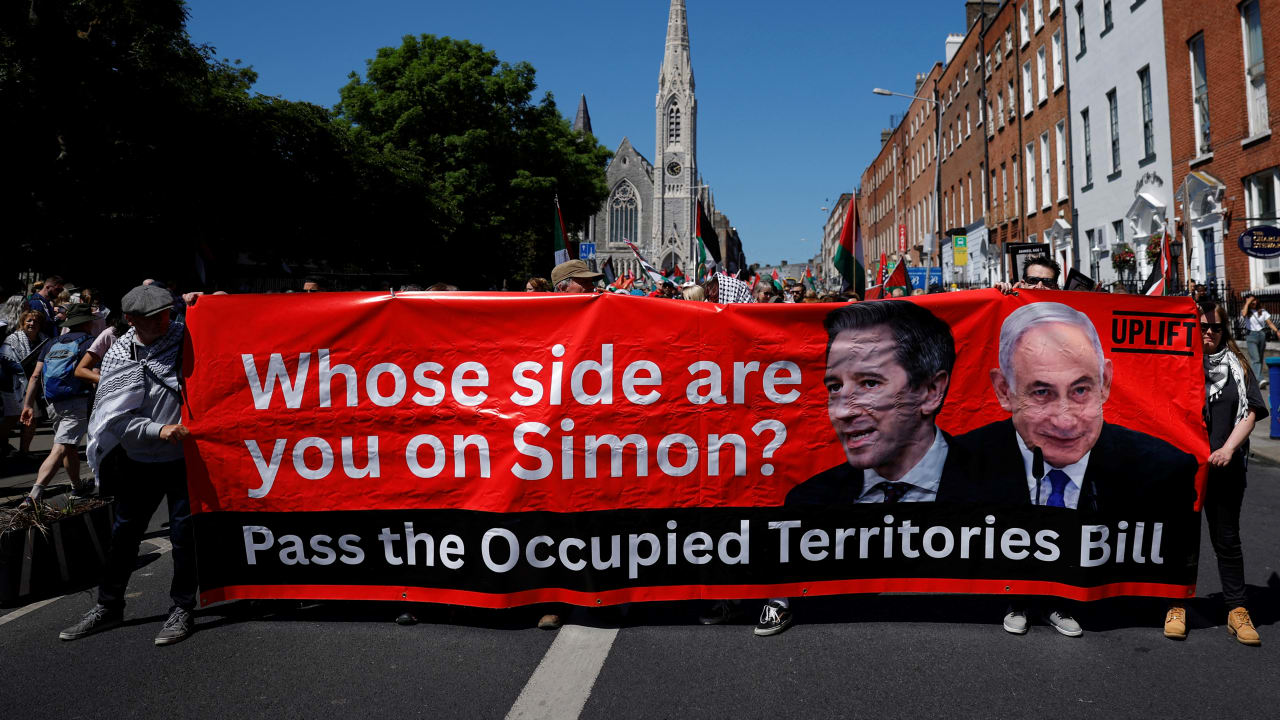
Ireland’s Joint Committee on Foreign Affairs and Trade opened two days of hearings on Tuesday for the Israeli Settlements in the Occupied Palestinian Territory (Prohibition of Importation of Goods) Bill 2025, the government-backed measure that would criminalize imports from West Bank settlements judged illegal under international law.
Senior officials from the Department of Foreign Affairs briefed TDs and senators on the draft, which the Cabinet approved on May 27. The general scheme treats settlement produce as “prohibited goods” under the Customs Act, carrying fines or seizure at the border.
Services were left out after the attorney-general warned that banning them could breach European Union single-market rules — a point several committee members signaled they will challenge as hearings continue on Wednesday with testimony from Senator Frances Black, author of the original 2018 Occupied Territories Bill.
Although trade in settlement goods is tiny, just €685,000 over four years, according to official estimates, Dublin’s move is widely seen as a test case that other EU capitals hostile to Israel’s war in Gaza may emulate.
Last month, nine member states led by Belgium and Spain urged Brussels to consider an EU-wide ban on settlement commerce, citing last year’s International Court of Justice advisory opinion that declared the occupation illegal.

Israel-Ireland diplomatic fallout
Israel recalled its ambassador, Dana Erlich, from Dublin in May 2024 after Ireland pledged to recognize a Palestinian state, warning that anti-Israel measures would chill tech investment. The embassy has remained closed, and Jerusalem previously condemned similar Irish bills as “immoral” boycotts that reward Hamas.
Irish officials insist the legislation merely aligns national law with international obligations while pressuring the EU to adopt a collective response. “We would prefer Brussels to act, but until then Ireland will not be lonely out there,” Tánaiste and Foreign Minister Simon Harris said when unveiling the draft last week.
The committee aims to finish its report before the summer recess, though insiders doubt the bill can clear both houses of the Oireachtas before autumn.
Irish lawmakers are weighing whether to recommend extending the ban to services such as tourism and IT outsourcing linked to settlements.
The United States and Irish business lobby groups have privately warned that the measure could undermine Ireland’s reputation as a pro-trade hub.
If enacted, the bill would make Ireland the first EU state to legislate a settlement-goods ban, adding another layer of tension to already battered Irish-Israeli relations and inviting legal scrutiny from Brussels over trade competence — exactly the clash Dublin’s coalition says it is prepared to fight.