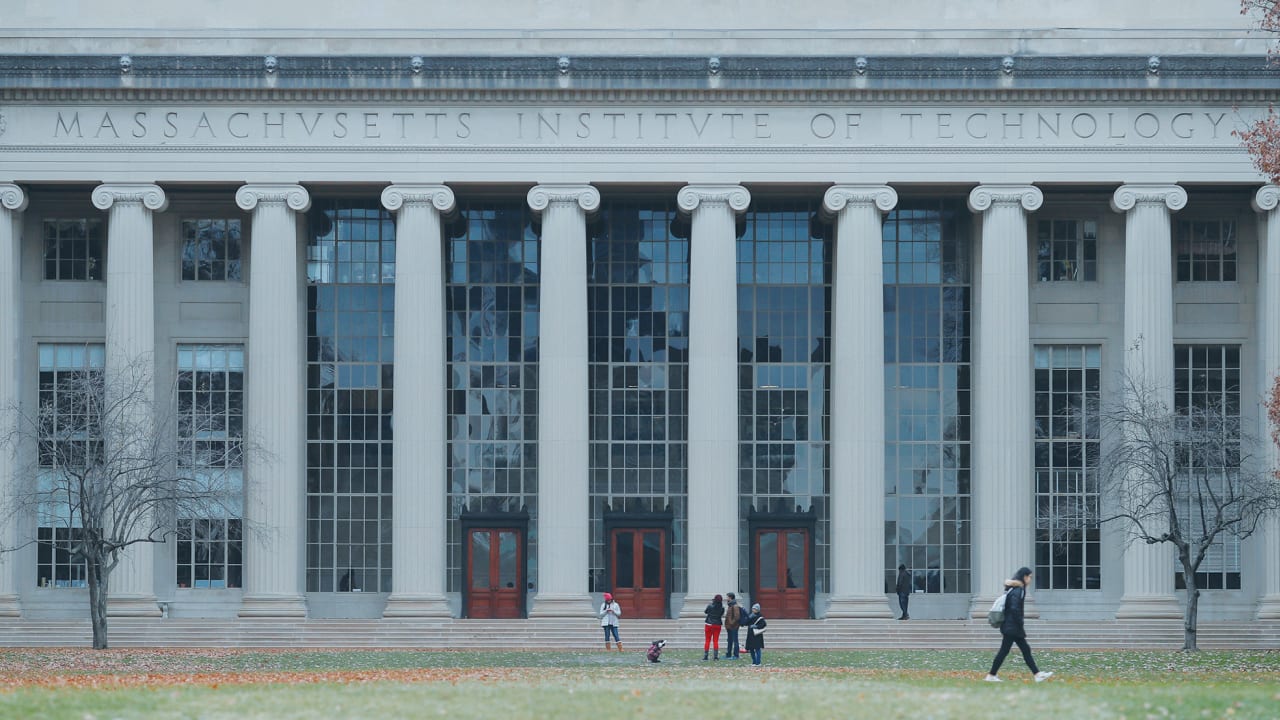
Two Jewish students have sued the Massachusetts Institute of Technology due to antisemitic discrimination they allegedly suffered at the hands of both the university itself as well as a tenured professor.
The Sussman v. MIT suit was filed on Wednesday, June 25, by the Louis D. Brandeis Center for Human Rights Under Law, which is acting on behalf of the two.
The 71-page suit – viewed by The Jerusalem Post – claims that linguistics professor Michel DeGraff violated Title VI of the Civil Rights Act of 1964, including via harassment on social media and in mass emails. The rest of the suit addresses antisemitic incidents involving other students.
One of the two students in the suit is Lior Alon, an IDF veteran and postdoctoral student at MIT. Alon said that, in 2024, he was publicly doxxed by DeGraff, who posted his name and photo on social media and tagged Al Jazeera.
DeGraff then penned an article in the French paper Le Monde in which he named Alon and said, “like many other Zionist counter-protesters, [Alon] participates in well-rehearsed propaganda that erases anti-Zionist Jewish students.”

The two doxxing incidents resulted in Alon being harassed by strangers in public, including at his child’s daycare, the suit continued.
Following the incidents, Alon formally contacted MIT President Sally Kornbluth to tell her he was frightened for himself and his family’s safety and asked for the posts to be deleted. The email said, “I have been subjected to antisemitic harassment and defamation by a professor, including online doxxing, which has made me and my family fear for our safety.” Kornbluth never responded to the message, the suit said.
“Not only did President Kornbluth’s silence and MIT’s inaction cause harm to Alon, but MIT’s failure to act also emboldened Prof. DeGraff, and his harassment of Jews escalated as a result.”
DeGraff also began teaching a seminar called “Language and Linguistics, from the River to the Sea in Palestine,” and posted about Jewish “mind infection.”
The second Jewish student, William Sussman, who was working towards his PhD, complained about the hateful rhetoric, following which the professor sent a series of mass emails to the department – copying in Kornbluth – accusing Sussman of being a real-life example of a Jewish “mind infection.”
The suit stresses that “while a long list of senior administrators witnessed the continuing antisemitic harassment of Sussman by a professor, “the only person who spoke out in an attempt to protect Sussman was an Israeli professor who himself was targeted and harassed by Prof. DeGraff based on his Israeli identity.”
On the same day as the seminar, flyers targeting Sussman specifically, including with white lettering on a green band (like those worn by Hamas), were posted under the doors of student dormitories.
Harassment too severe to stay at MIT
The suit states Sussman left MIT before completing his PhD because the harassment was too severe.
Sussman lodged a formal complaint which did not culminate in any support.
On January 13, 2025, Moriah Silver, manager of investigations at MIT, emailed Sussman to say they would not be pursuing a discrimination investigation, and that Sussman could not appeal this. Silver added that DeGraff’s communications “do not suggest that Prof. DeGraff is treating you differently because you are Jewish.”
Silver added, “It appears that Prof. DeGraff’s use of the ‘mind infection’ term relates to his views of the Israeli government, its education system, and how its ‘propaganda’ about the Israeli-Palestinian conflict has impacted the discourse and events on US college campuses.”
Brandeis said that as a result of the hostile antisemitic environment on campus, plaintiffs have been deprived of educational and professional opportunities and the ability to participate in campus life to the same extent as their non-Jewish peers.
“Jews and Israelis on campus were prevented from fully engaging in their studies, their research, and the full spectrum of campus life. They have been forced out of their programs, out of campus spaces, off campus, and even out of the university entirely.”
Sussman said Kornbluth was one of three college presidents (alongside Harvard and the University of Pennsylvania) who testified in the famous December 2023 congressional hearing on campus antisemitism.
“It’s a failure of leadership,” Sussman told the Post.
Kornbluth had said calls for the elimination of the Jewish people can be antisemitic “depending on the context.” While the two other university presidents lost their jobs for their statements, Kornbluth remained in situ.
“That tells you everything you need to know,” Sussman added.
Nevertheless, he said, “We are seeking systemic change. No one should have to go through what Lior and I went through.”
When asked if he felt scared pursuing such a public case, Sussman said, “We cannot let fear dictate our actions, that’s how terror wins.”
Regarding his own career, he said his future was not a positive one.
“My academic career is over,” he said. “I will never be Dr. Sussman.”