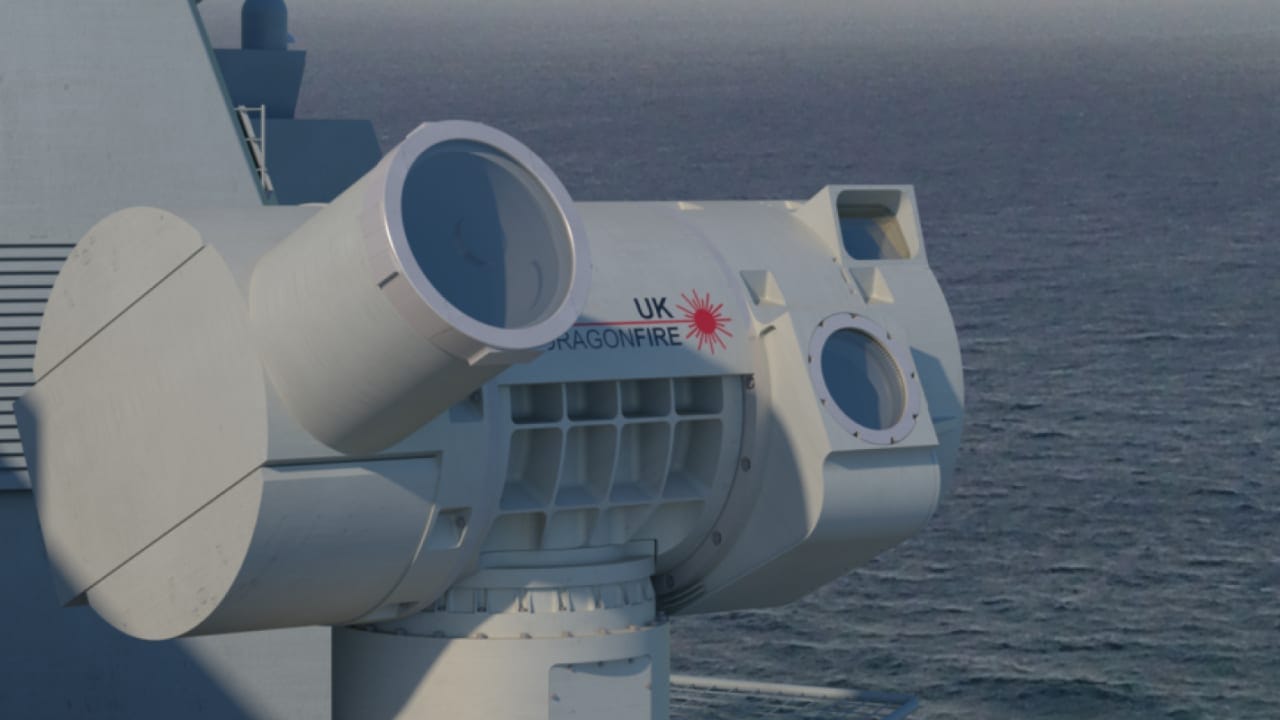
Britain awarded a 316 million pound ($413 million) contract to missile company MBDA UK to provide DragonFire laser systems for the Royal Navy, it said on Thursday, as part of a plan to add new technology to ships for countering drones.
In recent trials, the laser successfully intercepted drones cruising at 650 kilometers (404 miles) per hour.
According to a UK Defense Ministry release, DragonFire exploits UK technology to be able to deliver a high power laser over long ranges. The project is led by the Defence Science and Technology Laboratory (Dstl), on behalf of the UK MOD, working with its industry partners MBDA, Leonardo and QinetiQ.
The DragonFire weapon system is expected to be installed on Type-45 destroyers by 2027 and is intended to intercept aerial threats, such as unmanned aerial vehicles (drones) and incoming projectiles. It’s the result of a £100 million joint investment by the Ministry of Defence and UK industry.
“This high-power laser will see our Royal Navy at the leading edge of innovation in NATO, delivering a cutting-edge capability to help defend the UK and our allies in this new era of threat,” said Minister for Defense Readiness and Industry, Luke Pollard MP.
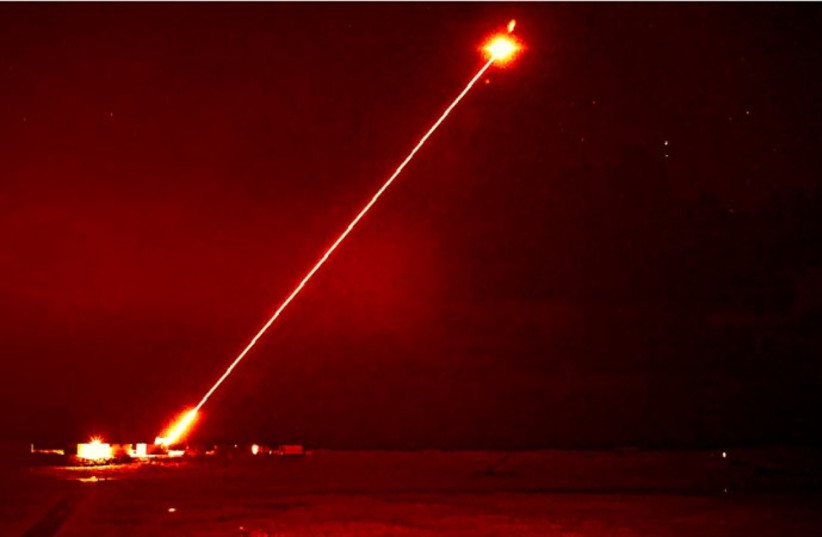
DragonFire is the first high-power laser system entering service from a European Nation.
Laser-directed energy weapons can engage targets at the speed of light, and use an intense beam of light to cut through the target, leading to structural failure or more explosive results if the warhead is hit. The cost of operating the laser is less than £10 per shot and firing it for 10 seconds is the cost equivalent of using a regular heater for just an hour.
The growing proliferation of such weapons, including UAV and guided munitions, pose a meaningful threat, necessitating advanced defenses like high-power laser systems to neutralize them before they can cause harm.
In May, the IDF revealed that it had successfully shot down dozens of Hezbollah drones that had infiltrated into Israel using the Iron Beam laser system. The IDF said that this was part of wider efforts which shot down close to 1,000 drones when taking into account all of the various fronts from which hostile actors have tried to attack Israel, including: Lebanon, Gaza, Iran, Yemen, Syria, and Iraq.
Laser tech on Israel Navy ships
In a recent interview with Globes, Lt. Col. H., Head of the Naval Division at the DDR&D, said that the Israeli Navy is preparing to integrate a defensive laser system on its next-generation vessels as a complementary solution to the ship’s traditional interceptors.
“Design platforms with room to grow, integrate capabilities gradually, and create advantage through collaboration. From major companies to agile startups that bring precise solutions to the field,” he was quoted as saying.
Forged under the constant pressure of persistent threats, Israel has built a multi-layered air defense architecture that has proven vital in real-time conflict. The Iron Dome, David’s Sling, and Arrow 3 systems constitute a robust shield against short, medium, and long-range threats.
In a recent talk, Dr. Yuval Steinitz, chairman of Rafael Advanced Defense Systems, explained that laser technology will revolutionize air defense by enabling ultra‑fast, low‑cost interceptions.
“Throughout history, wars were fought by launching something toward the enemy-from rocks to rockets,” he said. “With the laser system, aerial threats to Israel could become irrelevant, as a single beam of light will clear the skies.”