
In the new age of great power rivalry, the control of the seas will decide who controls the future, and the shipyards of South Korea may matter more to America’s security than any aircraft carrier it already owns.
Defense tech has become one of the biggest investments and strategic focuses in an era of global instability and renewed great power rivalry. And great powers still rely on great ships for projecting military strength and enabling the global trade on which modern economies depend.
That’s why shipbuilding matters. Enormously.
And it’s why South Korea (with Japan, and some help from Israel) holds keys that the US and its allies can’t afford to ignore.
The US Shipbuilding Gap
As US Vice President JD Vance recently noted at the American Dynamism Summit, the numbers are striking. During World War II, the US was producing three Liberty Ships every two days. Today? Just five commercial ships per year, a fraction of 1% of global shipbuilding output.
Yet ships remain the backbone of physical goods transportation from cars, chemicals, and containers to fuels like petroleum and LNG. For navies, they’re essential for projecting force, defending borders, and fighting wars.
From a venture capital perspective, shipbuilding sits at the intersection of two vital sectors: defense tech and climate tech. The problem is that the US simply can’t meet its needs without help.
Why Korea and Japan Matter
Korea is the largest shipbuilder outside China, a close US ally, and home to global heavyweights like Hanwha, Hyundai, and Samsung. These diversified conglomerates produce not just the consumer tech we know but also tankers, cargo vessels, and advanced naval ships.
Korea leads in high-value vessels, offers production across multiple ports, and is aggressively transitioning to environmentally friendly ships that meet global regulatory standards. Japan, too, remains a top three shipbuilder, with major players like Imabari, Mitsubishi, and Kawasaki.
The European outlier is Italy’s Fincantieri – significant but far smaller in scale.
The Strategic Rival: China
China dominates global shipbuilding and sees it, like AI, as a sector to control for strategic advantage. Heavy state subsidies give Chinese shipyards an edge but also mask reported financial instability in some of them. For the US and its allies, dependence on Chinese shipbuilding is a risk they increasingly seek to avoid.
Israel’s role in shipbuilding
On raw shipbuilding numbers, Israel barely registers, but its impact is far greater than the tonnage suggests.
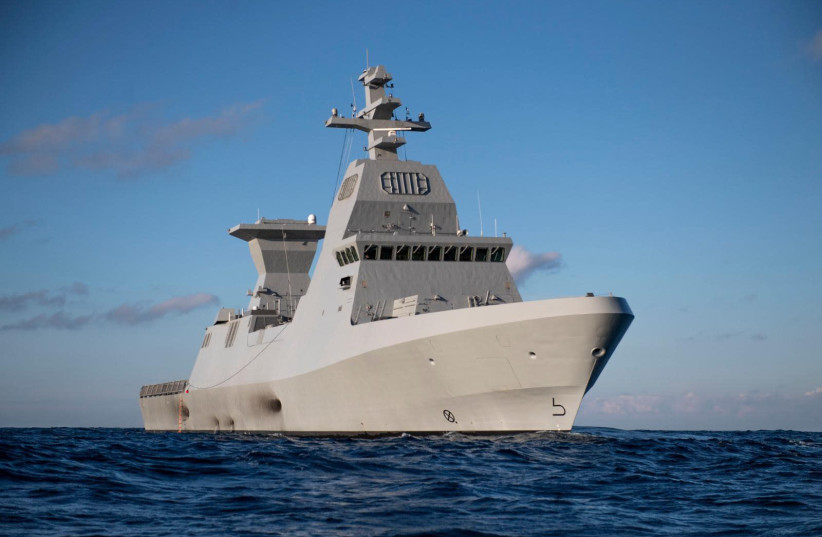
First, Israel Shipyards produces respected naval craft, including Saar fast attack boats and Shaldag patrol vessels, both proven in operational use.
Second, Israeli deep tech is solving critical industrial bottlenecks. Civan Lasers, an OurCrowd portfolio company, is transforming welding, one of shipbuilding’s slowest, most labor-intensive processes. Its next-generation laser welding technology delivers faster production, higher quality, and less strain on an aging workforce – benefits vital for Korea, Japan, and the US alike.
Finally, Israel is emerging as a force in maritime AI and cybersecurity. Orca AI improves safety and collision avoidance in commercial shipping; Windward provides intelligence for risk management and operational decision-making; and Cydome secures vessels and fleets against cyberattacks, a capability with very few serious global competitors.
In short, Israel may not build the largest ships, but it helps make them smarter, safer, and faster to produce.

Korean Innovation in Maritime Tech
Korea’s innovation isn’t limited to shipbuilding – it, too, has a start-up ecosystem surrounding its shipping prowess. Consider these 3 examples:
- Amogy: Korean-American start-up developing ammonia-powered zero-carbon fuels for large vessels.
- Cytur: Military-grade cybersecurity for ships, offshore platforms, and smart shipyards (supplying Hanwha Ocean and Rakuten).
- SeaVantage: Maritime AI providing real-time logistics analytics integrating AIS, weather, and congestion data.
US won't regain its strategic strength at sea alone
If the US is serious about regaining strategic strength at sea, it cannot do it alone. Building five commercial ships a year is not a strategy; it’s a vulnerability. America’s answer lies in harnessing the capabilities of its most reliable allies: South Korea and Japan for industrial capacity, and Israel for defense-tech ingenuity.
Korea and Japan bring the world’s most advanced shipbuilding infrastructure, proven naval production, and a readiness to pivot to green maritime energy. Israel brings the technological accelerators from laser welding to maritime AI to cybersecurity, which can modernize and secure the fleet of the future.
In an era where control of the seas is once again a measure of national power, the winners will be those who combine industrial might with cutting-edge innovation. That’s why I believe the next wave of defense tech and climate tech opportunity isn’t just on land or in the air, it’s being built right now, in the world’s shipyards.
Ely Razin is a Partner at OurCrowd & Chief Strategic Investments Officer.