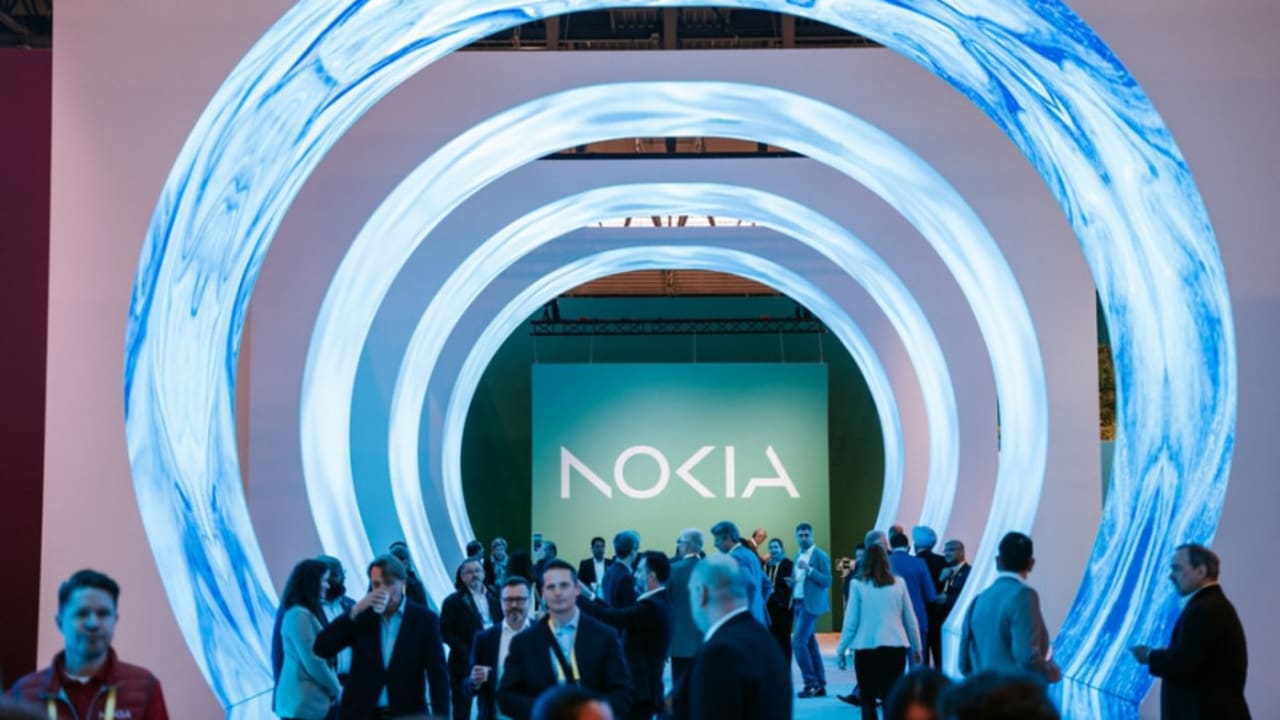
Many of us still hold a warm place in our hearts for the old Nokia phones - the ones with interchangeable panels and addictive games. Back then, Nokia was the undisputed queen of the tech world. But the revolution it is leading today is far removed from the world of small pocket devices; it is now focused on building the backbone of human civilization itself.
The Finnish telecommunications giant, once dominant in the mobile phone market, has gone through a complex journey of collapse and reinvention. Today, it is positioning itself as a powerful force behind global internet infrastructure, securing a role that could extend well into the middle of this century.
Nokia’s story is one of the most fascinating in modern business - a company that reached the highest peak and then fell from it at breathtaking speed. Until 2007, Nokia was synonymous with innovation and reliability. But that year, Steve Jobs introduced the first iPhone and changed the rules of the game forever.
Nokia’s executives at the time dismissed the new device, claiming it was an expensive toy that would break easily and fail in a competitive market. That mistake came at a heavy cost: Within less than five years, Nokia lost its entire market share to Apple and to devices based on Google’s operating system. When the company realized it could not beat the iPhone on its own turf, it made a painful but brilliant strategic decision to reinvent itself as an infrastructure and patent company.
Today, the situation is completely different, and Nokia’s bet appears to have paid off significantly. The company has developed and registered thousands of patents without which no phone manufacturer in the world - including the largest - can sell devices using 5G or 6G technology. Nokia has become a central global authority in defining next-generation communication standards, granting it the right to collect licensing fees and royalties from virtually every device sold worldwide.

These agreements were signed for the long term, securing stable and substantial revenue streams for the company through at least 2040. This business model transforms Nokia from a company competing for consumer attention into one that effectively “owns the roads” over which global data travels.
As part of its effort to lead the next technological revolution, Nokia is currently making one of its most significant moves: The acquisition of the American company Infinera. Infinera is not an ordinary tech company; it operates the world’s only development and production center for chips based on a material called indium phosphide.
This is a semiconductor with extraordinary physical properties, the most notable of which is its ability to emit light on its own. In traditional silicon-based chip technology, external light sources are required to transmit data through fiber optics, leading to significant energy loss and heat generation. Infinera’s chips allow a laser to be embedded directly within the chip itself, dramatically reducing power consumption and making data transmission significantly faster and more efficient.
Nokia has already secured patents related to this laser-based manufacturing technology, and as of 2026, it is the only company in the world that owns this capability. This combination allows artificial intelligence systems to operate at near light speed, with data flowing not through slow copper wires but through tiny optical chips.
Nokia now controls the entire value chain: It designs the chip, builds the laser system, and develops the software that manages it all. This move is especially critical in an era where artificial intelligence demands enormous computing power and energy consumption, and Nokia’s ability to provide efficient, high-speed solutions positions it as a uniquely capable player in the market.
The sixth generation of mobile communications, expected to be widely deployed in the coming years, will offer speeds 100 times faster than today’s 5G. This is not merely about faster mobile browsing, but about the ability to transmit massive amounts of data in real time with virtually no delay. Such capabilities will unlock possibilities that are difficult to imagine today.
Video calls will allow people to appear in full 3D and perfect quality, making it feel as though they are in the same room. This revolution will also transform medicine, allowing a surgeon in New York to operate on a patient in a hospital in Tel Aviv, with movements transmitted through the 6G network with perfect precision and no perceptible delay.

At the same time, transportation will undergo dramatic change thanks to Nokia’s infrastructure. Autonomous vehicles will communicate continuously with each other and with road systems, eliminating traffic jams and enabling smooth traffic flow.
Cars will receive immediate alerts about a child running into the road before either the driver or vehicle sensors detect it, thanks to data streaming from smart street cameras connected to the high-speed network. This technology will save lives and make urban spaces significantly safer. All of this requires a stable, fast, and intelligent network - and Nokia is building those foundations in its laboratories and newly acquired facilities.
The economic implications of these moves are enormous for Nokia and for global capital markets. Senior analysts estimate that if Nokia decides in the future to spin off Infinera as an independent public company, its valuation could exceed that of the entire combined Nokia group today.
The reason is the exclusivity of indium phosphide technology and the massive demand expected from tech giants such as Google, Amazon, and Microsoft, all of which require energy-efficient solutions for their massive data centers. Nokia now holds a strategic asset unmatched by any other company, and it is leveraging this position to secure long-term dominance.
Although the average consumer no longer sees the Nokia logo on their phone every morning, the company is everywhere data flows. It is in the fiber optic cables underground, in antennas on rooftops, and in the servers that process our internet requests. The shift from focusing on end-user devices to focusing on infrastructure is what saved the company and made it more relevant than ever.
The coming years will be the real test of these technologies, but with a vast patent portfolio secured through 2040 and control over laser-chip production, Nokia is in a starting position that any other company could only dream of. The revolution is already here - and it is powered by Nokia’s laser light.