Working from home has long ceased to be a temporary solution, and this shift is clearly reflected in residential design. Nirit Frenkel, founder of an architecture, planning, and home design studio, encounters this trend firsthand and describes how the home office has moved from the margins to the center of design thinking.
“If in the past people made do with a small work corner by the dining table or a spot in the living room, today it is clear to everyone that the home must also function as a full work environment,” she says. “Hybrid work has completely changed the way homes are designed - people understand that they need a quiet, comfortable, and efficient space that does not disrupt family life.”
According to her, the home office has become a room in every sense, one that is incorporated into the layout from the very first planning stage. “This is not something you improvise after the fact,” she emphasizes. “We plan it just like a bedroom or a kitchen, adapting it to the household’s routine - and above all, to the routine of the person who works there.”

There Is No One-Size-Fits-All Solution
The questions that arise during the planning process are many: Where the office should be located, how open or closed it should be, whether a separate entrance is needed, and how it integrates into daily life without causing disruption. In cases involving work with overseas clients or non-standard hours, the planning becomes even more precise.
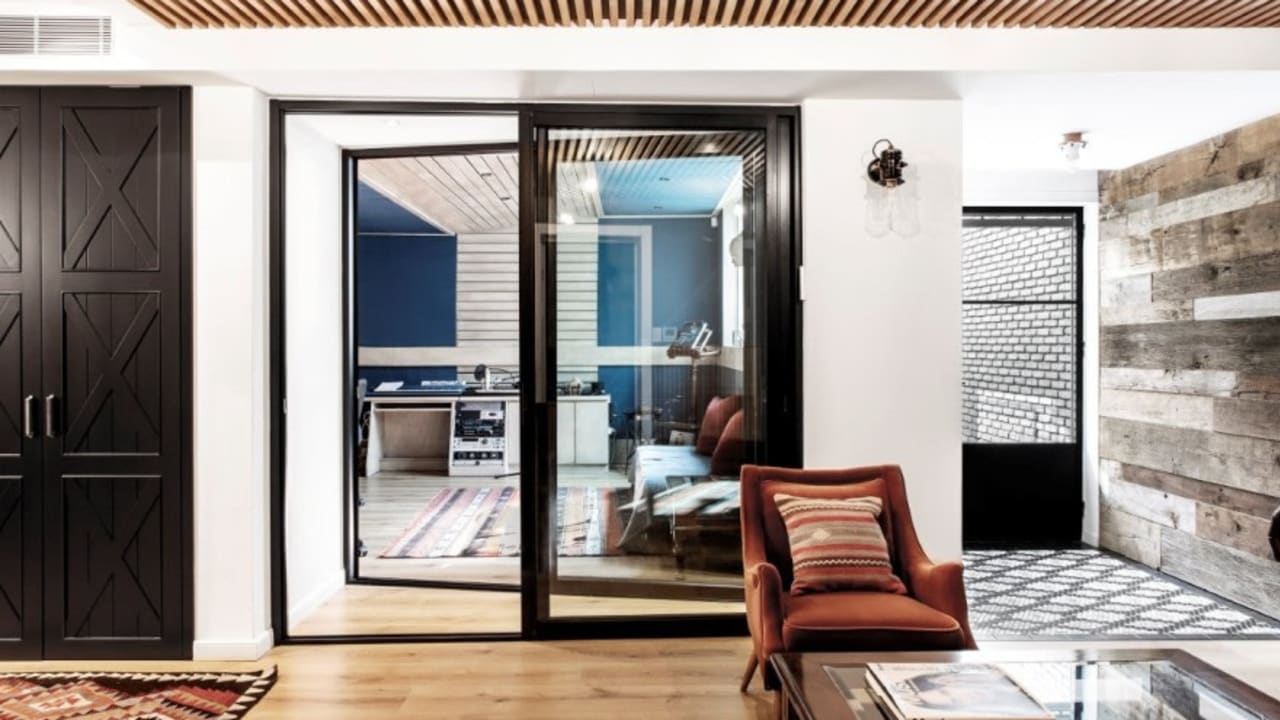
There is no single solution that suits everyone. Some prefer an office enclosed by glass walls - a space that maintains visual connection with the home while preserving quiet and acoustic insulation. Others opt for a more detached office, on a separate floor, in a basement, or in a particularly quiet area. “If possible,” Frenkel adds, “access to a private balcony can significantly enhance the work experience - a place to pause for a moment and get some fresh air in the middle of the day.”
Proper planning of a home office, she explains, must take into account a long list of parameters: Working hours, Zoom calls, collaboration with overseas teams, storage needs, appropriate lighting, acoustics, privacy, and the presence of young children at home. “This is planning that understands real life,” she says. “The office needs to be part of the home - but also separate from it.”

A Good Work Environment Improves Productivity
As an example, Frenkel describes a home office she designed for a father who works from home at unconventional hours. “We created a kind of glass cube for him, designed in a slightly different language from the rest of the house. The glass envelope was decorated along its upper section, a dominant custom cabinetry unit was painted light blue and incorporated brass elements, and the back wall was clad on its lower portion with dark wood panels, above which reddish-toned bricks were installed.”
When a home office is designed properly, she concludes, its impact extends far beyond working hours. “A good work environment improves productivity, but just as importantly - it allows you to truly disconnect at the end of the day. In today’s reality, this is no longer a luxury. It is a necessity.”