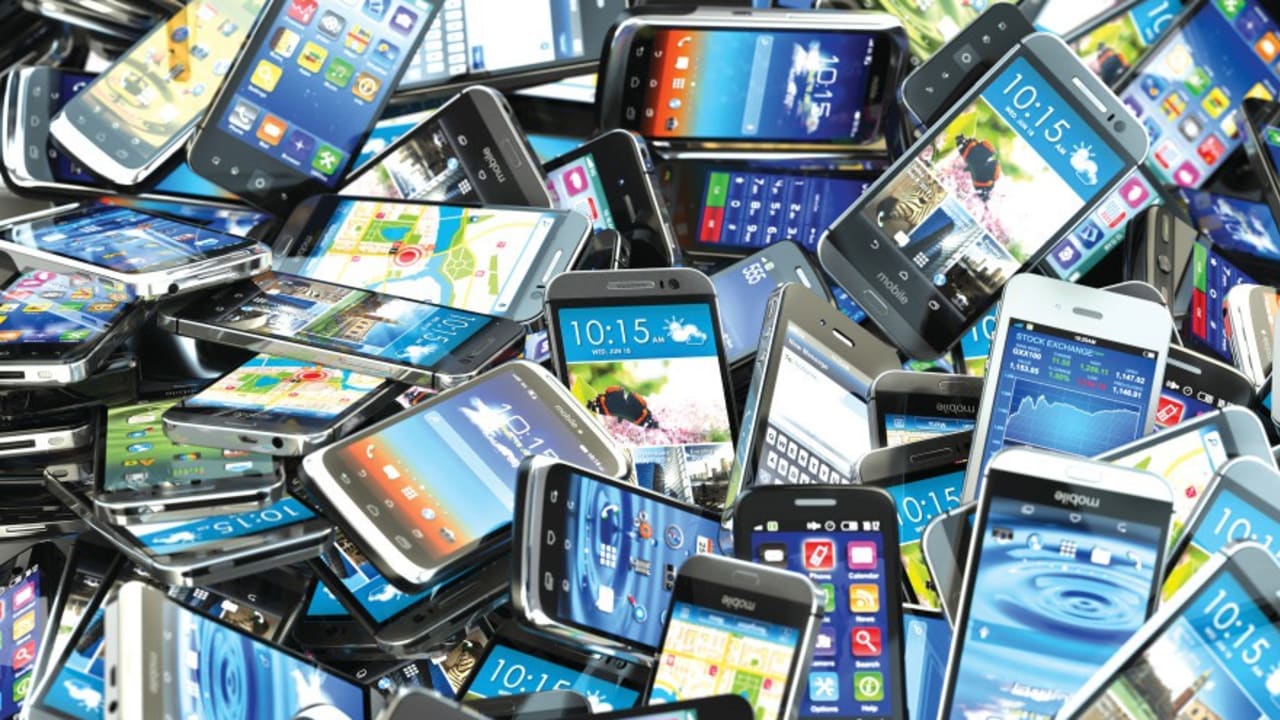
Israel invests vast resources in developing advanced technologies—drones, laser systems, smart munitions and digital medicine—yet remains almost entirely dependent on overseas mining sources. The precious metals required to drive these industries are not found in Israeli soil but rather all around us, embedded in the old electronic devices we rush to discard. A fast-growing global field known as urban mining offers a smart, clean alternative: Locating, collecting and recycling the gold, silver and rare metals already circulating in the local market.
In Israel, despite the enormous potential, there is still no plant capable of extracting rare metals from electronic waste, and the waste is exported to facilities in Europe. At the Ecology for a Protected Community initiative, operating in the Misgav industrial zone and employing some 93 workers with disabilities, the goal is to turn waste into opportunity. Amid old processors, screens, drives and electrical contacts, a nearly poetic picture emerges: Gold, palladium, silver and neodymium—hidden inside technology that is no longer in use.
“An average person in the Western world generates about 20 kilograms of electronic waste each year,” says Ami Gur, materials engineer and owner of I.G. Metals Ltd. “In Israel, with 10 million residents, that amounts to roughly 200,000 tons annually, which is enormous. Almost every product contains metals—aluminum windows, stainless steel in the kitchen, gold in computers and iron in cars. These metals are essential raw materials, and some are strategic.”
What happens if we don’t deal with this?
Gur: “In the era of trade wars, countries like Russia and China control some of these materials, and the global transition to green energy only increases the demand for metals such as silver, indium and aluminum, for example in solar panels. Electronic waste is not just an environmental hazard but also a strategic resource. Urban mining collects metals and raw materials from existing products and returns them to use. The goal of Ecology for a Protected Community is to build a plant that will process this waste and return metals like iron, copper and aluminum to the market, while also extracting precious metals like gold and platinum. That creates dual value—environmental and economic.”
Endless Recycling
“This is a social-ecological initiative focused on recycling electrical and electronic waste,” explains Dudu Levin, CEO of Ecology for a Protected Community. “Our core mission is providing employment opportunities for people with disabilities. About 80% of our workers are people with disabilities, and we are a leading force in recycling in Israel. I have worked in the company for six years, nearly three of them as CEO, after beginning in operations.”
“I come from the industrial world and have held managerial roles for many years,” adds Ronen Yoeli, CEO of the Ecology Israel Group. “For the past three years I’ve been part of Ecology Israel, which includes three companies and a nonprofit organization. Alongside Ecology for a Protected Community, the main company, there are two additional companies and a nonprofit focused on educational outreach, a visitor center that opened this month, and public information initiatives.”
The plant was founded 18 years ago by Danny Kog out of a vision shaped by his son Yonatan, who was diagnosed on the autism spectrum with severe epilepsy. “Danny wondered what happens to young people like him when they reach working age. After age 21, when the educational system ends, many are at risk of ‘losing themselves,’ whether staying at home without employment or entering workplaces where their potential isn’t realized,” says Levin. Kog saw recycling as an “endless” field—one that never stops and only grows year after year.
Levin: “It’s an industry where people with disabilities can work and express themselves. Today the plant employs close to 93 workers, 80% of them with various disabilities—physical, sensory, cognitive and psychological. All are recognized through the Welfare Ministry, the Health Ministry and the Defense Ministry. Any worker who shows motivation and desire to work receives a pathway and a tailored work environment.”
“My own connection didn’t begin from the environmental side, but from the social one,” Levin adds. “I come from a background in engineering and management, and spent about 20 years in high-tech at Flex. I have two sons on the autism spectrum, and my transition into recycling and social action came from a desire to contribute, to act from the heart—to be an ambassador on their behalf as well.”

What does your day-to-day work look like?
Yoeli: “First, the waste arrives from various sources—businesses, municipalities, urban collection centers and households—and is transported to recycling facilities. There it is processed so it doesn’t end up in landfill: Either the products are refurbished for reuse, or dismantled into raw materials such as metals, plastics and glass, which return to the market. The goal is to minimize landfilling as much as possible.”
Levin: “Products arrive at our facility and go through sorting and advanced treatment processes that ensure material recovery and reuse of metals and other components. But the peak of recycling for us is when we manage to refurbish a product and bring it back to life. That is the highest goal. For this we established an online-commerce department, including activity on eBay. Many items that reach us aren’t even broken—just technologically outdated, like when someone replaces a fully functioning microwave or computer. These items undergo inspection, refurbishment and renewal, and are resold in Israel and abroad at social prices.”
Always Out in the Field
The Electrical and Electronic Waste Law was enacted in 2014, about 11 years ago, based on the principle of producer and importer responsibility. “Since Israel has almost no domestic manufacturers of electrical equipment, the responsibility falls mainly on importers,” says Levin. “They pay handling fees to compliance corporations, which must prove to the government that they meet recycling targets. These organizations, such as Ecology for a Protected Community, employ companies that physically process the waste.”
“The 2014 law was a turning point,” acknowledges Gur. “Until then we treated waste mainly from an economic angle, keeping only profitable components and discarding the rest, which caused environmental pollution. The law established that all waste must be handled in an environmentally responsible way. In parallel, we aim to pioneer the recycling of solar panels. Their volume is rising quickly, and there is already a need to recycle old panels. Currently they are not covered by the law, and we are working to include them and become Israel’s first plant in this field.”
At home we all collect old computers, phones and devices—and often don’t know what to do with them. Collection sites aren’t always accessible.
Levin: “Any citizen can call the municipal hotline 106 and ask where the nearest collection site is. If it’s a large product, you can schedule a pickup—place it on the curb and the municipality will collect it.”
For now, there is no plant in Israel that fully recovers these metals?
Gur: “Correct. Today we separate mainly the metals that are easy to extract—aluminum, copper, iron, and so on—and export the rest to countries with advanced refining facilities. In parallel, Israel is working on establishing a battery-recycling plant that will be able to recover critical materials like lithium, cobalt and nickel.”
Your message is that companies and individuals can contact you directly?
Levin: “Absolutely. We’re constantly out in the field, building collaborations with companies and industry. There’s both a business aspect and an environmental-social aspect. On the one hand we reduce environmental harm from electronic waste, and on the other we return equipment to use and allow people to enjoy high-quality, affordable products. Once waste arrives at the recycling plant, we dismantle it down to raw materials—separating iron, plastic, stainless steel, aluminum and various components, including electronic boards from every device. The metals return to the local market through traders or online platforms, and the electronic components are sent to global refineries, where precious metals like gold, silver and palladium are recovered.”
So you’re essentially doing on a small scale what Israel needs on a large scale.
Levin: “When we say ‘small scale,’ we mean volume. Ami mentioned the 200,000 tons of electronic waste generated yearly in Israel. We process just over 2,000 tons a year—less than one percent of the total. The volume grows yearly due to consumption habits and technology cycles. If phone upgrades once happened every five or six years, today there is a new model every year. In the coming months we are establishing an advanced facility that will handle far larger quantities to meet expected growth.”
Are you the only ones in Israel doing this?
Levin: “There are other recycling companies, but we are among the few with advanced machinery. Most processes today are manual. With new equipment we can greatly increase efficiency.”
Yoeli: “Right now we process about one percent of Israel’s electronic waste. When the new plant is fully operational, we can reach around four to five percent—a very significant change. Currently some waste ends up in the iron industry, where components are only partially sorted. We can dismantle waste into its individual parts and extract far greater value.”
Levin: “After the recent war, there is growing discussion in Israel about the need to keep isotopic and rare metals in the country for the defense industries. Currently most metals are sent abroad for refining, but we hope that in the future a local industry will develop.”
Do you work with companies like Rafael?
Yoeli: “We process their waste in an organized, supervised manner. Ultimately the waste is sent for refining to recover precious metals—a process currently done outside Israel. Clearly we hope that in the future refining will be possible locally, but that requires government initiative and the establishment of domestic plants.”
Ami Gur: “It’s important to understand that defense, medical and chemical companies require high-quality raw materials with certifications. You can’t use materials that haven’t undergone professional, licensed recycling.”
Dudu Levin: “On the social level, beyond the ecological value, this is far more than regular employment. It’s unique employment. Some workers dismantle waste; others are forklift operators or driver assistants collecting waste nationwide. Seventeen laboratory workers—all with disabilities—sit and process computers under adapted conditions, receiving full wages, transportation and a hot meal. We are also a recognized rehabilitation body under the Welfare Ministry and the Health Ministry, meaning we are both a plant and a rehabilitative center.”
Ronen Yoeli: “The reason we opened a large visitor center is to expose the public—from students to seniors, from businesses to executives—to the importance of recycling and to the work our employees do. The center will host workshops, lectures, escape rooms and various artistic activities. The goal is to raise awareness and create ambassadors who understand the importance of employing people with disabilities.”
Dudu Levin: “Additionally, the plant is a kind of incubator. The goal is to prepare employees through rehabilitation and integrate them into the broader industry. More than ten employees have already moved into other factories, and more collaborations are developing. We have a full-time social worker who supports workers in the industry and provides full rehabilitative assistance, which helps both industry and employees.”