For several years, Elon Musk has promised an electric car for $25,000, but behind the scenes, he has continued to delay the model that Tesla so badly needs to compete with Chinese electric car manufacturers.
Now the company is taking a step toward making its cars more accessible, with the official launch of cheaper versions of the Model Y and Model 3. But as we reported earlier, this is a rather small step.
Both versions will be called Standard, while the regular models previously marketed will now be defined as Premium, and the Performance models remain unchanged in name. For a discount of about $5,000–$5,500 in the U.S., they lose a long list of features, including a smaller battery and lower performance.
Both models come with rear-wheel drive and only a 69 kWh battery. Among other things, they have lost the electric mirror folding, lane-keeping system, and particle filter, and received simpler shock absorbers. The luxurious leather upholstery was replaced with fabric, front and rear seat heating was removed, there is no 8-inch rear screen, nor electric adjustment for the steering wheel or ambient lighting. The sound system has only 7 instead of 15 speakers, and it no longer has AM/FM radio. There are only three color options: Gray or pearl white (for an additional $1,000) and black (for an additional $1,500).
The Standard Model Y, which will cost $40,000 in the U.S., is 11% less than the Premium. The range according to the stricter U.S. standard is 517 km, and the acceleration from 0–97 km/h has slowed to 6.8 seconds compared to 5.4 seconds for the Premium. The top speed remains unchanged at 200 km/h. Externally, the model loses the light bars in the front and rear, and inside there is no panoramic glass roof.
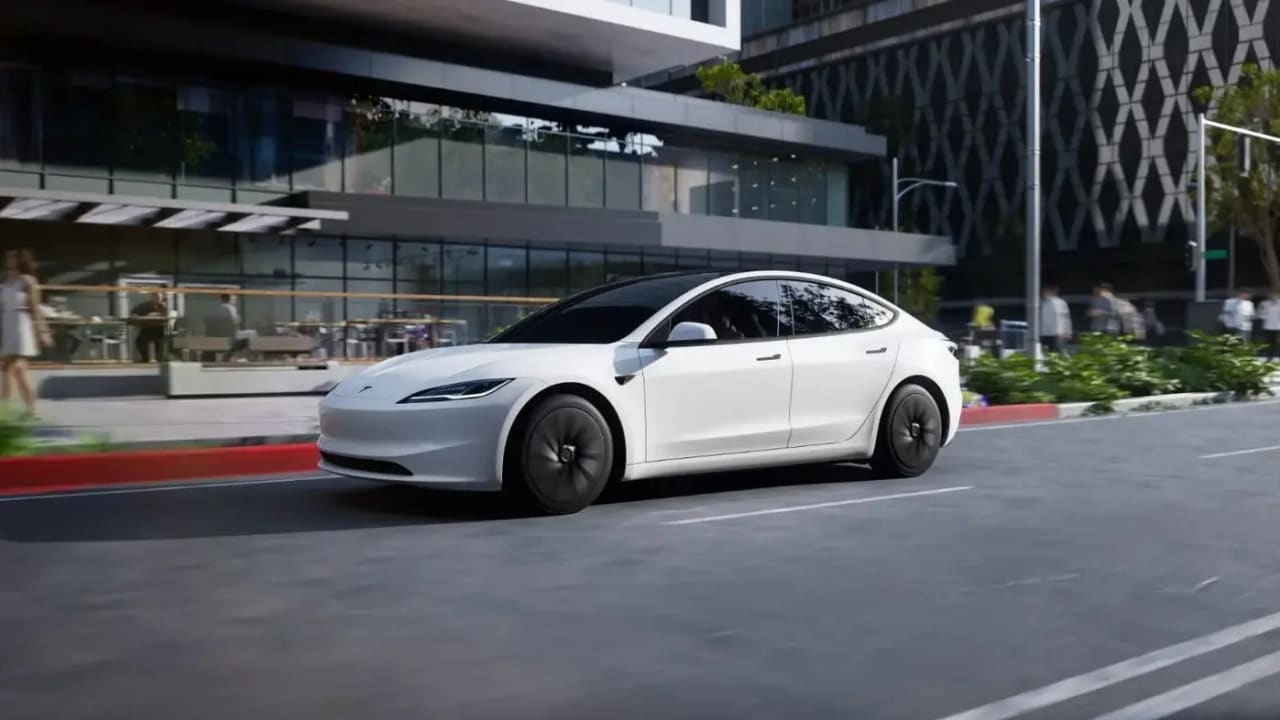
The Standard Model 3 will cost $37,000 in the U.S., 13% less than the equivalent Premium. Its range is 517 km according to the same strict standard, acceleration from 0–97 km/h is 5.8 seconds, and the top speed is the same at 200 km/h. The panoramic glass roof remains.

In the U.S., the new models may compensate for the removal of the $7,500 tax incentive for electric car buyers under the Trump administration, but this will not be enough against significantly cheaper new electric cars, such as the Nissan Leaf, which really starts at about $25,000 for the model with the smaller battery, and the Chevrolet Bolt, which will be relaunched soon at $30,000.
Tesla has not yet announced when the new models will be launched outside the U.S. If Israel sees a relatively similar price reduction, the Standard Model Y would cost NIS 217,000, a much more competitive price compared to Chinese cars, but the reduced equipment level will make it difficult to compete with them and with cars like the Hyundai Ioniq 5.
But the Model 3 for NIS 185,000 could be a different story, costing only about NI 10,000 more than hybrid or plug-in sedans. With Tesla’s reputation and low operating costs, it could also appeal to companies with leasing fleets.