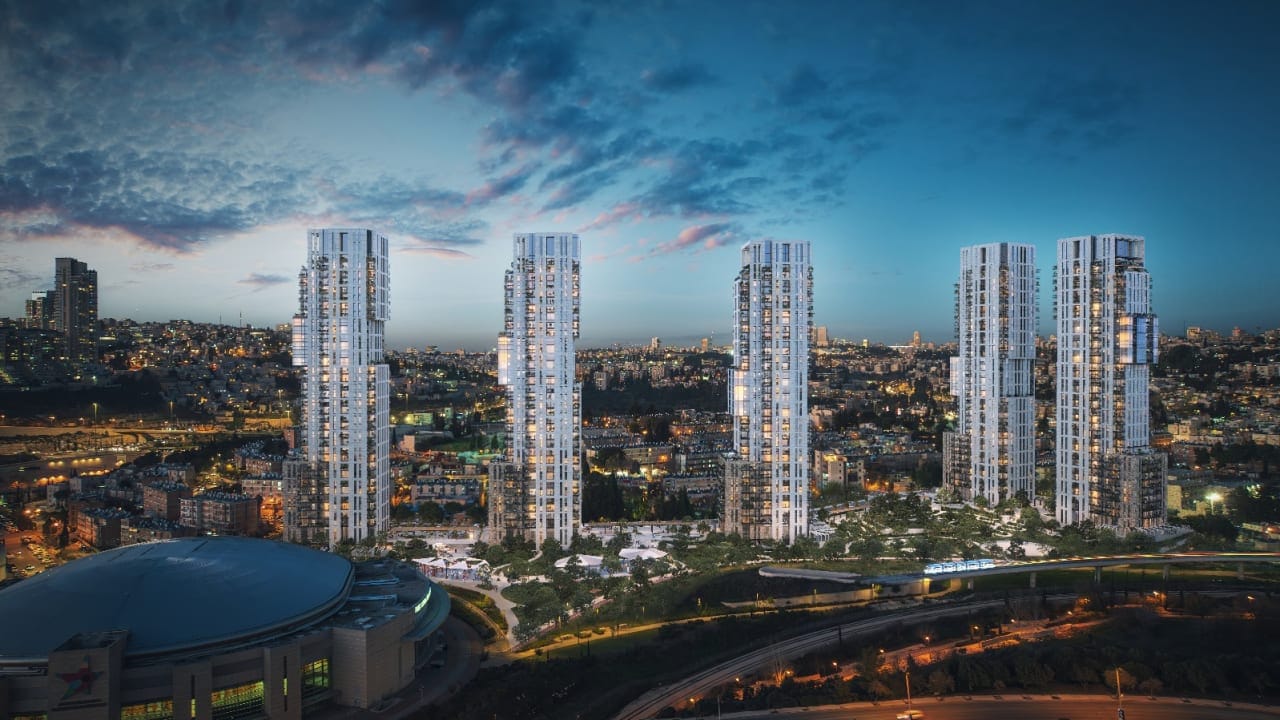
New residential towers, commercial and leisure centers, green parks, two new light rail lines reaching the neighborhood, and a new population that will include young Jerusalemite families, the national-religious community, and foreign residents - the Katamon (Gonenim) neighborhood is undergoing a true transformation and will become in the coming years the new and sought-after residential district of Jerusalem.
Katamon (Gonenim), one of Jerusalem’s oldest and most beloved neighborhoods, is changing beyond recognition. For all city residents, Gonenim has always been a neighborhood with a nostalgic flavor a place that combines authentic Jerusalem characteristics with memories of the old city. The old railway housing blocks with their distinctive red stone lining most of the streets, two-family houses with aged plaster, and local corner shops served as the neighborhood’s beating heart for decades.
In recent years, Gonenim has undergone a real revolution. Its central location, the construction boom of planned residential projects, and significant transportation development in the southwest of the city have turned Gonenim into a highly strategic and desirable destination. As a result, real estate prices in this historic neighborhood have risen significantly and continuously. If you will, Jerusalem’s next big thing is already here.
Gonenim is beginning to change drastically ,from a neighborhood of old housing blocks into a modern, new neighborhood with thousands of new residential units, residential towers, advanced commercial and leisure centers within walking distance, green parks, new public buildings, street and infrastructure development, alongside exceptionally high transportation accessibility with two light rail lines expected to reach the neighborhood and close proximity to major city transport arteries such as Begin Road.
The population makeup will also undergo a significant change. Alongside longtime residents, a new population will settle in the neighborhood, including young couples, Jerusalem families seeking housing upgrades, young and veteran families from the national-religious sector, and foreign residents.
The flagship project of Gonenim’s renewal wave is the SOHO project by Kidmat Hayovel and Africa Urban Renewal, which represents the central symbol of the significant change the neighborhood will undergo in the coming years.
SOHO, one of the largest urban renewal projects in Jerusalem, involves the demolition of 376 old apartments located in five old railway buildings built in the 1960s. In their place, approximately 1,000 new residential units will be constructed in five towers of 35 floors each, featuring 2-5 room apartments, penthouses, and garden apartments. Additionally, the project includes a wide commercial boulevard, daycares and kindergartens, a synagogue, a gym, a residents’ club, and a café ,all providing fertile ground for shared community life. Designed by architect Avner Yashar, the project blends the red stone that characterized the neighborhood in the past and the urban character of the city with innovation, progress, and contemporary design.
SOHO is centrally located and forms an integral part of the Almaliach Park a vast green park spanning about 45 dunams adjacent to the Pais Arena. The project is situated in the front line of Jerusalem’s sports complex, which includes the arena, Teddy Stadium, and the Jerusalem Tennis Center, and is close to the light rail route, currently in very advanced stages of construction.
Recently, the demolition of the first of the five buildings in the project was completed, and construction of the first residential tower will soon begin.
“SOHO is a significant milestone in the renewal of Jerusalem, especially in the old Gonenim neighborhood, which will change beyond recognition in the coming years,” said Yossi Aton, CEO of Kidmat Hayovel. “The project is a real breakthrough for Jerusalem residents and will attract many Jerusalem families who will enjoy a different living experience a high-quality, high-standard project, a winning location, excellent transportation accessibility, a unique commercial boulevard, and proximity to Jerusalem’s sports, culture, and leisure hubs.”
Ronit Eshed Levi, CEO of Africa Israel Properties added: “We are proud to be partners in the flagship urban renewal project in Jerusalem, which will lead to a significant transformation in the lives of existing apartment owners and turn the neighborhood into a central attraction for new buyers. In the last decade, we identified Jerusalem as a strategic target for the company, based on strong belief in the city’s enormous potential, its unique culture, and the growing demand for housing from both locals and communities from Israel and abroad.”