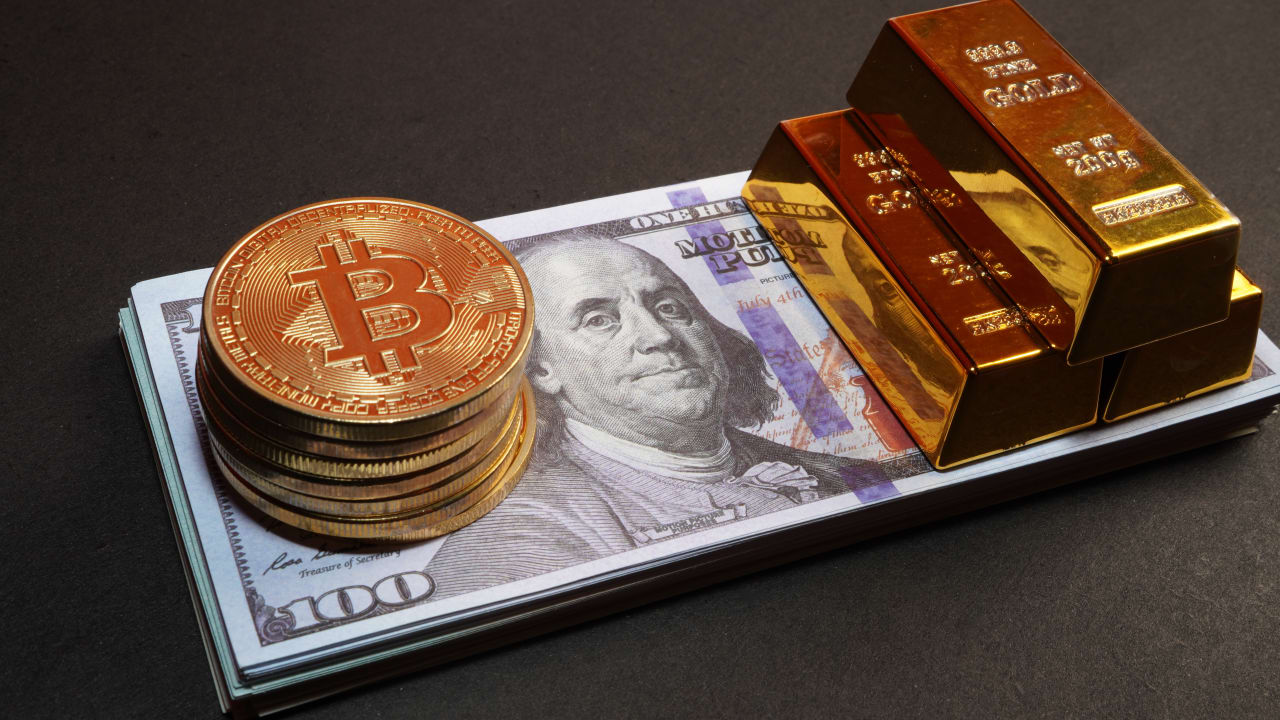
Economist and long-time gold bull Peter Schiff recently posted on X (formerly Twitter) that Bitcoin behaves more like a high‑beta technology equity than a safe‑haven asset, even lacking the earnings potential of tech firms.
Bitcoin’s alignment with U.S. tech stocks has grown notably in recent years. Analysts note that during periods of strong equity performance, particularly in the tech sector, Bitcoin tends to move in tandem with indexes like the Nasdaq-100 and the S&P 500. This trend contradicts the narrative that Bitcoin functions as a store of value similar to gold.
Gold, by contrast, traditionally serves as a hedge during times of economic uncertainty or inflationary pressure. When markets turn risk-averse, gold often rises in value, while Bitcoin has shown a tendency to fall alongside high-risk assets.
Recent spot prices reflect the contrasting roles these assets play in the market:
- Spot gold is trading around $3,375 per ounce, supported by safe-haven flows amid global economic uncertainty.
- Spot silver is hovering between $37.30 and $37.50 per ounce, benefiting from broader strength in precious metals.
Analyst forecasts suggest that gold is likely to remain above $3,000 per ounce through 2025, with some projecting prices could climb to $4,000 within the next year.
While some investors view Bitcoin as a long-term diversification tool, others caution that its behavior resembles a high-volatility, speculative tech asset. Financial experts point out that Bitcoin lacks underlying cash flows, dividends, or intrinsic value metrics commonly used to evaluate stocks.
Unlike tech companies, which can scale revenue and profits, Bitcoin’s value is largely driven by market sentiment and adoption trends. This makes it highly sensitive to macroeconomic factors, regulatory shifts, and shifts in investor risk appetite.
Bitcoin’s growing correlation with tech stocks and its divergence from gold suggest it may not fulfill the role of “digital gold” as once envisioned. Its lack of intrinsic earnings potential and its susceptibility to market sentiment position it closer to high-risk equities. For investors, understanding Bitcoin’s behavior within broader portfolio dynamics is crucial, especially when considering alternatives like gold and silver, which have long-standing roles as stores of value.
Content quality approved by JPost. JPost oversees the native, paid, and sponsored content on this website and guarantees quality, relevance, and value for the audience. However, articles attributed to this byline are provided by paying advertisers and the opinions expressed in the content do not necessarily express the opinions of JPost.The sponsor retains the responsibility of this content and has the copyright of the material. For all health concerns, it is best to seek the advice of your doctor or a legal practitioner.