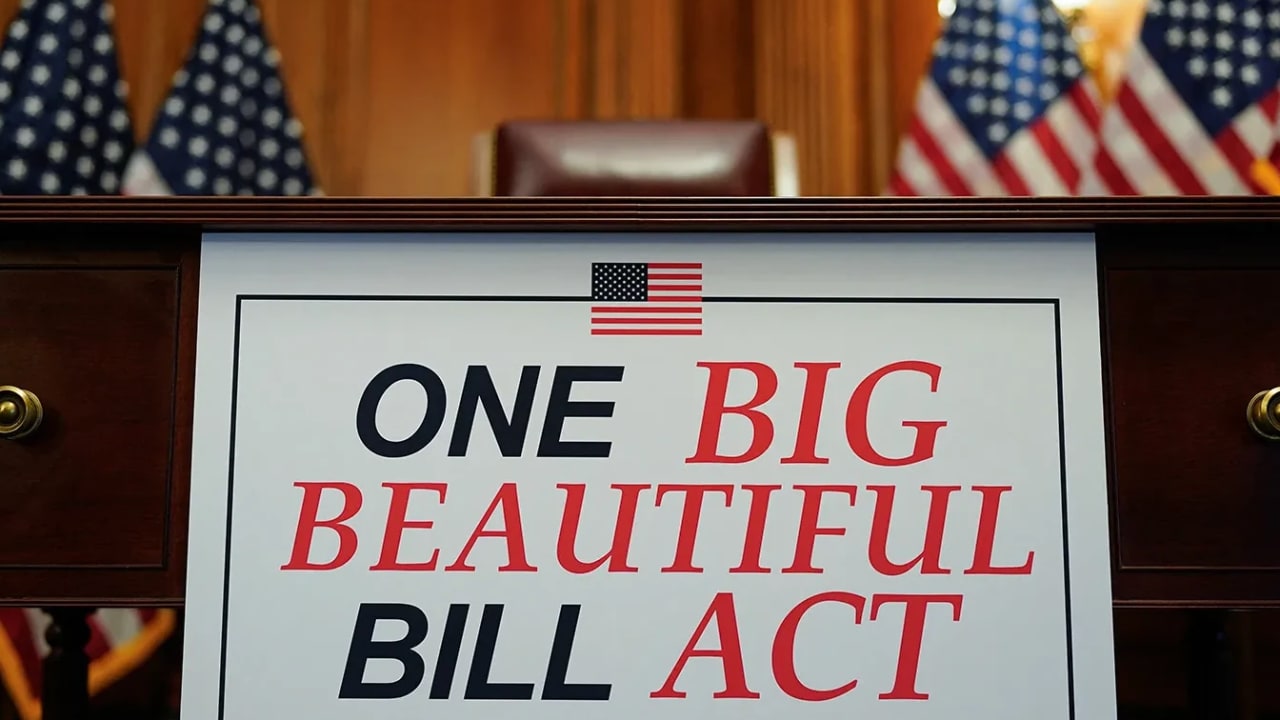
If you’re an American living in Israel, the new US One Big Beautiful Bill (OBBB) could bring meaningful and wide-reaching changes to your tax situation.
Before we dive into what will change, though, the most significant benefit of the new bill is how much remains the same. Had the bill not passed, the old changes from 2017 would have lapsed, and we would have had major changes. OBBB makes most of those old 2017 changes, such as the increased child tax credit, permanent.
1. Bigger refunds, if you don’t use FEIE
The Child Tax Credit rises to $2,200 per child in 2025, with the refundable portion (previously capped at $1,400) indexed for inflation. For many families in Israel, this can be a substantial refund, unless you exclude your income under the Foreign Earned Income Exclusion (FEIE).
Income excluded under FEIE doesn’t count as earned income when calculating the refundable portion. That means you could lose out entirely. Using the Foreign Tax Credit (FTC) instead keeps your income in play and wipes out US tax liability thanks to high Israeli taxes while unlocking refundable credits.
Also, one of the parents and the children must have valid Social Security numbers to claim the credit. Don’t delay filing for your newborn’s SSN.

For 2024, the inflated refundable amount was $1,700 per child. For 2025 onwards, it will continue to be $1,700 or higher, based on inflationary adjustments.
2. $1,000 Trump accounts for newborns
Each US citizen child born between 2025 and 2028 is eligible for a one-time $1,000 deposit into a Trump Account. Parents must elect this on their tax return and secure a valid SSN for the child. You can also contribute further amounts to grow tax-free, like a Roth-IRA plan.
These accounts grow tax-free in the US and may eventually be rolled into an IRA or ABLE account. However, the Israeli tax side will need checking out.
It’s free money – and it cannot be stressed enough how important it will be for your kids to get them an SSN quickly.
3. New benefits for charitable giving
The One Big Beautiful Bill Act (OBBB) restores a $2,000 above-the-line deduction (married filing jointly) for charitable giving if you don’t itemize. This is a welcome change for expats who don’t usually have enough deductions to itemize.
A new rule for everyone is a 0.5% AGI (adjusted gross income) floor on all charitable contributions. You only deduct amounts above that threshold. For example, with $100,000 AGI, the first $500 of giving isn’t deductible unless it qualifies for the above-the-line treatment.
For large or regular givers, it’s time to consider bunching donations or using donor-advised funds.
4. $6,000 deduction for seniors
Seniors 65+ can now claim a $6,000 deduction in addition to the regular senior add-on. A married couple over 65 could see their standard deduction increase to over $42,000.
This deduction has a phase-out. For joint filers, the deduction starts reducing once Modified AGI exceeds $150,000. Seniors with pensions and part-time income can now pay lower taxes in the US.
5. $15M Estate exemption: Less stress, still reporting
Starting in 2026, the estate and gift tax exemption rises to $15 m. and continues to be indexed for inflation. This change removes estate tax concerns for most US citizens in Israel.
Without the passing of the OBBB, this amount was set to go back down to ~$7.5 m., so this change is a nice reprieve for many.
Also, you must continue to report gifts and inheritances over $100,000 from foreign persons, using forms 3520 and 3520-A. Penalties for non-compliance can be steep, even if no tax is owed.
6. GILTI gets tougher, especially for low-tax entities
The OBBB eliminates the 10% Qualified Business Asset Investment (QBAI) exclusion and lowers the Section 250 deduction from 50% to 40%. However, the FTC cap on Global Intangible Low Tax Income (GILTI) rises from 80% to 90%, which softens the blow.
If your Israeli company pays the full 23% corporate tax rate, you likely won’t owe additional US tax.
Before the OBBB, your Israeli company had to pay at least 13.125% in Israeli taxes to avoid GILTI. The new necessary Israeli tax rate will be 14% with all these changes.
7. Qualified small business stock (1202) – More flexibility, higher cap
You can now exclude 50% of gain after three years, 75% after four years, and 100% after five years. The lifetime cap increases to $15 m. per issuer, indexed from 2027.
Israel’s 25%-30% capital gains tax still applies, so coordinate your exit strategy.
As always, consult experienced professional advisers in each country at an early stage in specific cases.
Yaacov@pstein.com
The writer is director of the Individual & Partnership Department at Philip Stein & Associates, US Certified Public Accountants, Jerusalem.