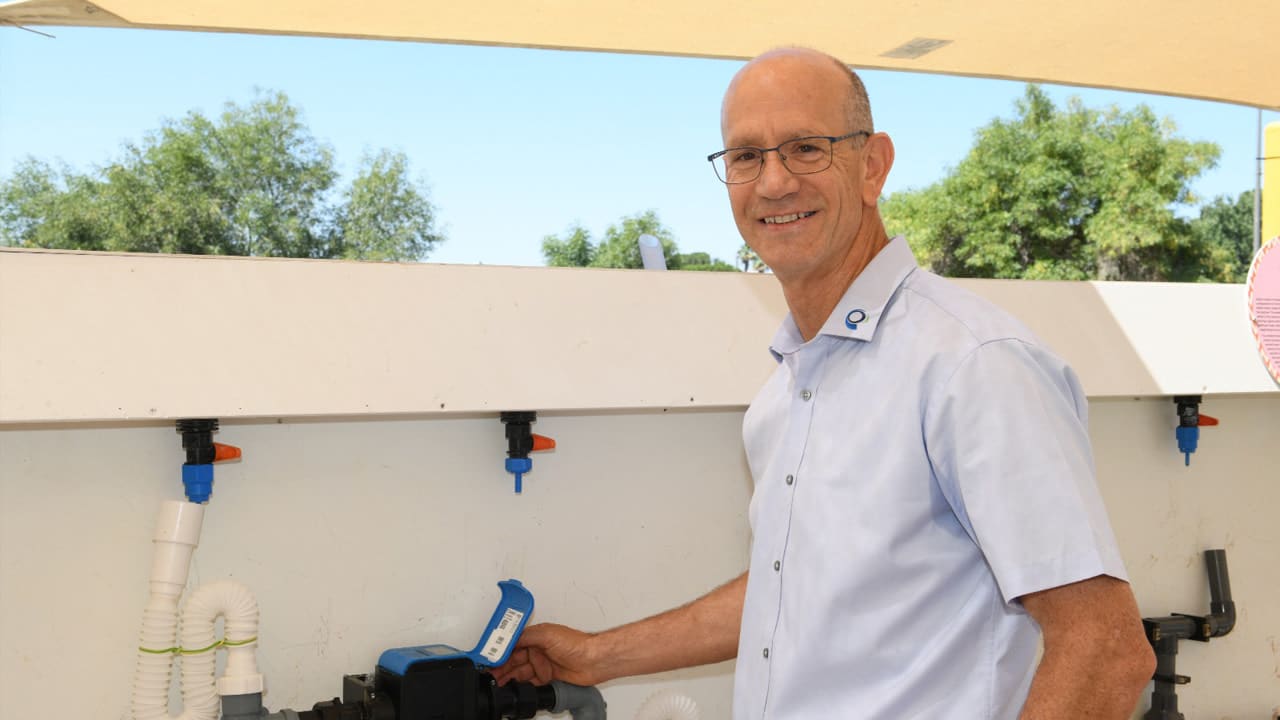
Arad Group, one of the world’s pioneers in smart water metering, has announced that over one million active LoRa-based water meters and sensors are now deployed across Israel. LoRa technology, a leading global standard in the Internet of Things (IoT) world, is recognized for its advanced capabilities, cost-effectiveness, and deployment flexibility.
According to market research firm Omdia, the LoRaWAN protocol is expected to expand global low-power (LPWA) IoT connections to more than 3.5 billion by 2030 – a tenfold increase over today. While LoRaWAN is still growing gradually in Europe and North America, Arad has built a nationwide network in Israel within three years.
Arad’s IoT network has been deployed in dozens of cities, such as Tel Aviv, Haifa, Ashdod, Modi’in, and Nesher. This infrastructure supports a wide range of Massive IoT applications – large-scale deployment with vast numbers of connected devices, namely smart parking systems, energy-efficiency solutions, air-quality monitoring, soil humidity sensing, public lighting control, and even emergency alert buttons in kindergartens and nursing homes.
Regev Yanai, LoRaWAN vice president of sales and marketing in Israel, said, “Water meters are only the beginning.
Once a city has a LoRa network – municipal and nationwide – almost anything can be connected. Israel is shifting from an innovation testbed into a global leader in large-scale smart-city deployment.”

The company’s strategy for building Israel’s LoRaWAN network is based on full-coverage network planning and deployment – including indoor coverage – rather than isolated point installations; strict, built-in cybersecurity across all system layers; and a management platform with advanced analytics that generates insights and operational efficiency.
In environmental and health applications, continuous air-quality monitoring using LoRaWAN sensors provides residents with accurate, real-time data on pollution levels. This enables municipalities to take rapid preventive actions, contributing to lower rates of respiratory illness. Research indicates that effective environmental monitoring in smart cities can improve air quality in measured zones by up to 15%, directly benefiting public health.
Smart parking systems help drivers quickly locate available parking spots, reducing time spent searching, cutting frustration, fuel waste, and emissions. International studies show that such systems can reduce average parking search time by 30%.
Head of IoT at Arad Group Yiftach Yad-Shalom concluded: “In any large urban solution, ongoing operational costs are the critical factor. We’ve seen many projects fail when trying to scale from pilot to full deployment. Our commitment in every project is to ensure on-time, on-budget rollout – with the flexibility and capacity our customers need to expand and meet future demands.”