Ashdod Port Company has signed a memorandum of understanding (MoU) with the Chartered Group Investment Fund, in a move to accelerate technological innovation and global startup collaboration.
The fund, which oversees $400 million in assets, will partner with Ashdod Port to co-invest in promising startups within the port’s pioneering Technology HUB.
This strategic alliance was born out of a series of conferences hosted by Ashdod Port in Osaka and Tokyo, where the port showcased its unique Technology HUB model and the numerous startups working in its hub focusing on supply chain, cybersecurity, logistics, and operations.
To keep pace with a rapidly changing world, Ashdod Port has undergone a transformation in recent years, embracing innovation and technology.

Following meetings in Tokyo with Shaul Schneider, Chairman of Ashdod Port, and Roy Avrahami, Head of the Innovation Division, Agmoni traveled to Israel to formalize the agreement. Under the terms of the MoU, the Chartered Group will not only co-invest in selected startups but will also play a critical role in helping them expand into Japan and other Asian markets. Startups participating in the HUB will also gain access to both the fund’s financial capital and Agmoni’s extensive industry network.
These events drew attention from key players in the Asian innovation landscape and laid the groundwork for deeper cooperation, Schneider told The Jerusalem Post.
“There is real intention to collaborate and learn,” he said.
Expanding Global Reach and Innovation Strategy
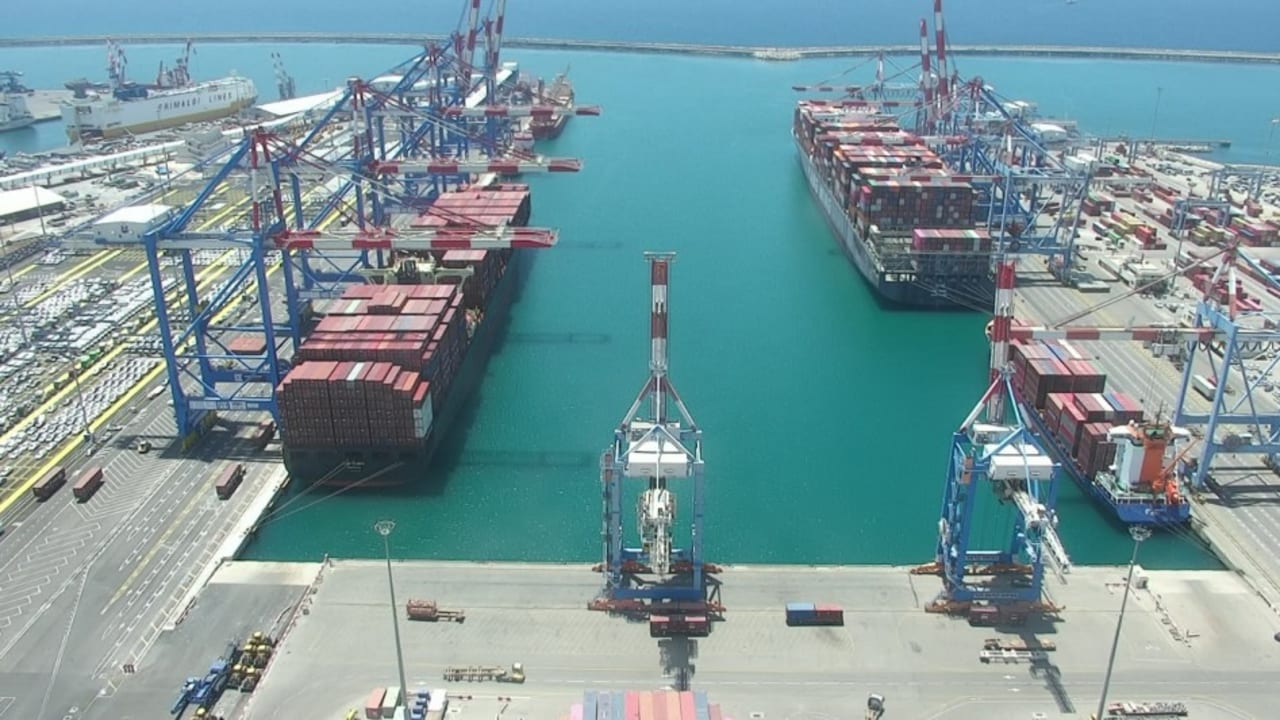
Ashdod Port is Israel’s largest seaport in terms of cargo volume and serves as a major gateway for goods into and out of Israel. With 11 piers, 78 cranes, and 2,200 ships docking each year, 40% of Israel’s total cargo volume passes through the port which serves all segments - containers, vehicles, general cargo, bulk, and cruises.
This agreement marks the 28th international cooperation Ashdod Port has signed in recent years, reinforcing its commitment to global partnerships and technological advancement. The port’s innovation strategy centers on expanding its Technology HUB to support cutting-edge solutions in logistics, supply chain management, and cybersecurity.
The collaboration between the two companies is expected to unlock new growth channels, attract further investment, and foster joint business opportunities across the region. During the recent conference in Japan, the company also explored the establishment of an “innovation embassy” in the Asian nation that would enable joint responses to global sustainability challenges emphasizing advanced technological solutions.
Ashdod Port’s continued investment in innovation reflects a broader vision of transforming traditional maritime infrastructure into a dynamic ecosystem for technological development.
At the conference, eight startups at different stages of growth presented their innovative solutions within Ashdod Port’s technology incubator, focusing on cybersecurity, autonomous trucks, safety, ESG, and maintenance. The startups included Salvador, which enables rapid recovery from cyberattacks; Flyz Robotics which is developing miniature autonomous drones with unique capabilities; Azimut AI (AMPC) which is developing a real-time vessel identification system; Captain's Eye which is developing an AI-based system for real-time monitoring of safety and security events on vessels using existing cameras and others.
“Japan has always been a symbol of discipline, creativity, and excellence,” said Schneider. “The maritime world is entering a new era. Not just trade and geopolitics, but technology, cybersecurity, artificial intelligence and advanced innovation - they are reshaping our industry faster than ever. Ashdod Port is proud to be at the front of this change. We built a tech incubator, we created an investment arm, and we work with start-ups that use Ashdod as their beta site. This conference is a true crossroads of ideas, insights, inspiration, and also business”.
According to Schneider, there is a continued growth in innovative startup companies.
“We are still a start-up nation, but not only. We are moving ahead to become a scale-up nation.”