
The alarm clock ring made me jump out of my bed. I opened my eyes, and for a moment I did not remember where I was. I looked at the watch – the time was 11 p.m. And then the memory hit me: I am in Tromsø, the northernmost city in the world.
"Anat," I called out to my friend and roommate, "get up, we have to go out." Anat did not hesitate. Within minutes we were already wandering the city streets, with strong and blinding sunlight surrounding us as if it were the middle of the day.
In the summer months, the "midnight sun" phenomenon occurs here – a natural phenomenon in which the sun does not set for weeks, completely disrupting the biological clock. Night turns into day, and the body struggles to understand when it is time to sleep.
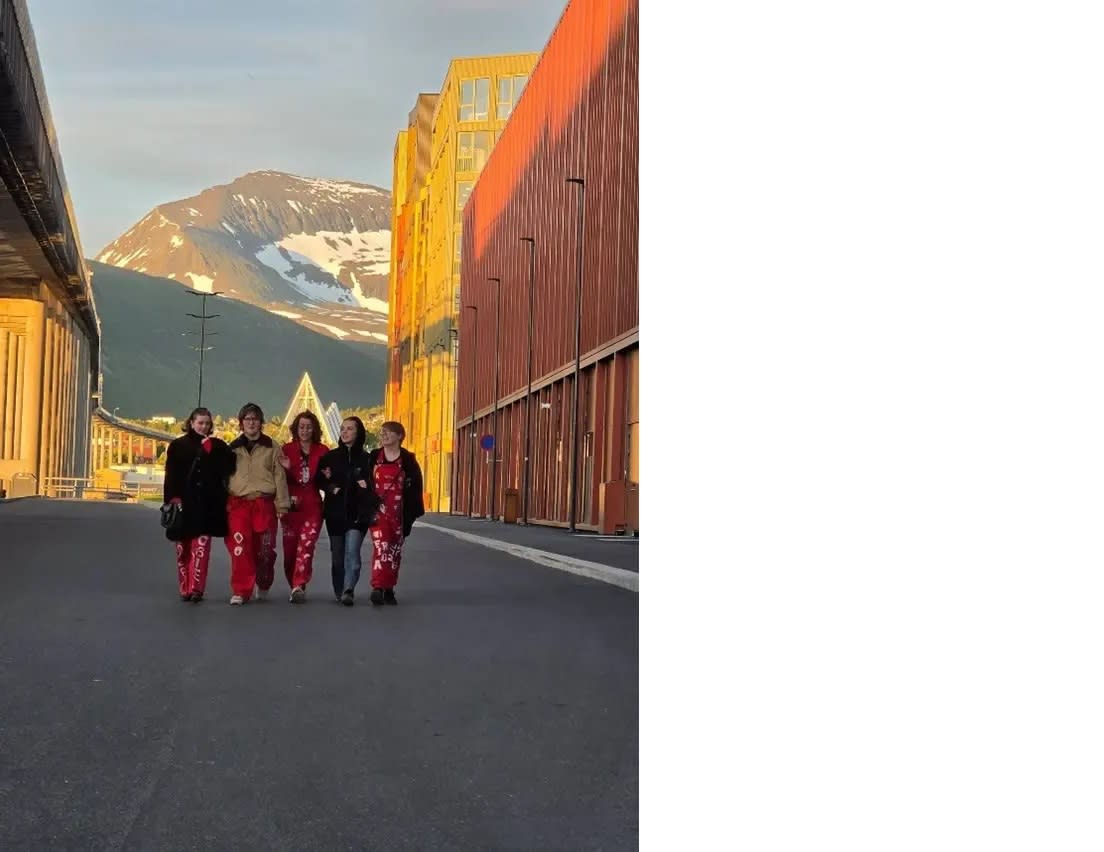
The large bridge in the heart of the city was painted in a soft, golden light of the midnight sun, which cast magnificent shades on the structures behind it. On our way, we met locals returning from a night out, taxi drivers, and young people who simply refused to surrender to the endless light.
On the illuminated bridge, an almost surreal scene took place: Five young girls embracing, dressed in red, marched and sang against the backdrop of the snowy mountains during the midnight golden hour.
Tromsø – Norway's Arctic capital
Tromsø, known as the "Arctic Capital," is located about 350 km north of the Arctic Circle. It is home to about 40,000 residents – a large city in local terms, and one of the largest in the Arctic region.
Norway as a whole has fewer than 6 million residents over an area 17 times larger than the State of Israel, a fact that gives the expanses here an almost infinite sense of primeval nature.
Despite its extreme northern location, Tromsø is a young and vibrant city. The main reason for this is the local university, where about 16,000 students from 100 different countries study, turning it into a fascinating multicultural center.
Thanks to the research institutions operating in it, a significant portion of the city's residents work in fields such as climate change, marine sciences, and polar research. It is a rare combination between wild nature and an educated, cosmopolitan city – one that does not stop celebrating life even at the height of winter, when the sun emerges for only a few hours.
Between Arctic plants and glaciers
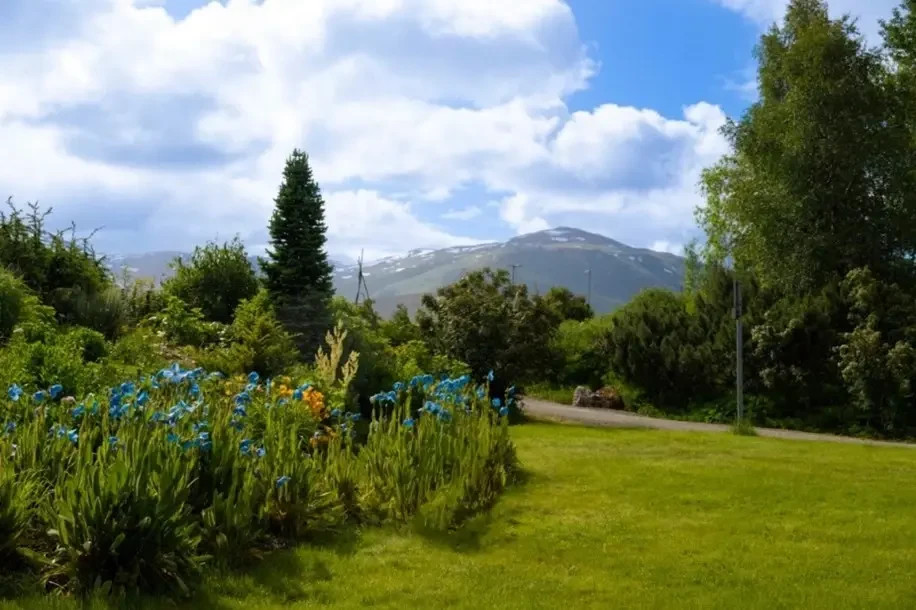
We visited the Botanical Garden of the University of Tromsø, managed under its academic auspices. The garden specializes in Arctic and alpine plants from all over the world – from the snowy Himalayan mountains to the peaks of the Andes Mountains.
Alongside global vegetation, resilient local flora also grows, and slate rocks shimmering under the sun's rays trace magnificent walking paths.
Most of the plants here are perennials, adapted to the harsh Arctic climate. When temperatures plummet and the light disappears, they enter a deep dormancy, while the snow becomes a natural insulating blanket that protects them until spring arrives.
From there we continued to the Ishavskatedralen – the "Arctic Cathedral." This is an Evangelical-Lutheran church, but it has become one of the symbols most identified with the city.
Its unique design, made of concrete and aluminum and inspired by glaciers, is meant to reflect the Arctic landscape and the games of light characteristic of the polar region – especially the Northern Lights.
The story of the hunters and pioneers
In the Polar Museum, located in a red wooden building on the waterfront, we were exposed to the fascinating history of the region from a human perspective.
The displays are dedicated to the hunters and pioneers who lived here in the past, and include reconstructions of modest winter huts and the harsh living conditions in the region.
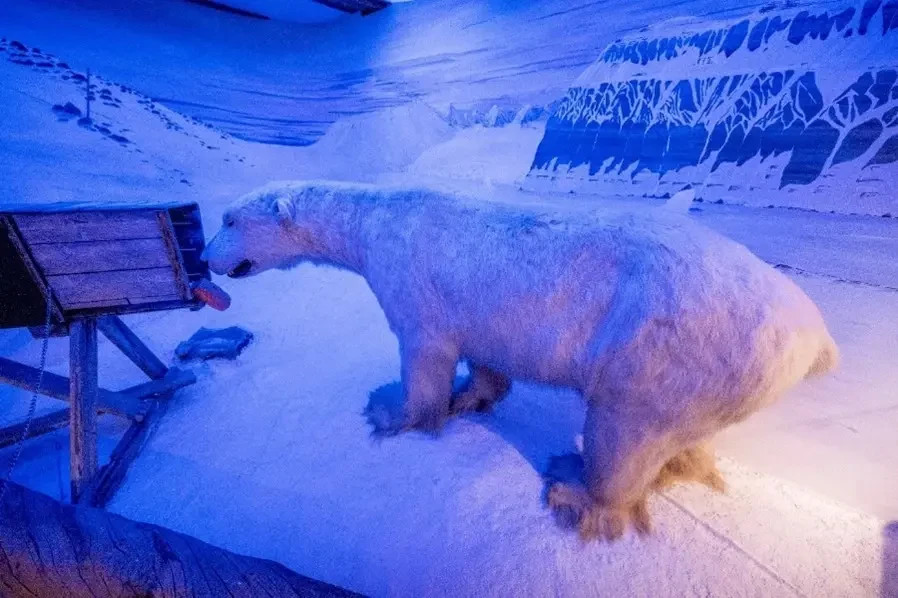
When I stood in front of a giant stuffed white polar bear, I looked into its eyes and wondered what such a meeting in the wild would look like – far from any shelter.
To the peak above Tromsø
We understood the true structure of Tromsø only when we rode the cable car to a height of 420 meters. There, all the pieces of the puzzle came together: The island on which the city is located, the clear water of the fjords, and the jagged peaks surrounding it from all sides.
From the café at the peak, with hot chocolate and traditional apple cake, the view looked like a postcard that you cannot turn your eyes away from. The air was clear and sharp, and the feeling was that we were on top of the world.
Lofoten – The place where nature paints the landscape
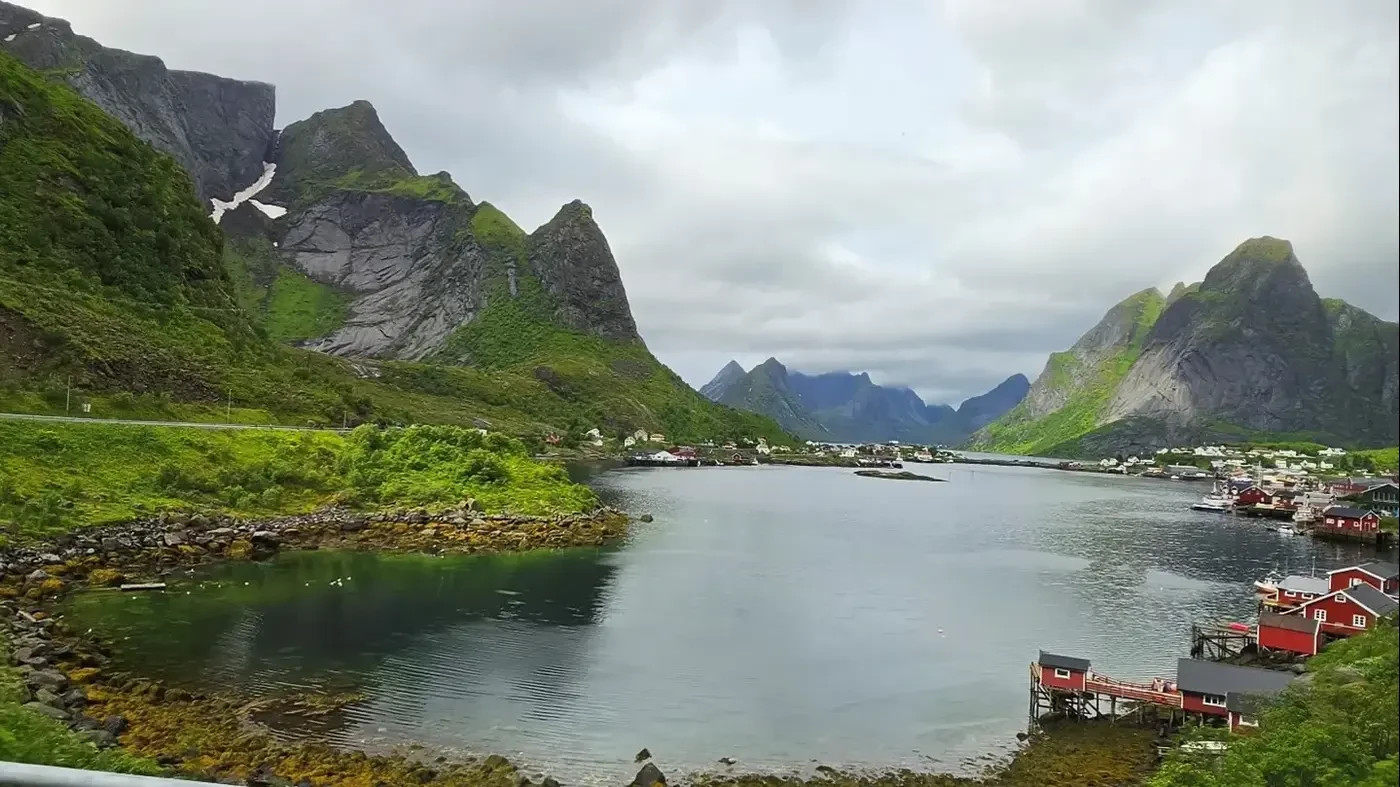
The cherry on top was without a doubt the Lofoten archipelago. When we arrived there, we felt as though we had entered a painting by a Romantic painter. A chain of dramatic islands protrudes from the sea, snowy peaks drop steeply into deep turquoise water, and life here is dictated by nature and by the constantly changing light – from dramatic gray to golden midnight sun. The wooden houses on stilts have survived decades of storms, evidence of the resilience of the fishermen who have lived here for generations.
In Svolvær, the gateway to the archipelago, we combined an urban atmosphere with a wild landscape. Despite the rain and cold – 10 to 12 degrees during the day and about 5 degrees at night in June – we went on a cruise in Trollfjord.
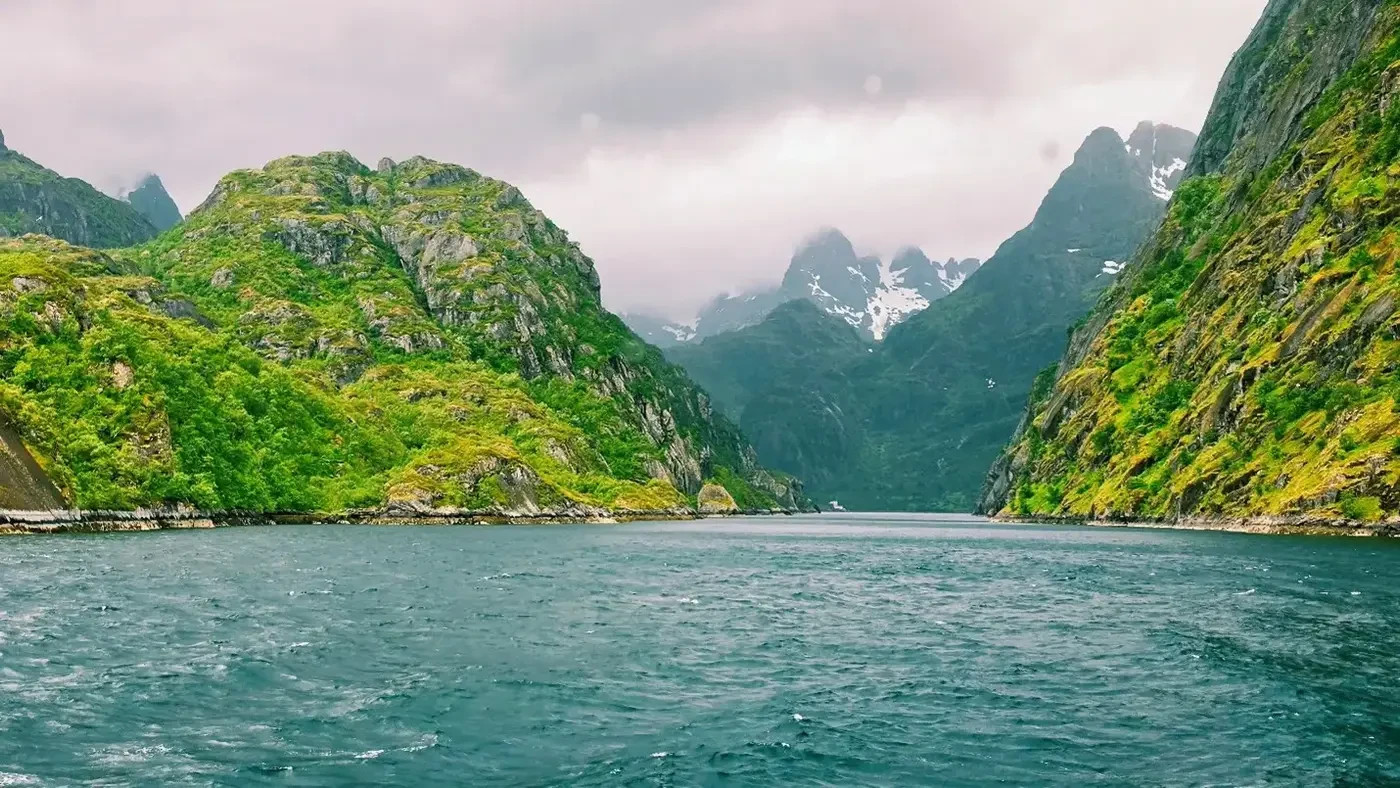
Entering the narrow fjord felt like crossing into an ancient world. According to legend, the passage was created by a giant troll's axe blow in an ancient battle, but reality tells a no less fascinating story: In 1890, the "Battle of Trollfjord" took place here, in which local fishermen in rowboats stood up against modern steamships in a struggle for their right to make a living. The confrontation led to the "Lofoten Act" of 1891 – a historic compromise meant to balance progress and tradition, allowing small fishermen to continue making a living from the sea as well.
During the sailing, I experienced the power of nature in all its glory. Despite the rain that hid the eagles and whales from us, the huge waterfalls created by the melting snow on the peaks that poured directly into the sea were a mesmerizing sight. The sounds of the waterfalls, the hum of the engine, and the caressing cold together created a powerful, multi-sensory experience.
The people behind the landscape
Norway's beauty is beyond doubt, but its true heart is its residents. When my phone was lost during the trip, near a remote bridge far from the hotel where we stayed, the receptionist recruited the hotel chef, who lived nearby, to help. He went out to the field, initiated a video call with us, located the lost item on the grass, and returned it to me.
This is perhaps the story that best illustrates Norwegian kindness – a willingness to help whole-heartedly, even to complete strangers. The kind chef who returned my phone reminded me in his size of the tall Vikings whose heritage we learned a lot about from our guide, Motti.
And it is impossible to summarize this journey without addressing the Viking heritage that shaped the spirit of the place. The Vikings, who operated in the region between the 8th and 11th centuries, were much more than the wild warriors from the movies. They were brilliant engineers and navigators whose "Drakkar" ships crossed stormy seas with confidence. Their society was complex and advanced, with the "Thing" assemblies and rights for women – values that influenced Norwegian culture to this day.
The villages where time stood still
On our way south, we passed through the village of Reine, located on tiny islands connected by bridges. The red cabins and the reflection of the mountains on the water created a picture of absolute tranquility. Reine grew around the skrei fishing season – Arctic cod that arrives in the area from January to April – and it remains to this day a small and intimate village. Throughout the village, we saw the traditional wooden racks for drying cod, spreading a smell of sea and ancient tradition.
The village with the shortest name in the world
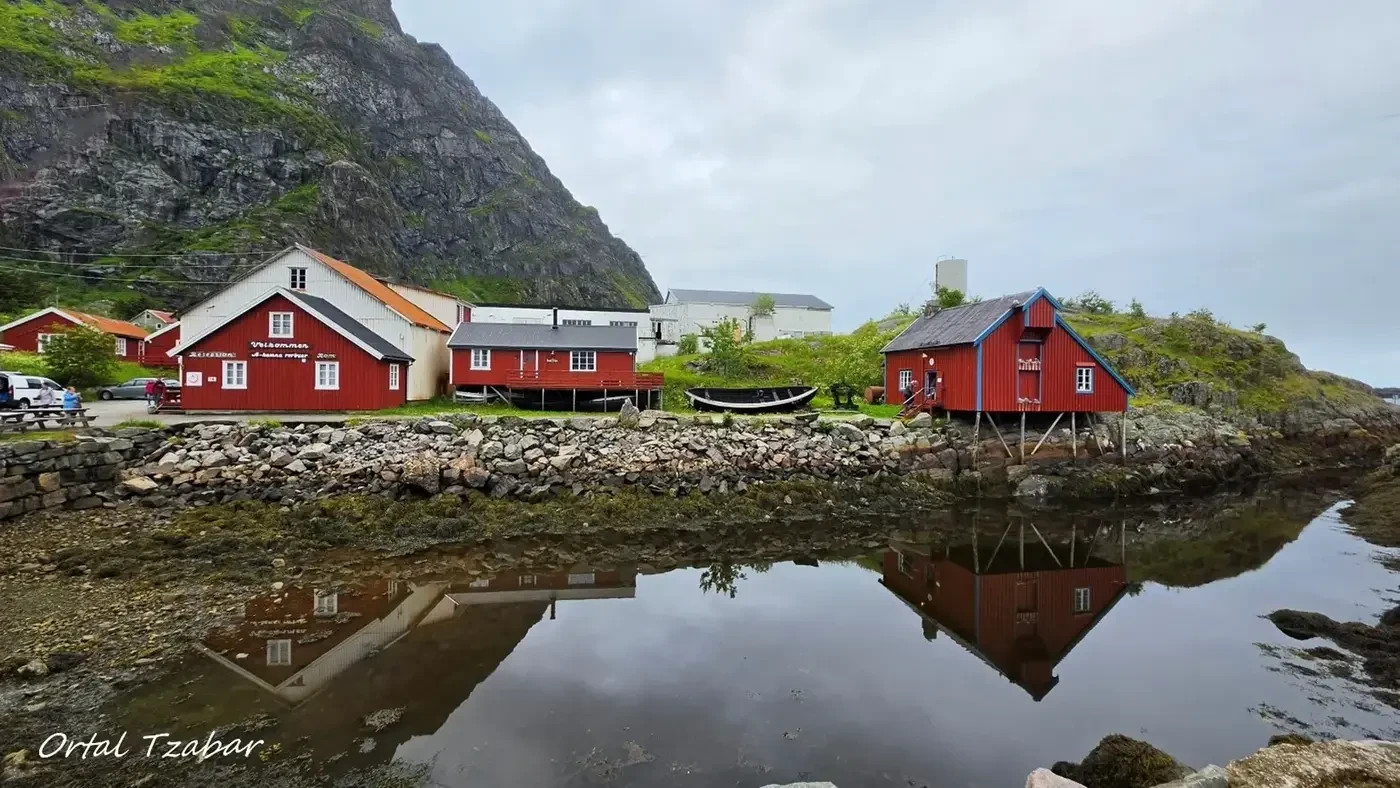
We finished in Å (pronounced "O"), the village with the shortest name in the world, which serves as a living museum of fishing life. The moment you arrive here, the road ends and the feeling is that you have reached the end of the world – the place where land meets the open ocean.
But this quiet is only apparent. In June, the village is louder and more alive than ever. On the red tiled roofs, directly above the fishermen's houses, hundreds of white seagulls nested. It was nesting season, and the air was full of screeching chicks and parents returning in fast flights from the sea, laden with catch.
The seagulls gave the place a wild and primeval feel, which caused me to stop again and again with the camera to try to capture the perfect movement of a seagull slicing through the salty air on its way to the nest.
Between the huge wooden racks for drying fish and the huts on stilts, we felt as if time stood still.
As I stood at the water's edge in Lofoten, surrounded by jagged mountains, I thought about those ancient pioneers. Their legacy – resilience, respect for the sea, and living at the pace of nature – still beats here today.
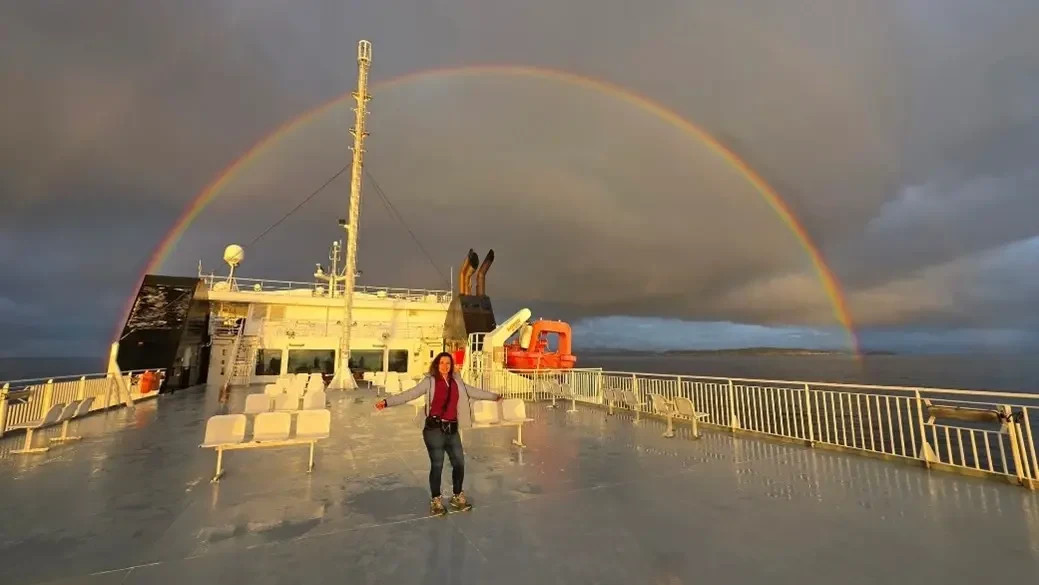
We concluded the final chapter of the journey on our way to a flight from Bodø. While on the ferry, a spectacular double rainbow suddenly emerged, stretching its colors over the Arctic water – a moment of grace and a perfect closing chord to a journey filled with beauty and wonder.
Ortal Tzabar is a nature and environment reporter – more travel photos on her website